Brier is a quiet grid of larger lots under mature trees. The canopy keeps the soil cool and damp, clay holds the rain, and moss will take a lawn that only sees sun in patches. Shade, not neglect, is usually why the grass looks tired. Moss will grow on the face. That is fine. What is not fine is a wall dug through the roots that are holding the bank you wanted to keep.
Snohomish County · ZIP 98036 · 2020 population 6,642
Stone in the trees
We fit the wall between the trees or we keep it low and in front of the root plate. Hand setting is normal. A boulder that needs a full-size machine may not belong in a wooded backyard, and we will change the material rather than skin the lot.
Shade stone stays damp. We do not promise a bare, dry, desert look. The wall should look settled, because the woods will settle it.
The ground in Brier
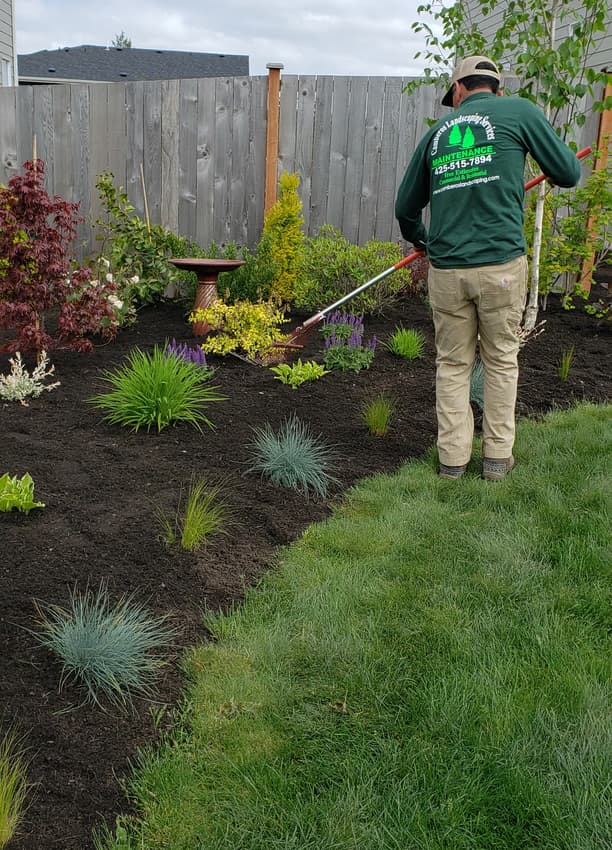
Most of the yards we walk in Brier have been under evergreens for decades. Roots sit high, the lawn is thin where the shade is deepest, and the beds along the fence line are already trying to become forest again — ferns and salal move in on their own. That is a better clue than a catalog. Fighting those beds with a sun-loving flower border means weeding forever.
Clay and humidity show up as moss in the turf and as slippery film on patios that never quite dry. Aeration and a real dethatch help the lawn, but only if we also lift the canopy enough for light to reach the grass. Tree work here is pruning for structure and clearance, not topping. Privacy matters on these lots, so we thin, we do not scalp.
How we do the work
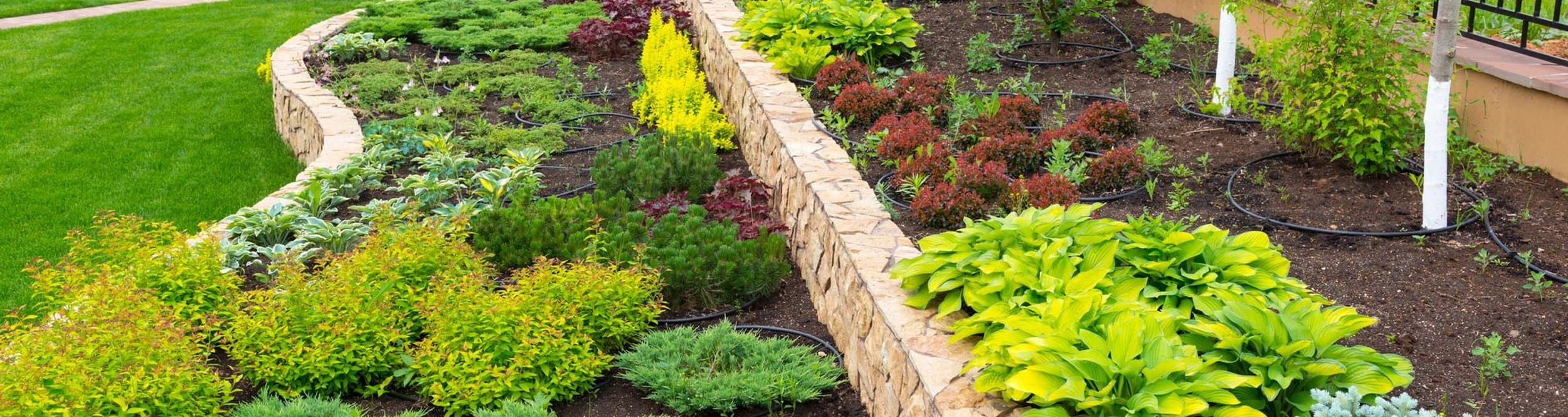
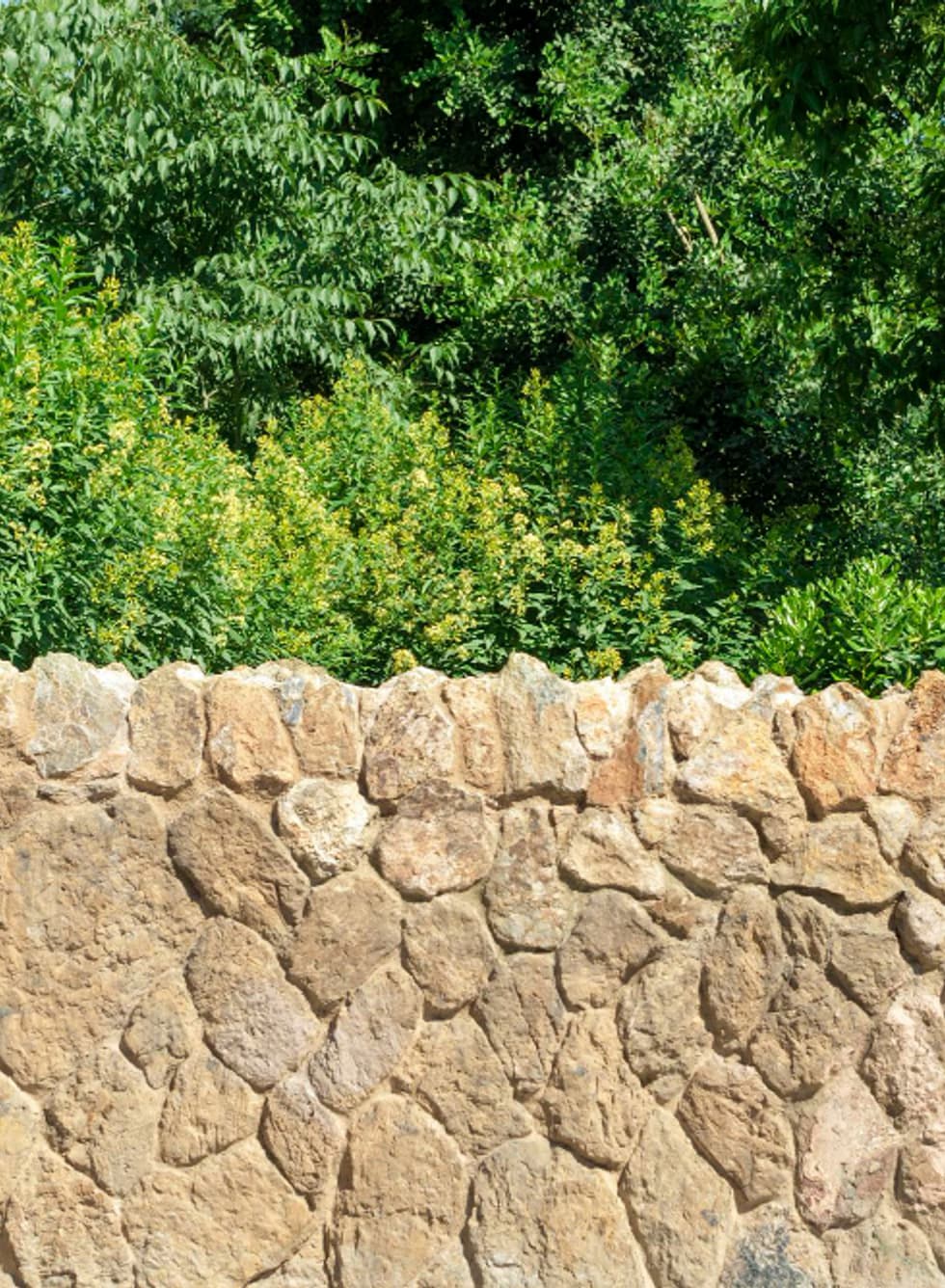
A rock wall is dry-stacked or lightly set, with the weight in the stone and the drainage in the voids. It is not a veneer glued to a failing timber wall. We use rock big enough for the height, with a face that leans back into the hill, and smaller rock locked behind so the soil does not pipe through.
Good rock work looks heavier at the bottom. If every stone is the same patio-sized block, it is not a wall, it is a stack. We source local stone and we will tell you when the access cannot take the boulder the job wants.
What we look at first
- Height and whether it is structural or a garden edge
- Machine access for real boulders
- The soil behind: clay that needs a drain, or rock that already sheds
- An existing wall we are tying into
Tying into old rockery
We can often continue an existing rockery if the old base is still honest. If the old wall is tipping, we take it down and use the good stone again. Matching a lean is how you extend a failure.
What it will not do
A rock wall will not hold an engineered height it was not built for, and it will not stop a landslide. Past a certain height we involve an engineer or we change the grade so the wall can be shorter. That conversation happens before the stone is ordered.
Dry stack versus mortared
Most of our rock walls are dry, so water can leave and the wall can move a little without cracking a joint. Mortar is for a low, formal edge that is not holding a wet hill. We do not mortar a drainage problem shut.
More from this crew
- Rock walls across Snohomish County
- Retaining walls in Brier
- Gravel installation in Brier
- Landscaping in Brier
- Hardscaping in Brier
- Rock walls in Lynnwood
- Rock walls in Mountlake Terrace
- Rock walls in Edmonds
Sources for the climate and the water
- USDA plant hardiness map for choosing plants that can take a Snohomish County winter.
- EPA WaterSense on watering less once a lawn or a new planting is established.
- EPA Soak Up the Rain on keeping roof and yard water from becoming someone else’s problem.