Brier is a quiet grid of larger lots under mature trees. The canopy keeps the soil cool and damp, clay holds the rain, and moss will take a lawn that only sees sun in patches. Shade, not neglect, is usually why the grass looks tired. A shady side yard that is mud and moss is often a gravel path waiting to happen. It still needs fabric and an edge, or it sinks and grows weeds in the fines.
Snohomish County · ZIP 98036 · 2020 population 6,642
Gravel where grass has already quit
We excavate the muck, not just cover it. Tree roots get worked around. A path that heaves on a root is acceptable. A path that smothers the root is not, and we keep the excavation shallow there and thicker where we can.
Leaf fall will collect. Gravel in the woods needs an occasional blow-off. We tell you that. It is still better than a lawn that will not grow.
The ground in Brier
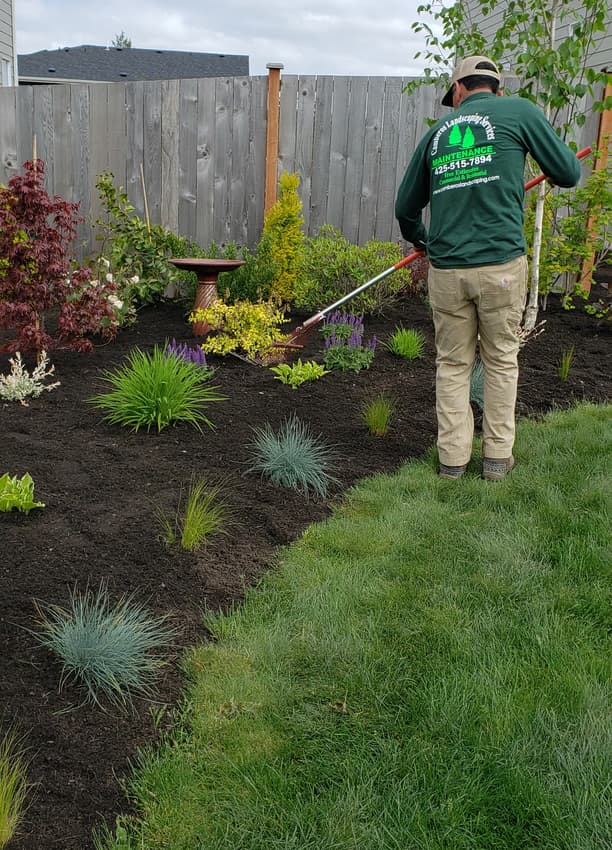
Most of the yards we walk in Brier have been under evergreens for decades. Roots sit high, the lawn is thin where the shade is deepest, and the beds along the fence line are already trying to become forest again — ferns and salal move in on their own. That is a better clue than a catalog. Fighting those beds with a sun-loving flower border means weeding forever.
Clay and humidity show up as moss in the turf and as slippery film on patios that never quite dry. Aeration and a real dethatch help the lawn, but only if we also lift the canopy enough for light to reach the grass. Tree work here is pruning for structure and clearance, not topping. Privacy matters on these lots, so we thin, we do not scalp.
How we do the work
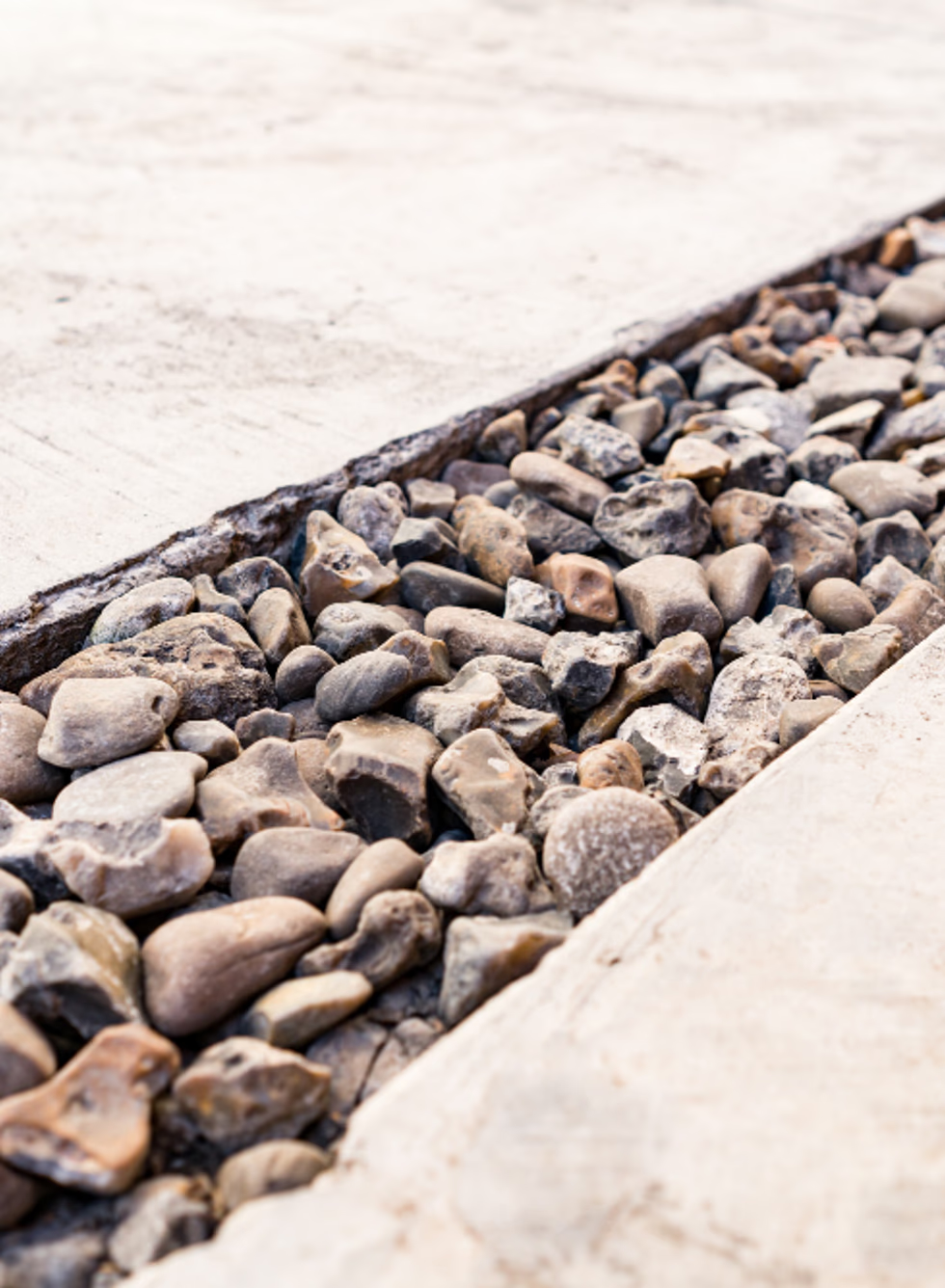
Gravel stays put when it has a compacted base, a fabric or a separation from the clay, a slight crown or a cross slope, and an edge. A load of rock dumped on the grass is a mud pit by spring. We dig out the soft soil, build the base, and top it with the rock you actually walk and drive on.
The top rock is not the same as the base rock. Base is angular and locks. The surface might be smaller crushed rock or a cleaner gravel, depending on whether this is a drive, a dog run, or a path.
What we look at first
- Cars, foot traffic, or both
- How soft the ground is in March
- Where the water crosses the drive today
- An edge against lawn or beds so the rock does not migrate
Fabric
Separation fabric keeps clay from pumping up. It is not weed magic, and it is not a substitute for digging out the mud. We lap it and we cover it. Sun-baked fabric at the edge means the gravel was spread too thin.
Edges and weeds
Steel, timber, or a paved border on a walking path. On a farm drive, the ditch is the edge. Weeds in gravel get pulled or treated early, before the root is a shrub. A thick, clean surface grows fewer of them than a dirty thin one.
Refresh
Gravel is maintenance. Every few years a drive needs rock added and graded back to crown. We would rather tell you that than sell a “permanent” gravel surface. Pavers are permanent. Gravel is a good, honest, recurring surface.
More from this crew
- Gravel installation across Snohomish County
- French drain installation in Brier
- Fence installation in Brier
- Hardscaping in Brier
- Paver installation in Brier
- Gravel installation in Lynnwood
- Gravel installation in Mountlake Terrace
- Gravel installation in Edmonds
Sources for the climate and the water
- USDA plant hardiness map for choosing plants that can take a Snohomish County winter.
- EPA WaterSense on watering less once a lawn or a new planting is established.
- EPA Soak Up the Rain on keeping roof and yard water from becoming someone else’s problem.