Edmonds faces the Sound. Salt air reaches the patios, the wind comes off the water, and the soils change as you move up off the beach — sandier near the shore, heavier as the hills rise toward the ferry and the bowl downtown. A rock wall on sand needs a base that does not wash out. Pretty stone on a bluff edge, with the tide of runoff under it, is a temporary arrangement.
Snohomish County · ZIP 98020 · 2020 population 42,690
Rock that can take wind and a sandy toe
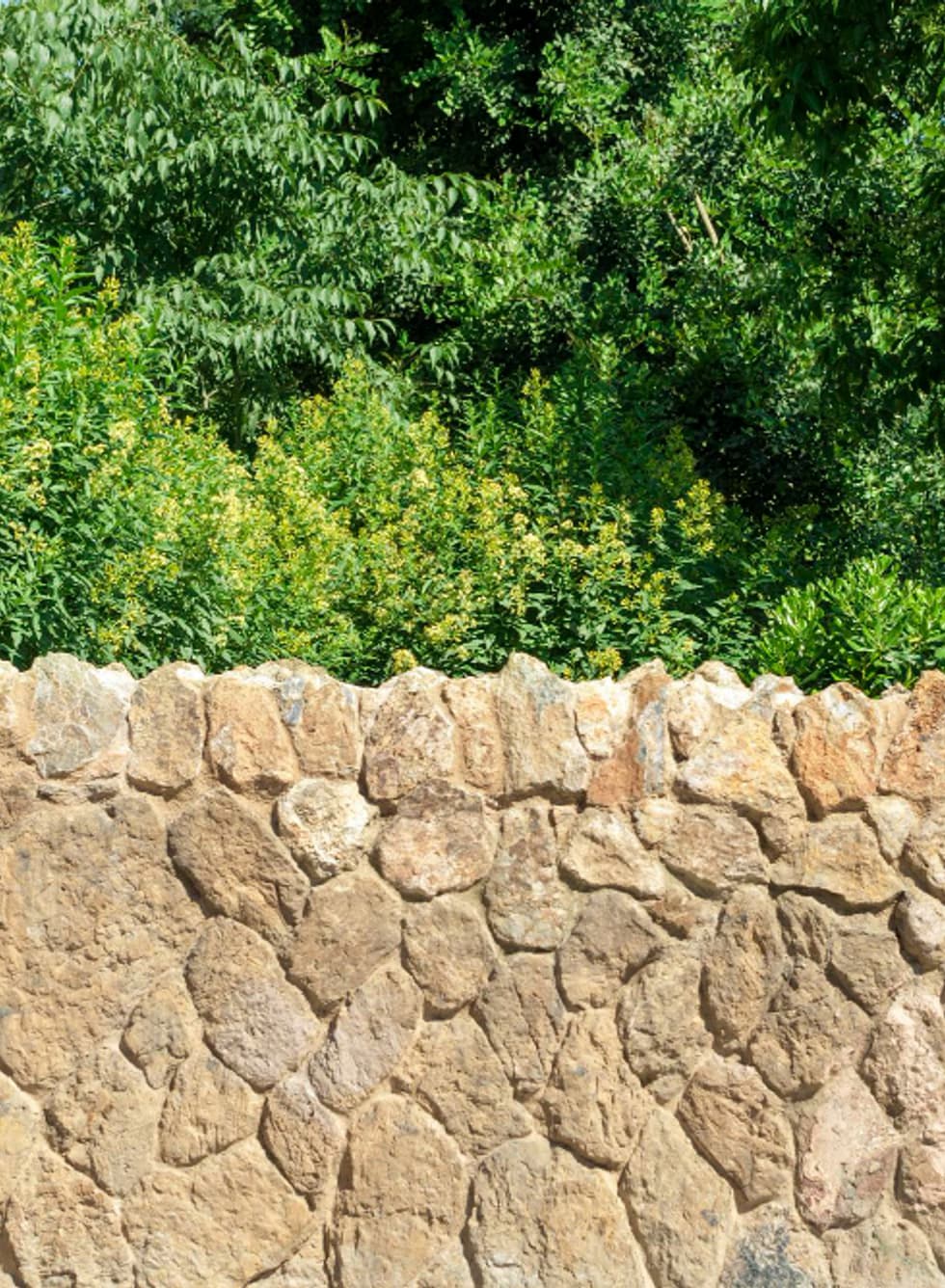
We dig the toe in, we drain the back, and we do not outlet that drain as a spout over the bank. The stone can look natural against madrone and shore pine. We avoid a formal, mortared look that cracks when the bank moves a half inch, which marine slopes do.
Salt does not bother the rock. It bothers the metal pins and the cheap edging people ask us to add. We keep the wall stone.
The ground in Edmonds
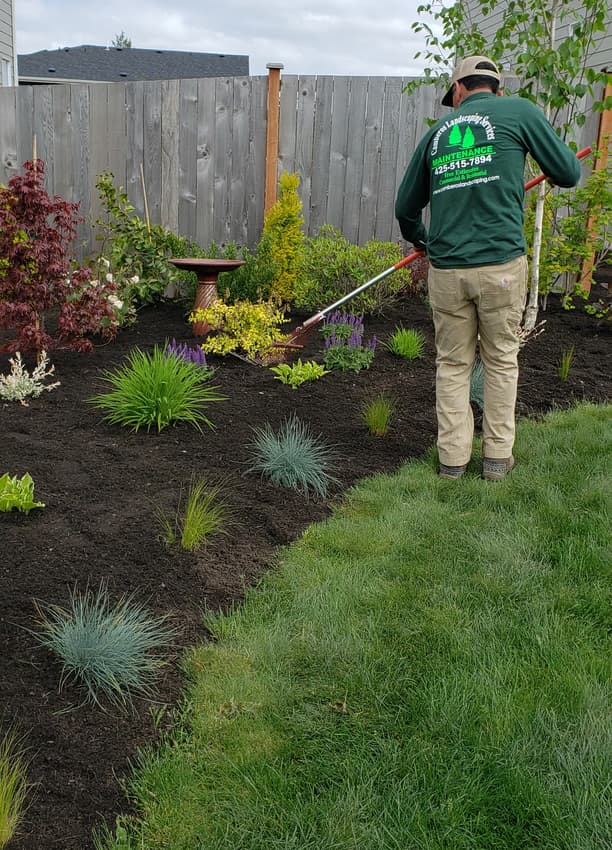
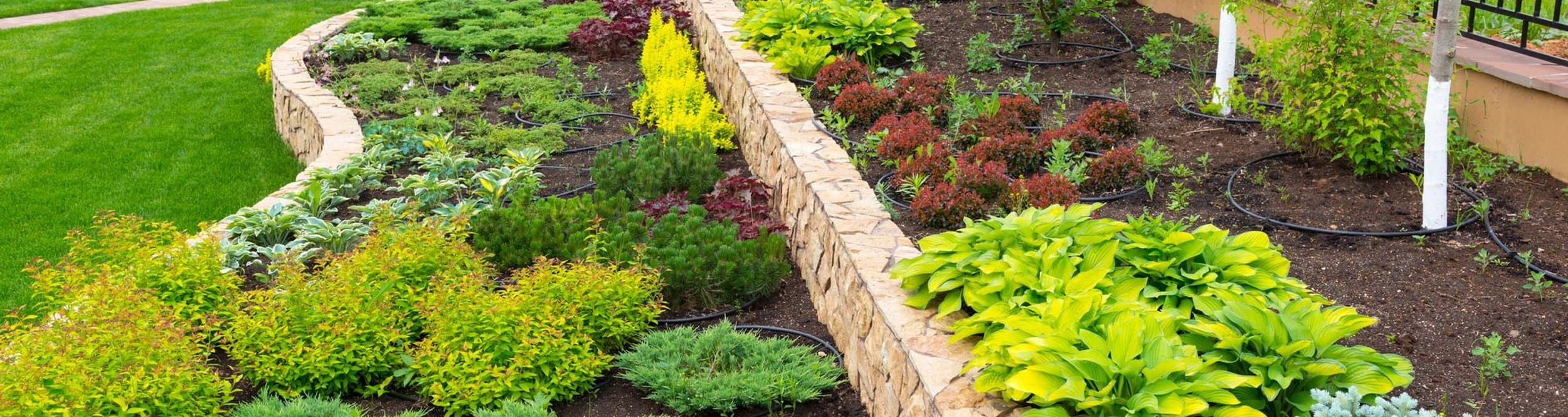
A yard with a view of the water is also a yard in the wind. Screens and plantings have to stand up to salt and to gusts that shred a soft shrub in one winter. Madrone, shore pine, and kinnikinnick already grow on these bluffs for a reason. We use that palette when a client wants the bank to stay put without a weekly watering schedule.
Lower down, salt film builds on pavers and railings, and a pressure-wash is maintenance, not a one-time event. Retaining work on the west-facing slopes is about holding a sandy bank, with drainage behind the wall so the hill does not load up and shove. The older neighborhoods up the hill have more conventional clay and bigger trees, so we do not treat every Edmonds lot like a beach cottage.
How we do the work
A rock wall is dry-stacked or lightly set, with the weight in the stone and the drainage in the voids. It is not a veneer glued to a failing timber wall. We use rock big enough for the height, with a face that leans back into the hill, and smaller rock locked behind so the soil does not pipe through.
Good rock work looks heavier at the bottom. If every stone is the same patio-sized block, it is not a wall, it is a stack. We source local stone and we will tell you when the access cannot take the boulder the job wants.
What we look at first
- Height and whether it is structural or a garden edge
- Machine access for real boulders
- The soil behind: clay that needs a drain, or rock that already sheds
- An existing wall we are tying into
Tying into old rockery
We can often continue an existing rockery if the old base is still honest. If the old wall is tipping, we take it down and use the good stone again. Matching a lean is how you extend a failure.
Dry stack versus mortared
Most of our rock walls are dry, so water can leave and the wall can move a little without cracking a joint. Mortar is for a low, formal edge that is not holding a wet hill. We do not mortar a drainage problem shut.
The base course
The biggest stones, buried, on compacted rock or competent ground. If the first course is the one you can see sitting on the grass, the wall is already failing. You should see the second course at grade, not the bottom of the first.
More from this crew
- Rock walls across Snohomish County
- Retaining walls in Edmonds
- Gravel installation in Edmonds
- Landscaping in Edmonds
- Hardscaping in Edmonds
- Rock walls in Mukilteo
- Rock walls in Lynnwood
- Rock walls in Woodway
Sources for the climate and the water
- USDA plant hardiness map for choosing plants that can take a Snohomish County winter.
- EPA WaterSense on watering less once a lawn or a new planting is established.
- EPA Soak Up the Rain on keeping roof and yard water from becoming someone else’s problem.