Brier is a quiet grid of larger lots under mature trees. The canopy keeps the soil cool and damp, clay holds the rain, and moss will take a lawn that only sees sun in patches. Shade, not neglect, is usually why the grass looks tired. A wall dug through a major root plate can kill the tree that is the reason you like the lot. We move the line or we shrink the wall.
Snohomish County · ZIP 98036 · 2020 population 6,642
Walls under trees, without cutting the bank apart
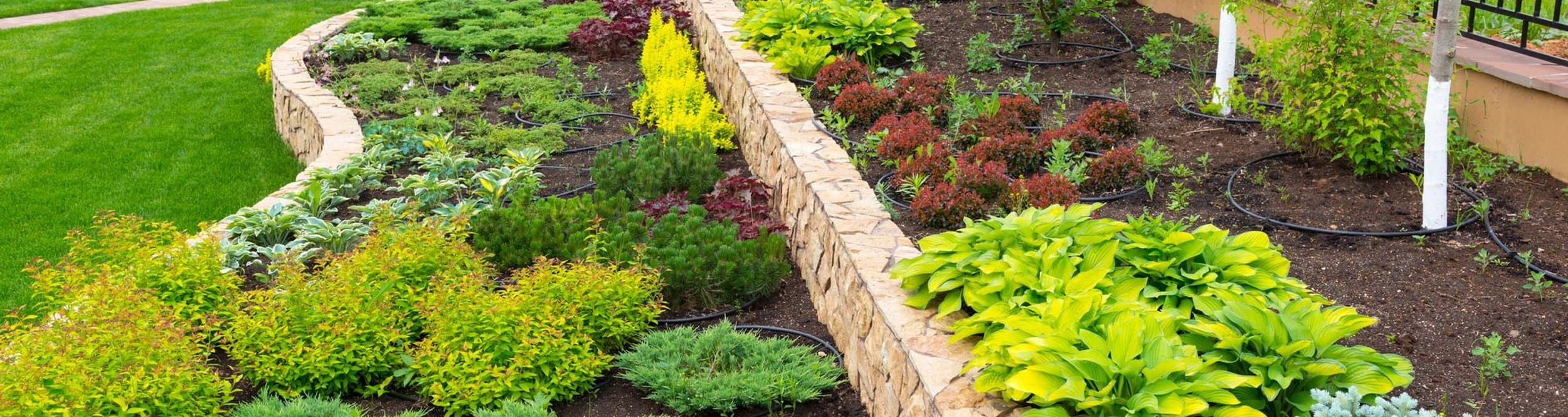
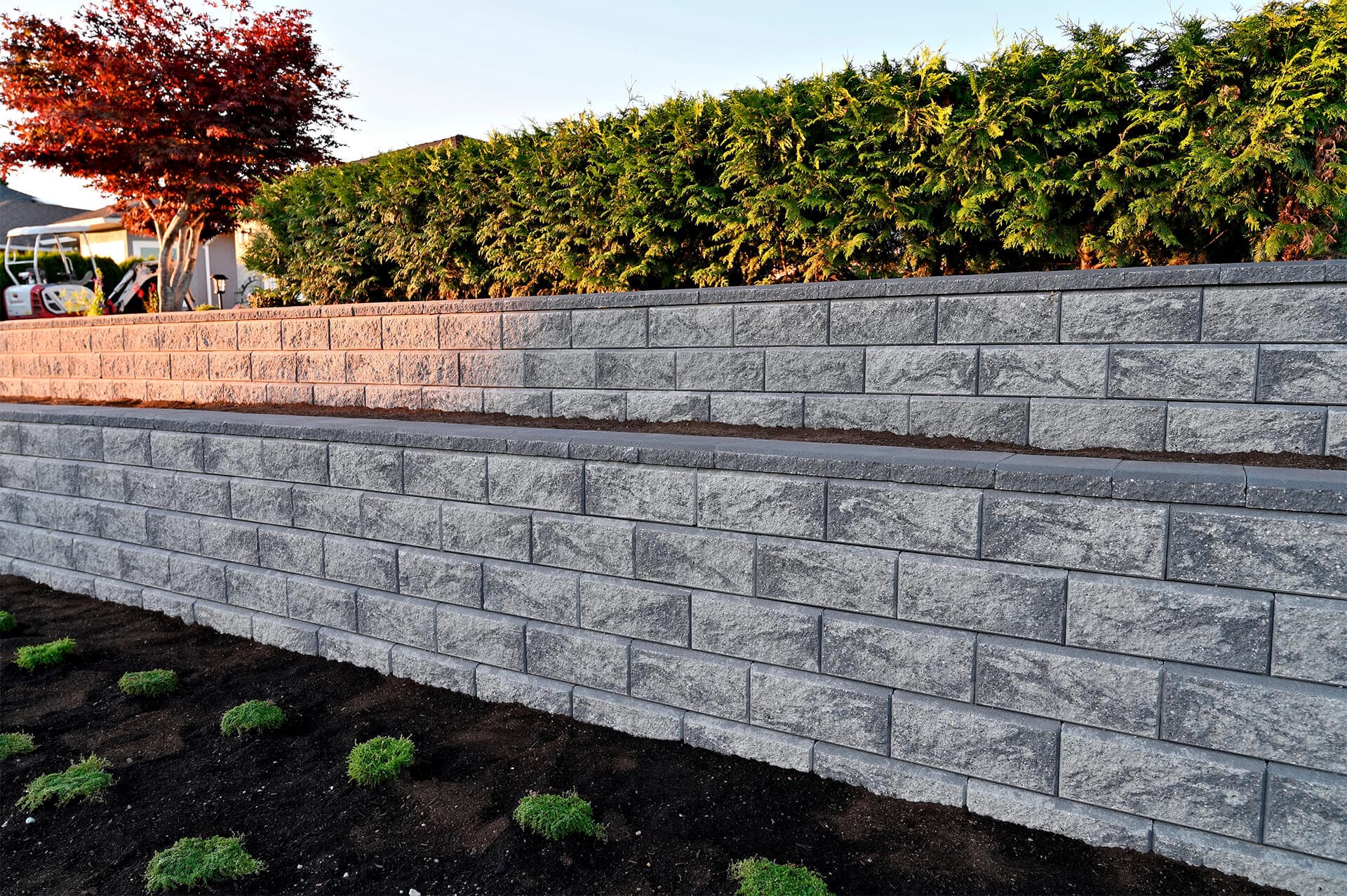
Shade lots want a low stone or block edge to hold a bed, not a cut into the hill under the firs. We hand-dig when the machine would skin roots. Drainage still goes in. Leaf litter will clog a weep that sits at the surface, so the outlet is something we can find again.
Timber walls in permanent shade rot faster. We say that and we steer you to block or rock if the wall is meant to last.
The ground in Brier
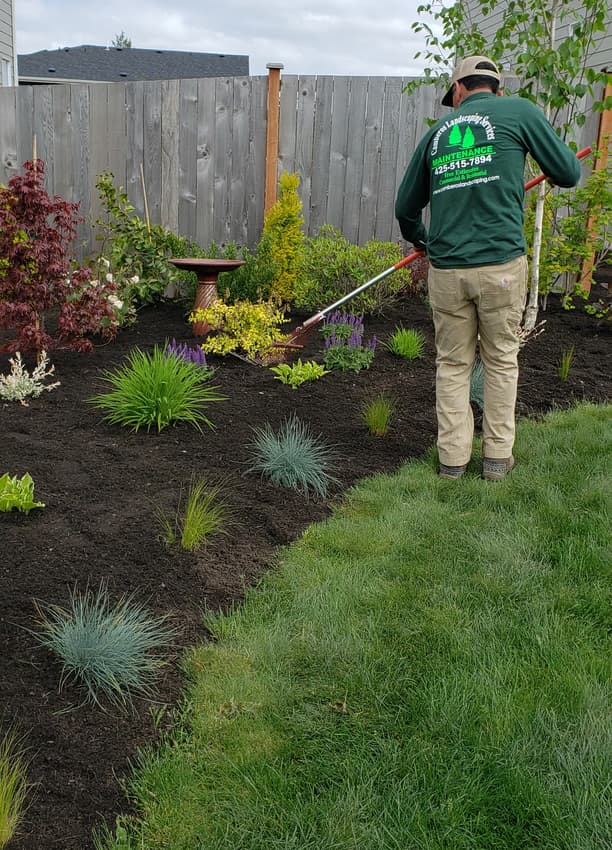
Most of the yards we walk in Brier have been under evergreens for decades. Roots sit high, the lawn is thin where the shade is deepest, and the beds along the fence line are already trying to become forest again — ferns and salal move in on their own. That is a better clue than a catalog. Fighting those beds with a sun-loving flower border means weeding forever.
Clay and humidity show up as moss in the turf and as slippery film on patios that never quite dry. Aeration and a real dethatch help the lawn, but only if we also lift the canopy enough for light to reach the grass. Tree work here is pruning for structure and clearance, not topping. Privacy matters on these lots, so we thin, we do not scalp.
How we do the work
A retaining wall is a structure. The part you see is the block, the boulder, or the timber. The part that keeps it standing is the base, the batter or the geogrid, and the drain rock behind it. We do not stack block on the sod and call it a wall.
Height decides everything. A low garden wall and a wall holding a drive are not the same detail, the same permit, or the same price. We measure the retained dirt, not the face you wish it were.
What we look at first
- Retained height, at the tallest point
- What is above the wall: a lawn, a drive, a house
- Water coming down the slope
- Access for block or for boulders
The base
Compacted rock, buried enough that the first course is not sitting in the organic layer. A wall is not a stack. If the base is soft, we dig out and replace it. There is no fabric or foam that fixes a bad base.
Block, rock, or timber
Engineered block is predictable and what we use when the height or the permit wants an engineered system. Boulders fit the foothills and the older yards. Timber is a short-life choice in the wet, and we will say how many years you are buying.
Drainage is part of the wall
Rock behind the face, a pipe at the heel, and an outlet you can see. Weep holes alone, stuffed with the native clay, are not a drain. This is the step that gets skipped on walls that lean.
More from this crew
- Retaining walls across Snohomish County
- Rock walls in Brier
- French drain installation in Brier
- Hardscaping in Brier
- Patio installation in Brier
- Retaining walls in Lynnwood
- Retaining walls in Mountlake Terrace
- Retaining walls in Edmonds
Sources for the climate and the water
- USDA plant hardiness map for choosing plants that can take a Snohomish County winter.
- EPA WaterSense on watering less once a lawn or a new planting is established.
- EPA Soak Up the Rain on keeping roof and yard water from becoming someone else’s problem.