Mountlake Terrace is mid-century houses on city lots, with newer buildings near the transit line. The slopes are gentle, the soils are compacted, and the yards were not designed for the amount of roof water a remodels-worth of downspouts can dump. In a tight city yard, boulders may not fit through the gate. We measure before we specify rock. Block is not a consolation prize if it is the stone we can build correctly.
Snohomish County · ZIP 98043 · 2020 population 21,272
A short rockery where block would also work
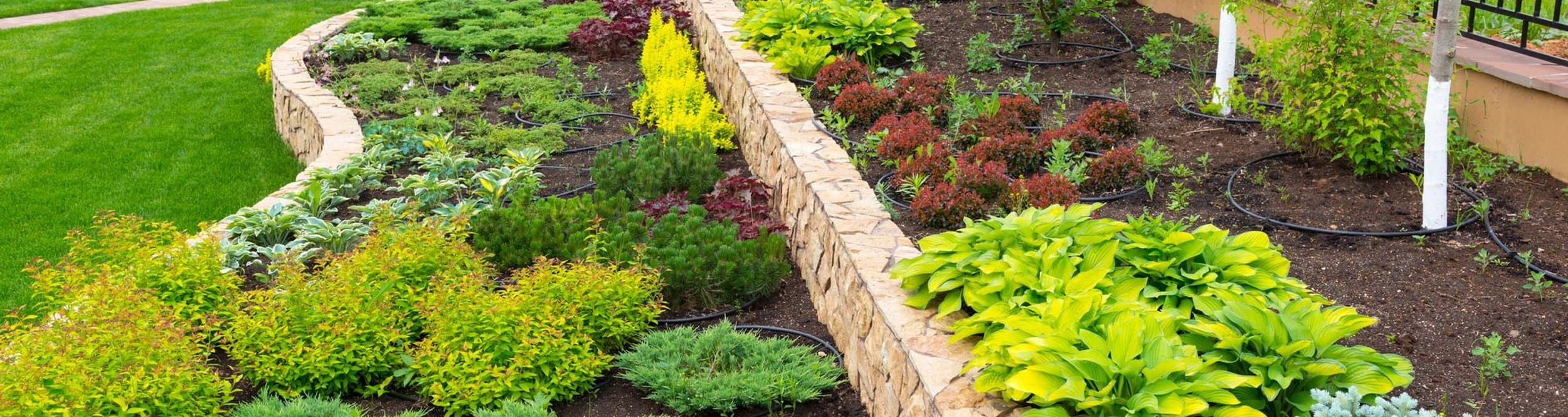
Where access allows, a low rockery is a good face for an older house and a small grade change. The base and the drain are the same discipline as a tall wall, just shorter. We do not dump a row of six-inch rock and call it a rockery.
Tie-ins to an old concrete step get thought through. A rock wall butted against a sinking stoop inherits the stoop’s problem.
The ground in Mountlake Terrace
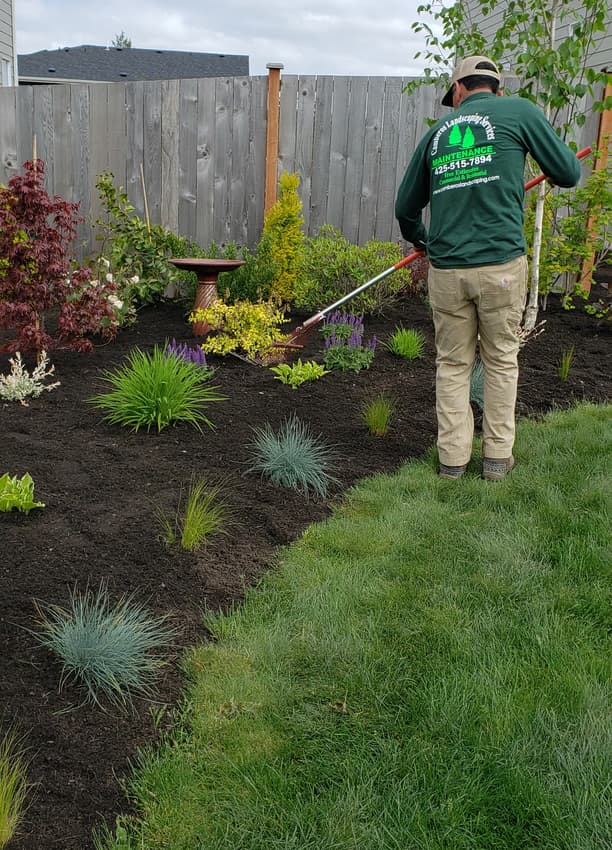
Lots are modest. A patio, a small lawn, a side yard that has become a moss strip, and a fence that is older than the owners. That is the usual visit. The soil has been walked on for sixty years. Aeration and dethatching change the lawn more than a bag of seed thrown on top.
Where the lot tips, it tips a little, and a low wall or a re-graded swale is enough. We are not cutting roads into a mountain. Pavers get people off the mud by the back door, and a pressure wash takes the black film off a walk that has not seen sun all winter. Plantings should stay in scale with the house. A hedgerow that needs a lift every year is the wrong tree for a forty-foot lot.
How we do the work
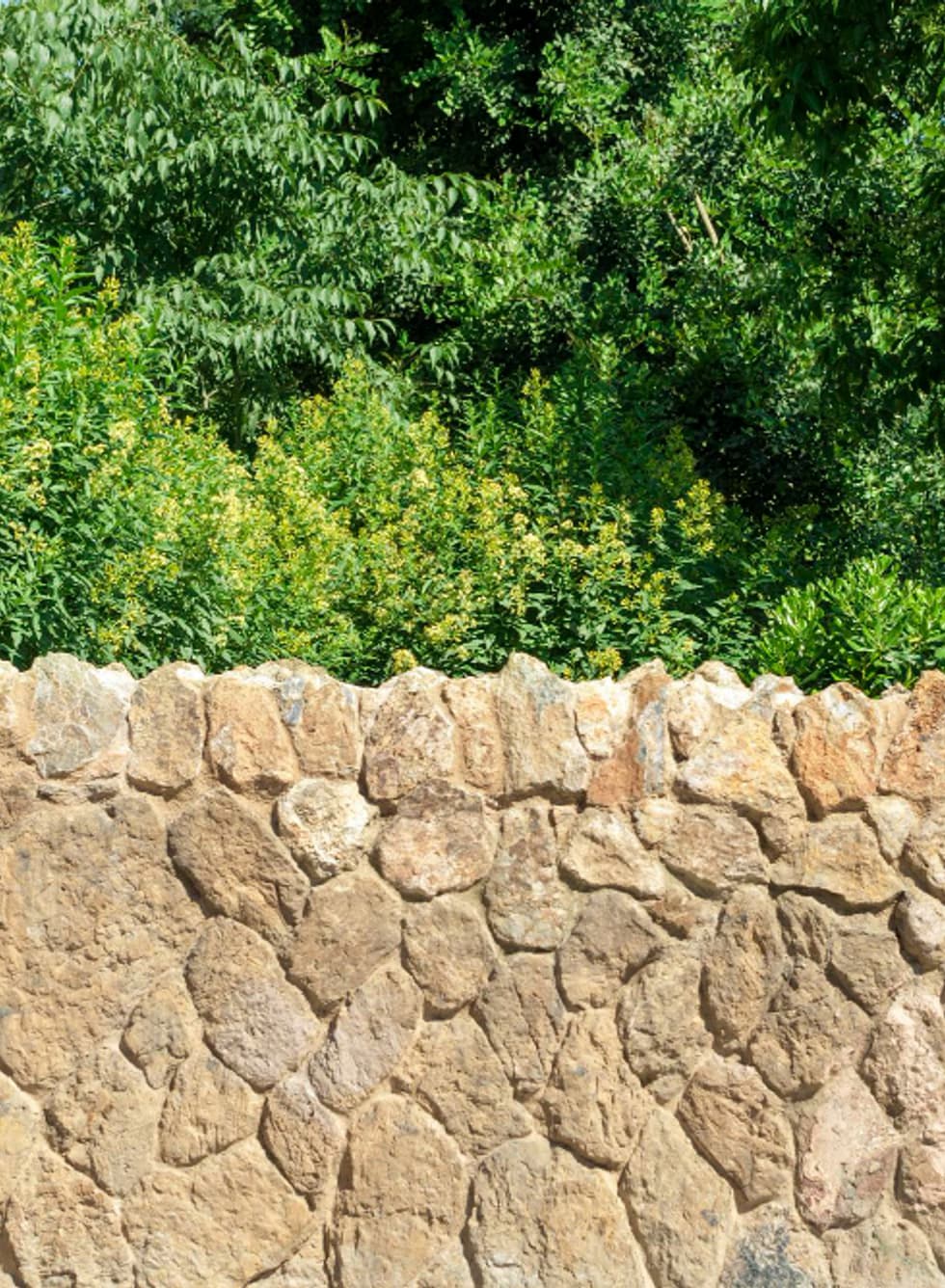
A rock wall is dry-stacked or lightly set, with the weight in the stone and the drainage in the voids. It is not a veneer glued to a failing timber wall. We use rock big enough for the height, with a face that leans back into the hill, and smaller rock locked behind so the soil does not pipe through.
Good rock work looks heavier at the bottom. If every stone is the same patio-sized block, it is not a wall, it is a stack. We source local stone and we will tell you when the access cannot take the boulder the job wants.
What we look at first
- Height and whether it is structural or a garden edge
- Machine access for real boulders
- The soil behind: clay that needs a drain, or rock that already sheds
- An existing wall we are tying into
The base course
The biggest stones, buried, on compacted rock or competent ground. If the first course is the one you can see sitting on the grass, the wall is already failing. You should see the second course at grade, not the bottom of the first.
Dry stack versus mortared
Most of our rock walls are dry, so water can leave and the wall can move a little without cracking a joint. Mortar is for a low, formal edge that is not holding a wet hill. We do not mortar a drainage problem shut.
What it will not do
A rock wall will not hold an engineered height it was not built for, and it will not stop a landslide. Past a certain height we involve an engineer or we change the grade so the wall can be shorter. That conversation happens before the stone is ordered.
More from this crew
- Rock walls across Snohomish County
- Retaining walls in Mountlake Terrace
- Gravel installation in Mountlake Terrace
- Landscaping in Mountlake Terrace
- Hardscaping in Mountlake Terrace
- Rock walls in Lynnwood
- Rock walls in Edmonds
- Rock walls in Brier
Sources for the climate and the water
- USDA plant hardiness map for choosing plants that can take a Snohomish County winter.
- EPA WaterSense on watering less once a lawn or a new planting is established.
- EPA Soak Up the Rain on keeping roof and yard water from becoming someone else’s problem.