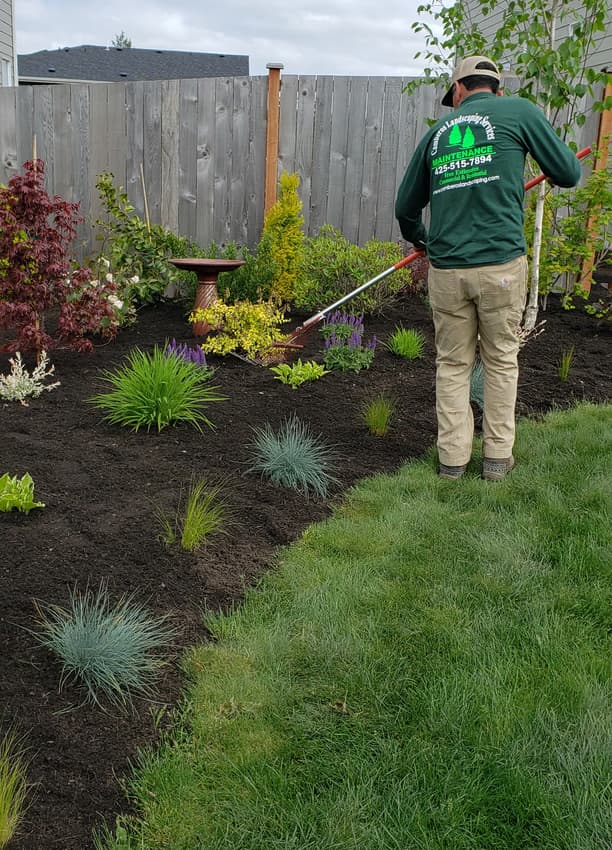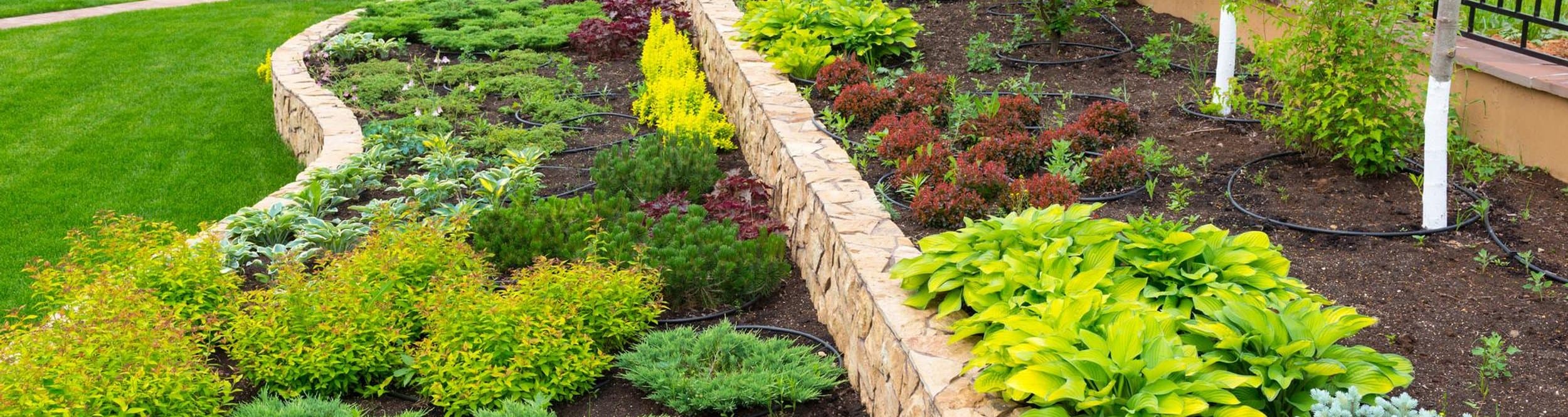

Brier is a quiet grid of larger lots under mature trees. The canopy keeps the soil cool and damp, clay holds the rain, and moss will take a lawn that only sees sun in patches. Shade, not neglect, is usually why the grass looks tired. Landscaping a wooded lot by removing every fern and laying sod is a fight you will lose. We edit. We do not clear for the sake of a suburban before-and-after.
Snohomish County · ZIP 98036 · 2020 population 6,642
Work with the canopy
Paths, a sitting place, pruning for light and roof clearance, bark where the lawn has failed, and shrubs that belong in shade. The lawn, if it stays, is the size the light allows. Irrigation is modest. Shade plants in this climate often fail from too much water, not too little.
Privacy is kept. The design should feel like the trees were invited.
The ground in Brier
Most of the yards we walk in Brier have been under evergreens for decades. Roots sit high, the lawn is thin where the shade is deepest, and the beds along the fence line are already trying to become forest again — ferns and salal move in on their own. That is a better clue than a catalog. Fighting those beds with a sun-loving flower border means weeding forever.
Clay and humidity show up as moss in the turf and as slippery film on patios that never quite dry. Aeration and a real dethatch help the lawn, but only if we also lift the canopy enough for light to reach the grass. Tree work here is pruning for structure and clearance, not topping. Privacy matters on these lots, so we thin, we do not scalp.
How we do the work
Landscaping, the way we mean it, is building the yard: dirt moved, water handled, plants in the ground, bark and edges finished. It is not a mow, and it is not only a patio. When a project is really just a patio or just a drain, we call it that and we price that.
We plant what can live through a wet winter and a dry August without a full-time gardener. The sequence is always the same. Get the water right, set the hard surfaces, then plant. Plants first is how they get buried or stood in a puddle.
What we look at first
- What you want to be able to do in the yard
- The thing that is failing now: water, a slope, a dead lawn, an empty bed
- Trees that stay
- A budget, so we phase instead of half-building everything
Plants we will not specify
Anything that wants a dry summer and no rain in winter, unless you understand it is a gamble. We plant for zone and for the wet. A plant you loved in California can be attempted in a pot. It should not be the backbone of the yard.
Order of work
Demo and haul, grade and drain, hardscape, soil, plants, bark, irrigation last or with the plants. We do not mulch a bed we are about to trench. You should see the yard get rougher before it gets finished. That is the sequence, not a delay.
Phasing
If the whole yard does not fit the budget, we finish a piece that works: the drainage and the door area, for example. An even layer of unfinished everything looks like we left. A finished half looks like a plan. We prefer the second.
More from this crew
- Landscaping across Snohomish County
- Landscape design in Brier
- Yard cleanup in Brier
- Paver installation in Brier
- French drain installation in Brier
- Landscaping in Lynnwood
- Landscaping in Mountlake Terrace
- Landscaping in Edmonds
Sources for the climate and the water
- USDA plant hardiness map for choosing plants that can take a Snohomish County winter.
- EPA WaterSense on watering less once a lawn or a new planting is established.
- EPA Soak Up the Rain on keeping roof and yard water from becoming someone else’s problem.