Mill Creek was laid out as a planned city: curving streets, townhome slopes, golf-course edges, and lawns that were meant to look trimmed from the day the house sold. The soils are the soils of a graded subdivision, and the rain is the same county rain that finds every low corner. Builder sod is often a single variety on tight soil. It thins in year three. Overseeding without loosening the ground gives you a green sprinkle and the same soil.
Snohomish County · ZIP 98012 · 2020 population 20,799
Thickening a builder lawn
We core or slice, then seed, then keep the irrigation off a daily sprinkle. Daily light water is why these lawns are shallow-rooted. After seeding we want the surface damp for two weeks, then longer gaps so roots chase moisture.
Fall is the season. Spring seed in a neighborhood with irrigation can work if we are early, before the summer schedule bakes the seedlings. We do not seed in July because the clock says the lawn looks tired.
The ground in Mill Creek
The expectation here is a clean edge. Lawns get mowed on a schedule, aerated before they mat down, and fertilized lightly enough that we are not just feeding the moss. Townhome and hillside lots need low walls and tight paver work more than they need a big landscape renovation. Bark beds are there to keep the mulch line straight and the weeds out of the front that faces the street.
We still find the same drainage mistakes as everywhere else: downspouts tied to nothing, and patios pitched back at the siding. The difference is that a small failure shows, because the rest of the street is kept. Native shrubs fit the greenbelts behind the houses. A tropical plant list does not survive the first wet winter, and it will not match the neighborhood even if it did.
How we do the work
Seed fails here for three boring reasons: it lands on moss, it lands in the dry week of July, or it is a variety that wants a Midwest summer. We use mixes that can take cool, wet winters and our weak sun. The ground is opened first, by dethatching or cores, or the seed is just decoration.
Hydroseed makes sense on a bare area big enough to justify the tank, especially a cleared bench or a new grade. A small backyard is hand seeded or slit seeded. We say which one when we see the square footage, not from the truck.
What we look at first
- Bare soil versus a mat the seed cannot touch
- Sun hours, because no mix grows under a solid canopy
- How the water leaves the area
- Whether hydroseed or a slit seeder fits the gate and the size
Water for the first two weeks
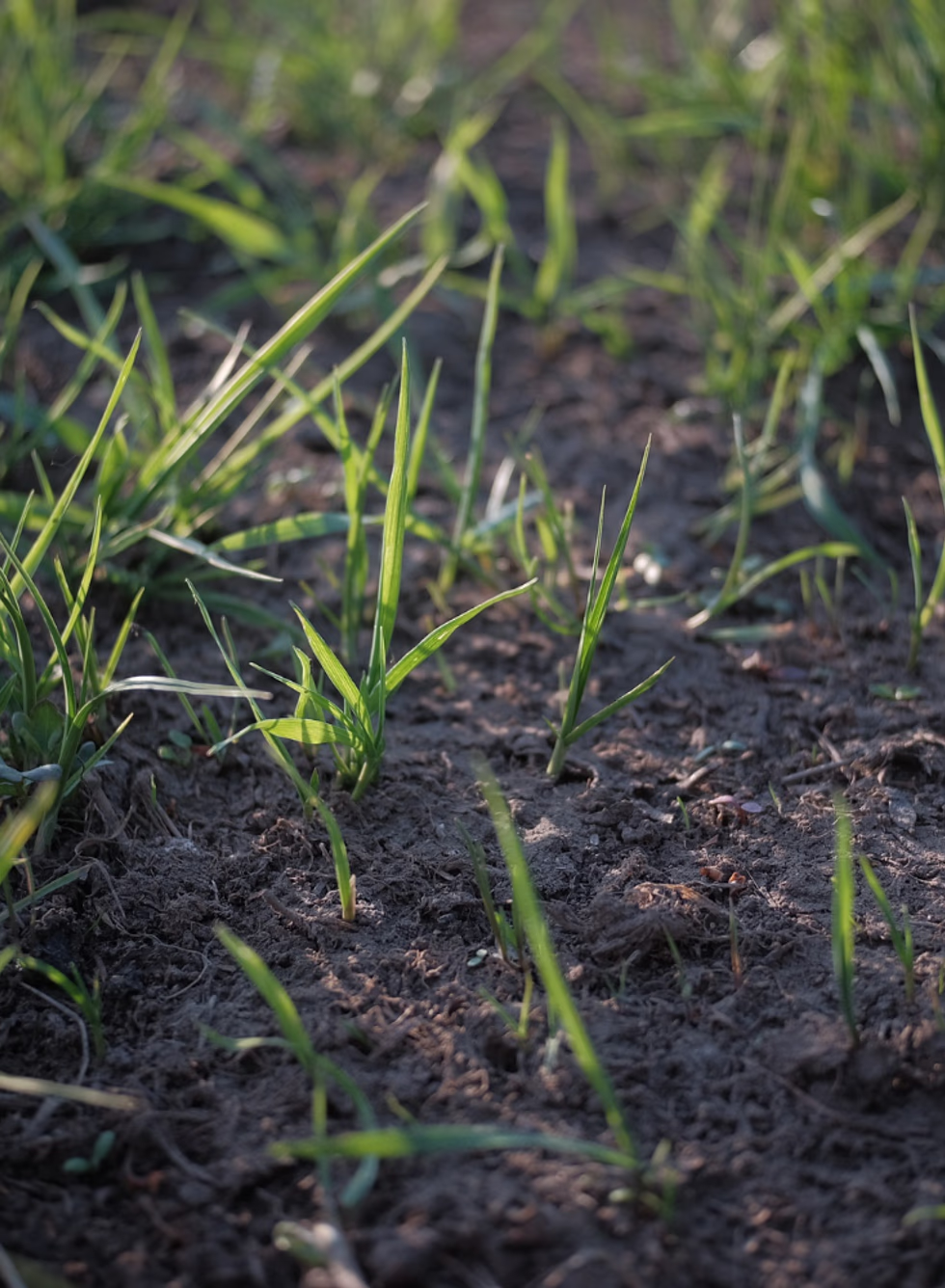
Rain usually does it in September. If it does not, the surface needs to stay damp, not flooded. Once the grass is up, we stretch the watering out. A seedling that is misted forever never roots.
Hydroseed, plainly
A slurry of seed, mulch, and tackifier, sprayed on bare soil. It holds on gentle grades better than dry seed. It still fails on a vertical bank, on moss, and on ground that is underwater. We look at those before we book the tank.
When to mow new grass
At about three inches, with a sharp blade, and not shorter than two. The first mows are slow. Turning the mower on a dime on day ten pulls the seedlings out in a clump.
More from this crew
- Lawn seeding across Snohomish County
- Lawn aeration in Mill Creek
- Sod installation in Mill Creek
- Lawn dethatching in Mill Creek
- Lawn fertilization in Mill Creek
- Lawn seeding in Bothell
- Lawn seeding in Lynnwood
- Lawn seeding in Everett
Sources for the climate and the water
- USDA plant hardiness map for choosing plants that can take a Snohomish County winter.
- EPA WaterSense on watering less once a lawn or a new planting is established.
- EPA Soak Up the Rain on keeping roof and yard water from becoming someone else’s problem.