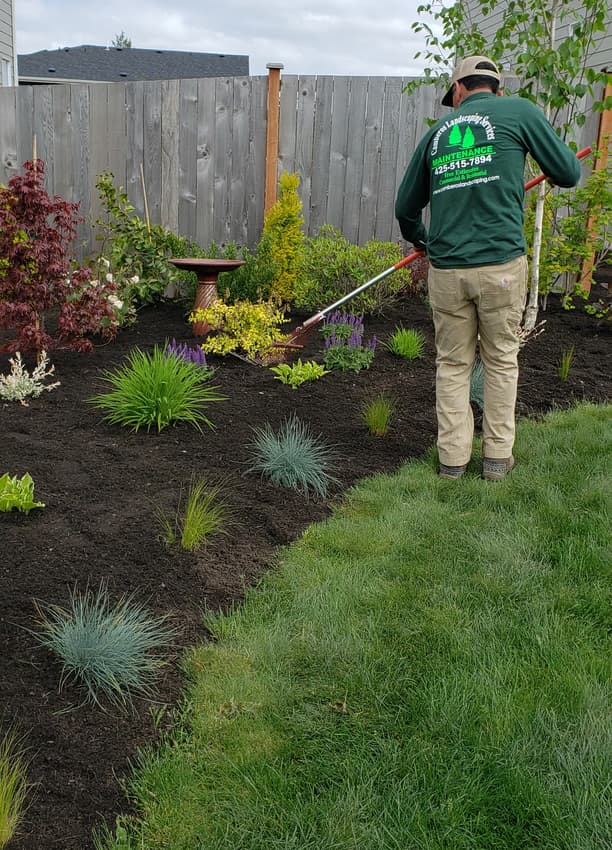

Mill Creek was laid out as a planned city: curving streets, townhome slopes, golf-course edges, and lawns that were meant to look trimmed from the day the house sold. The soils are the soils of a graded subdivision, and the rain is the same county rain that finds every low corner. A subdivision lawn can look mowed and still be a half-inch of green over a mat. You find out when it browns in a dry week and does not recover.
Snohomish County · ZIP 98012 · 2020 population 20,799
The lawn that looks even and is dead underneath
Irrigation on a short timer, every day, grows thatch. We would rather water deeper and less often, but first the mat has to come off so water reaches soil. We power-rake, haul, and then show you the irrigation schedule that grew the problem.
These lawns are small enough that the work is a morning, and visible enough that we blow the walks and the street before we leave. Seed goes down the same day if it is fall or early spring. Midsummer seed on a thatched-and-baked lawn is a redo.
The ground in Mill Creek
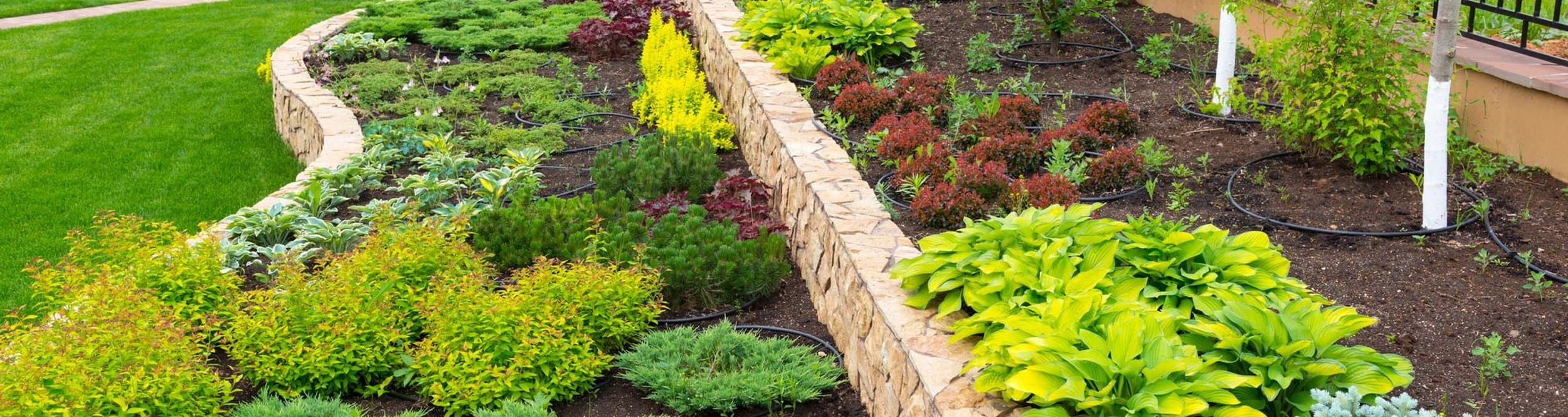
The expectation here is a clean edge. Lawns get mowed on a schedule, aerated before they mat down, and fertilized lightly enough that we are not just feeding the moss. Townhome and hillside lots need low walls and tight paver work more than they need a big landscape renovation. Bark beds are there to keep the mulch line straight and the weeds out of the front that faces the street.
We still find the same drainage mistakes as everywhere else: downspouts tied to nothing, and patios pitched back at the siding. The difference is that a small failure shows, because the rest of the street is kept. Native shrubs fit the greenbelts behind the houses. A tropical plant list does not survive the first wet winter, and it will not match the neighborhood even if it did.
How we do the work
Thatch here is usually moss plus a layer of dead stems, not the classic Midwest straw mat. A power rake set too deep tears out the live grass and leaves a scar. We set the blades to lift the mat and stop when we are in soil.
The debris has to leave the property. A thatch layer raked into the bed or left in windrows just moves the problem. We haul it. If the lawn underneath is mostly dirt and shade, dethatching is the start of a different plan, not a greener lawn by itself.
What we look at first
- How thick the moss mat is
- Whether live grass is under it or the mat is the whole lawn
- Irrigation and mowing height that are growing the thatch back
- A place to stage the trailer so we are not blocking a tight drive
How deep we go
Shallow enough to save the crowns of the grass. If the lawn is thin, a second light pass beats one aggressive pass that pulls the plants out by the roots. You should see soil in places and live grass still standing.
Mowing height afterward
Cutting to the dirt is how the mat comes back. We leave the grass taller than a golf collar, especially in shade. Tall enough to shade its own soil, short enough to walk.
Hauling is part of the job
A dethatched lawn produces a surprising pile, wet and heavy. We load and remove it. Spreading it in the beds plants the moss and the weed seed you just paid to lift.
More from this crew
- Lawn dethatching across Snohomish County
- Lawn aeration in Mill Creek
- Lawn seeding in Mill Creek
- Lawn mowing in Mill Creek
- Lawn fertilization in Mill Creek
- Lawn dethatching in Bothell
- Lawn dethatching in Lynnwood
- Lawn dethatching in Everett
Sources for the climate and the water
- USDA plant hardiness map for choosing plants that can take a Snohomish County winter.
- EPA WaterSense on watering less once a lawn or a new planting is established.
- EPA Soak Up the Rain on keeping roof and yard water from becoming someone else’s problem.