Mill Creek was laid out as a planned city: curving streets, townhome slopes, golf-course edges, and lawns that were meant to look trimmed from the day the house sold. The soils are the soils of a graded subdivision, and the rain is the same county rain that finds every low corner. These lawns were laid on soil that had been graded and driven on. They look even, and they are tight underneath. Annual cores keep them from turning into a moss mat.
Snohomish County · ZIP 98012 · 2020 population 20,799
Subdivision lawns that were rolled out on grade
A planned-neighborhood lawn usually has irrigation, a clean edge, and soil that was never loosened after the builders left. The second or third summer it thins in the traffic lines. We core those lines and the compacted parking strip beside the drive, not just a ceremonial pass down the middle.
Because the street is kept, people notice a rut. We pick a day when the irrigation has been off long enough that we are not coring soup, and we blow plugs off the sidewalk the same day. The lawn can look rough for a week. That is the work, not a mistake.
The ground in Mill Creek
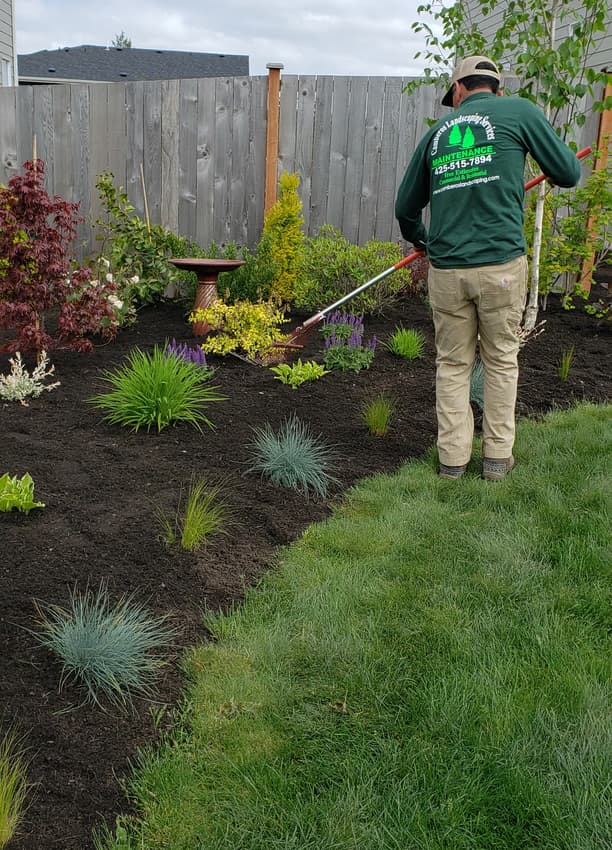
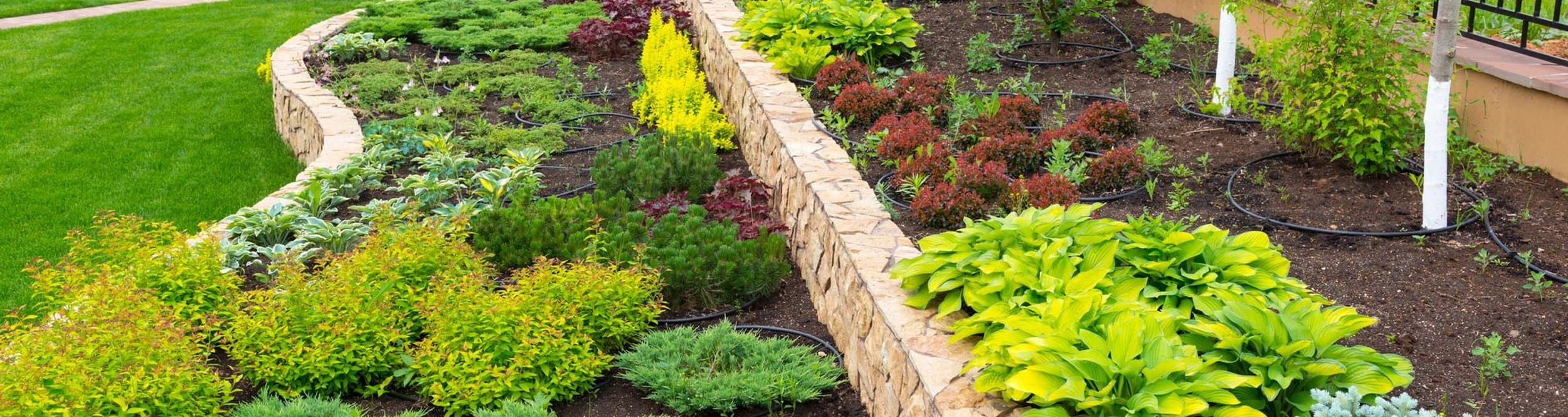
The expectation here is a clean edge. Lawns get mowed on a schedule, aerated before they mat down, and fertilized lightly enough that we are not just feeding the moss. Townhome and hillside lots need low walls and tight paver work more than they need a big landscape renovation. Bark beds are there to keep the mulch line straight and the weeds out of the front that faces the street.
We still find the same drainage mistakes as everywhere else: downspouts tied to nothing, and patios pitched back at the siding. The difference is that a small failure shows, because the rest of the street is kept. Native shrubs fit the greenbelts behind the houses. A tropical plant list does not survive the first wet winter, and it will not match the neighborhood even if it did.
How we do the work
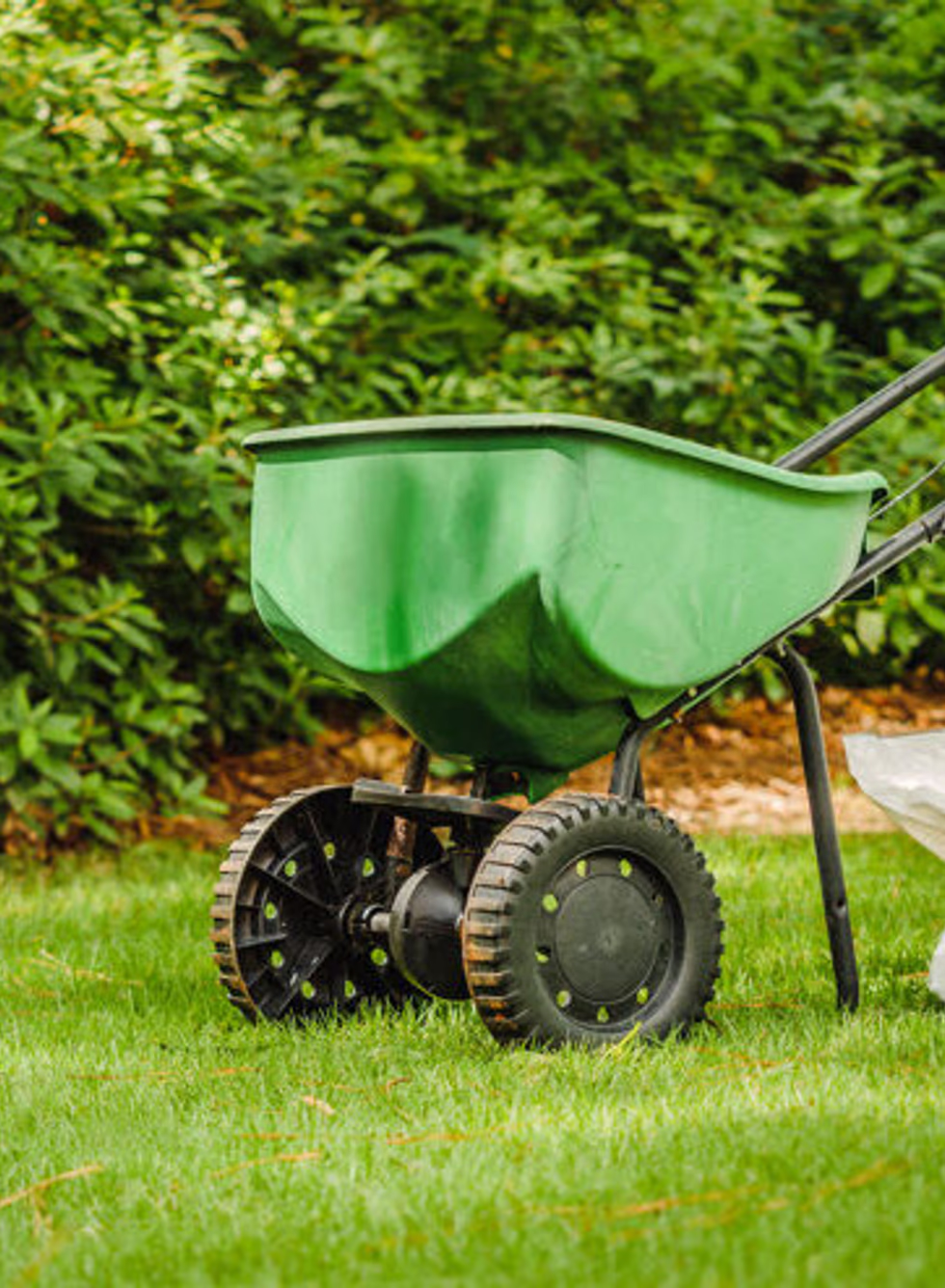
We pull cores, we do not poke holes. A spike aerator squeezes the soil tighter around each puncture, which is the opposite of what a Western Washington lawn needs. Cores are about three inches, left on the grass to break apart in the rain. The visit is timed for soil that is moist enough to take the tine and dry enough that the machine does not leave ruts.
If the thatch is thicker than a finger, aerating through it only decorates the moss. Those lawns get dethatched first. Lime is a separate decision. A lot of local soil is sour, and we spread lime when the lawn shows it, not because a calendar said March.
What we look at first
- Thatch depth before we core
- Whether the ground ruts under foot
- Shade from trees that will keep the lawn thin no matter how often we aerate
- Downspouts dumping onto the same corner every winter
What we leave behind
Plugs on the grass for a few days, then they fall apart. You can mow when they crumble. Watering is only needed if we seeded and the week turned dry, which is rare here. Stay off the soft spots until the footprints disappear.
What aeration will not fix
It will not move a downspout, kill a cedar’s shade, or drain a dish in the grade. If the lawn fails in the same circle every winter, we look at water and light before we sell you a third visit.
Seed in the holes
Aeration without seed is enough when the lawn is thick and you are only relieving compaction. When you can see soil between the plants, we put seed in the openings the same day. Seed on an unaerated moss mat is bird food.
More from this crew
- Lawn aeration across Snohomish County
- Lawn dethatching in Mill Creek
- Lawn seeding in Mill Creek
- Lawn fertilization in Mill Creek
- Lawn mowing in Mill Creek
- Lawn aeration in Bothell
- Lawn aeration in Lynnwood
- Lawn aeration in Everett
Sources for the climate and the water
- USDA plant hardiness map for choosing plants that can take a Snohomish County winter.
- EPA WaterSense on watering less once a lawn or a new planting is established.
- EPA Soak Up the Rain on keeping roof and yard water from becoming someone else’s problem.