Mill Creek was laid out as a planned city: curving streets, townhome slopes, golf-course edges, and lawns that were meant to look trimmed from the day the house sold. The soils are the soils of a graded subdivision, and the rain is the same county rain that finds every low corner. These yards want an even surface and a sharp edge. They also hide compacted grade under the old sod. We fix that or the new rolls mirror the old thin spots.
Snohomish County · ZIP 98012 · 2020 population 20,799
A clean lawn on a clean grade
We strip, loosen, and regrade minor swales that were tipping water at the siding. Then we lay. Irrigation, if it is there, gets a two-week establishment schedule and then a normal one. Daily ten-minute runtimes are how the new lawn stays shallow.
Edges against pavers and beds are cut after the sod has settled a week, so we are not locking in a wavy line. The street sees this lawn. We leave it swept.
The ground in Mill Creek
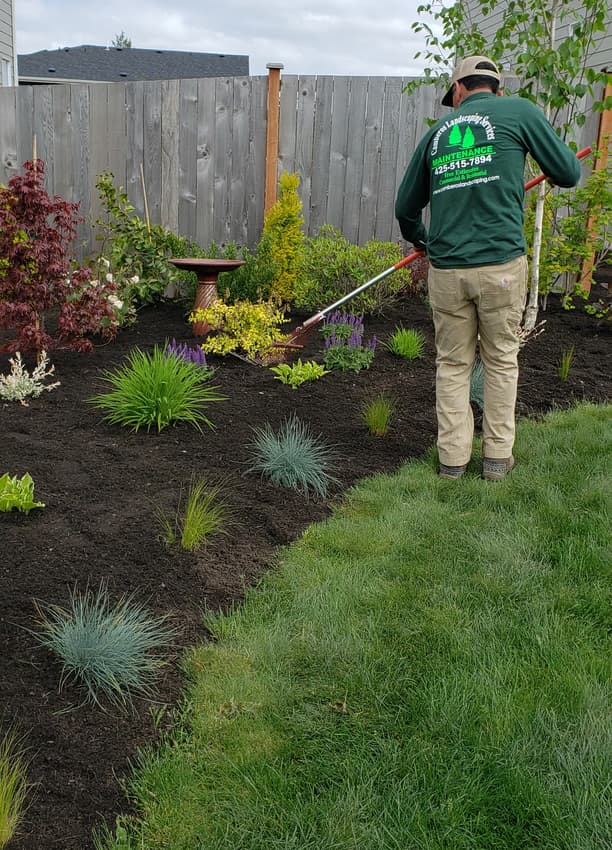
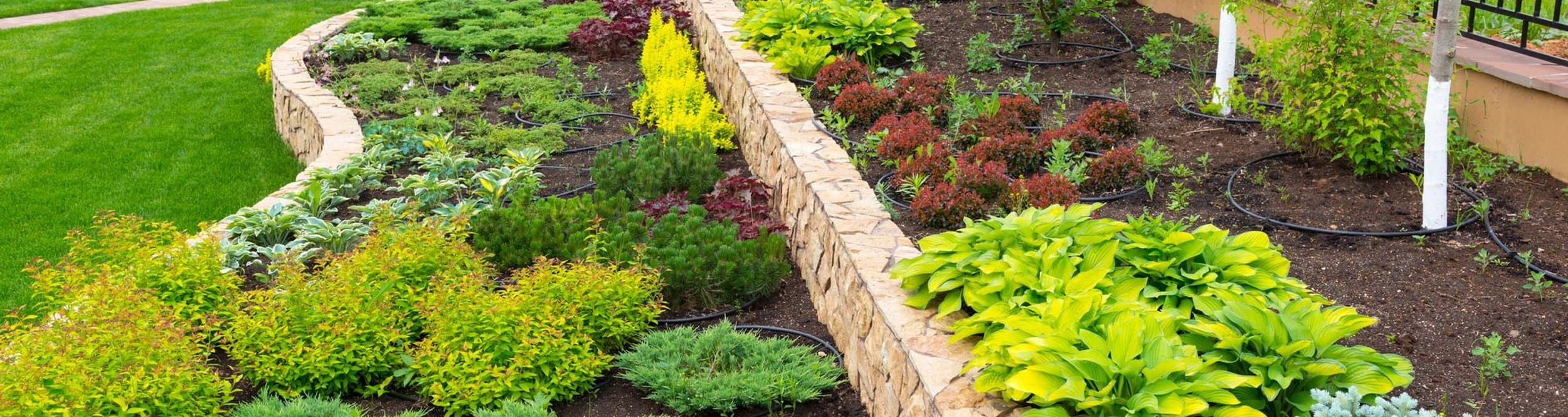
The expectation here is a clean edge. Lawns get mowed on a schedule, aerated before they mat down, and fertilized lightly enough that we are not just feeding the moss. Townhome and hillside lots need low walls and tight paver work more than they need a big landscape renovation. Bark beds are there to keep the mulch line straight and the weeds out of the front that faces the street.
We still find the same drainage mistakes as everywhere else: downspouts tied to nothing, and patios pitched back at the siding. The difference is that a small failure shows, because the rest of the street is kept. Native shrubs fit the greenbelts behind the houses. A tropical plant list does not survive the first wet winter, and it will not match the neighborhood even if it did.
How we do the work
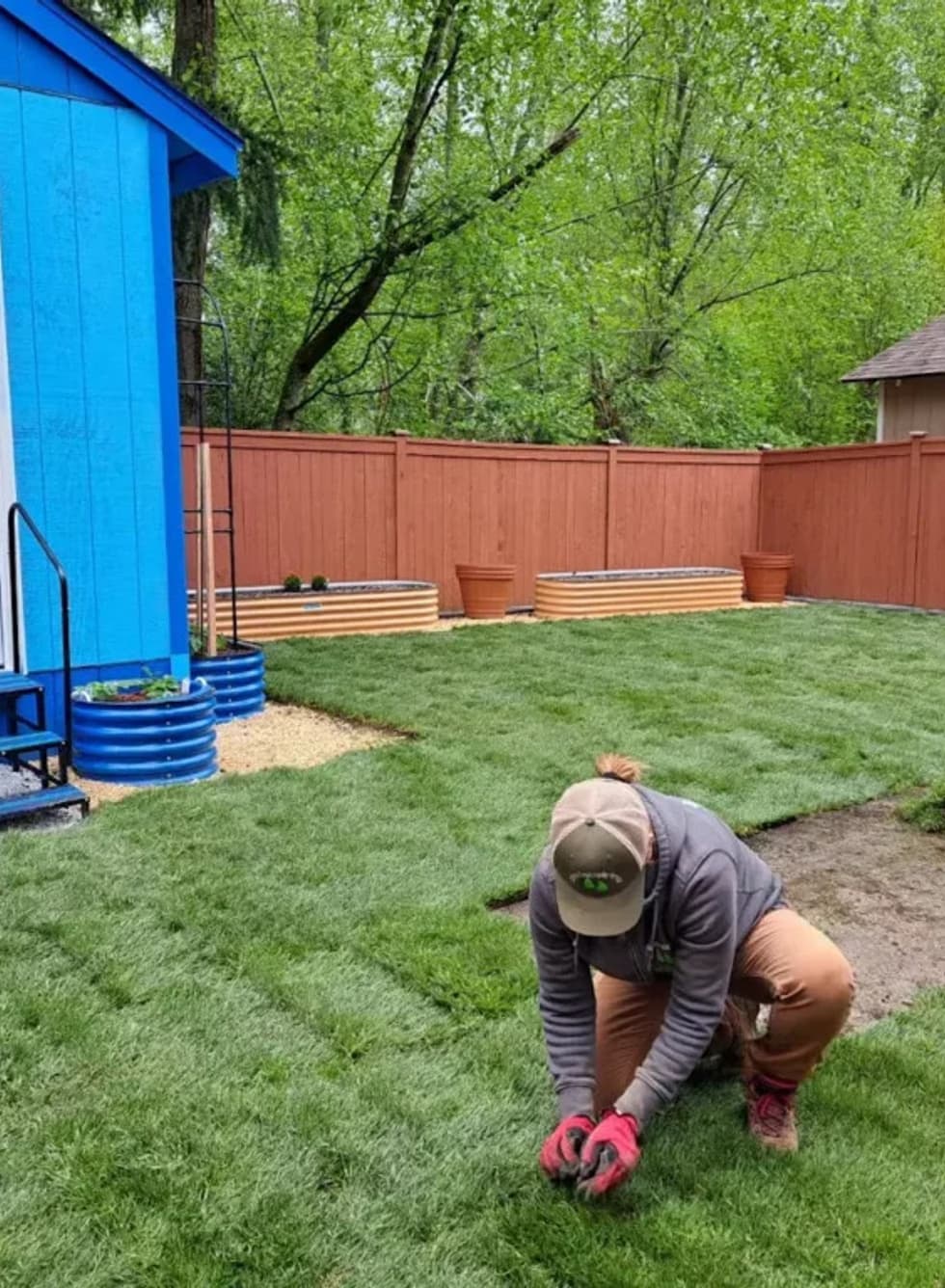
Sod is instant cover and a slow root. It dies when it is laid on compacted clay, on a moss mat, or in a low spot that stays wet. We strip or till, we fix the grade so water leaves, and we lay tight seams on soil that has been loosened a few inches down.
The first two weeks are water and no traffic. After that we want roots chasing soil, which means less frequent watering. A sod lawn that is sprinkled every day forever is a sod lawn that peels up in August.
We lay what arrives that day. Sod that sits on the pallet through a warm afternoon cooks in the roll, and we will not install it.
What we look at first
- What is under the old lawn
- Grade and where the roof water goes
- Access for the pallets
- Sun, because sod in deep shade is an expensive way to grow moss
When seed is the better buy
Large areas, deep shade, and tight budgets that would force us to skip prep. Seed costs less and roots deeper if you can wait a month. Sod is for the yard you need to use, on soil we were allowed to prepare.
Seams and edges
Tight, staggered, no overlap. Edges tucked against beds so the mower does not scalpel a flap. We cut curves with a knife, not by stretching a roll around a corner until it tears.
What is under the roll
A few inches of loosened soil and compost, graded to leave the house. Not the old lawn. Not landscape fabric. Not a sand bed that turns into a pan. If we cannot prep, we should not lay sod.
More from this crew
- Sod installation across Snohomish County
- Lawn seeding in Mill Creek
- Lawn aeration in Mill Creek
- Landscaping in Mill Creek
- Lawn fertilization in Mill Creek
- Sod installation in Bothell
- Sod installation in Lynnwood
- Sod installation in Everett
Sources for the climate and the water
- USDA plant hardiness map for choosing plants that can take a Snohomish County winter.
- EPA WaterSense on watering less once a lawn or a new planting is established.
- EPA Soak Up the Rain on keeping roof and yard water from becoming someone else’s problem.