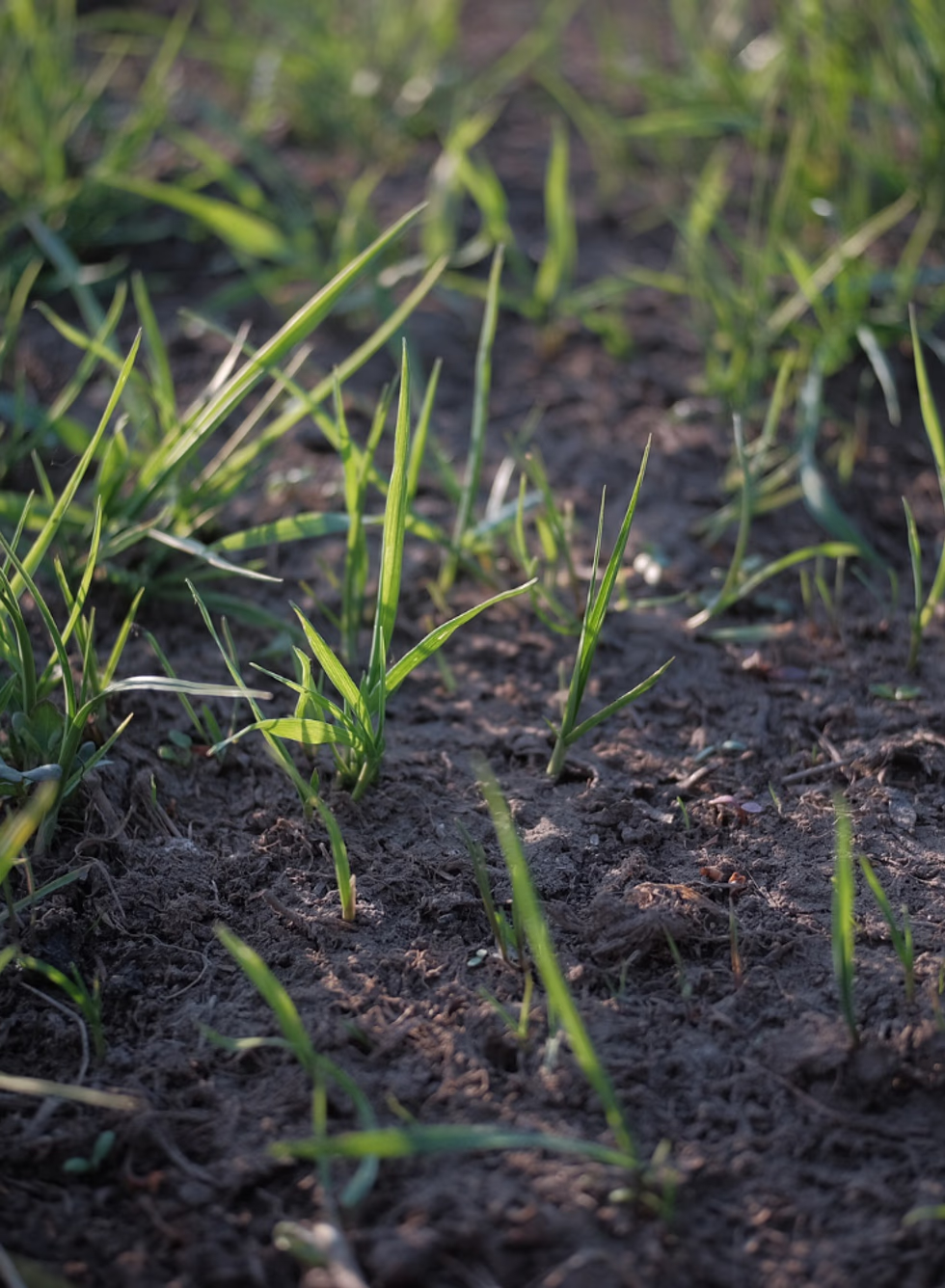
On the Snohomish County side of Bothell the lots sit between newer housing and the Sammamish River trail. Roofs, drives, and the trail corridor move a lot of water. The soils are urban soils: graded, compacted, and quick to grow moss where the sun is weak. The thin spots are usually the path the dog takes and the corner that stays wet. Seed on top of those, without opening the soil, disappears.
Snohomish County · ZIP 98021
Overseeding worn city grass
We slit seed or we seed into cores. Broadcast seed on a hard little lawn blows to the fence. The mix is wear-tolerant rye with fescue, because these yards get walked on. Shade from the neighbor’s fir gets the fescue; the parking-strip sun can take rye.
Keep off it for two weeks if you can. On a small lot that is awkward, so we tell you which strip actually matters. Mow when the new grass reaches about three inches, and do not bag the first cut so short you pull the seedlings.
The ground in Bothell
We work the north side of the city, not a pretend second office. Yards are a mix of older ramblers and newer houses with small planting strips and a patio poured on tight fill. Runoff is the theme. A permeable patio or a short drain does more for the foundation than a wider concrete pad.
People here ask for plantings that feed birds and do not need a sprinkler all summer. That fits. Native beds along a back fence, a bark layer that is actually thick enough to suppress weeds, and a lawn that is aerated instead of constantly reseeded. Pressure washing keeps the walks and the siding from going black under the trees. The trail is a nice neighbor and a weed source. Edges need a clean line or the brush moves in.
How we do the work
Seed fails here for three boring reasons: it lands on moss, it lands in the dry week of July, or it is a variety that wants a Midwest summer. We use mixes that can take cool, wet winters and our weak sun. The ground is opened first, by dethatching or cores, or the seed is just decoration.
Hydroseed makes sense on a bare area big enough to justify the tank, especially a cleared bench or a new grade. A small backyard is hand seeded or slit seeded. We say which one when we see the square footage, not from the truck.
What we look at first
- Bare soil versus a mat the seed cannot touch
- Sun hours, because no mix grows under a solid canopy
- How the water leaves the area
- Whether hydroseed or a slit seeder fits the gate and the size
The mix we actually use
Perennial rye for speed and wear, fine fescues for shade and for the wet. We do not push a bluegrass lawn that wants heat we do not get. The bag is matched to the light on that yard, not to a single recipe for the whole county.
When to mow new grass
At about three inches, with a sharp blade, and not shorter than two. The first mows are slow. Turning the mower on a dime on day ten pulls the seedlings out in a clump.
Water for the first two weeks
Rain usually does it in September. If it does not, the surface needs to stay damp, not flooded. Once the grass is up, we stretch the watering out. A seedling that is misted forever never roots.
More from this crew
- Lawn seeding across Snohomish County
- Lawn aeration in Bothell
- Sod installation in Bothell
- Lawn dethatching in Bothell
- Lawn fertilization in Bothell
- Lawn seeding in Mill Creek
- Lawn seeding in Lynnwood
- Lawn seeding in Brier
Sources for the climate and the water
- USDA plant hardiness map for choosing plants that can take a Snohomish County winter.
- EPA WaterSense on watering less once a lawn or a new planting is established.
- EPA Soak Up the Rain on keeping roof and yard water from becoming someone else’s problem.