The lake is the point of the town, and it is also the drainage problem. Shoreline lots shed water toward the water, banks erode where wakes and winter rain meet a soft edge, and inland yards stay damp because the water table and the clay do not let a storm leave quickly. Clippings and fertilizer dust pushed down the bank are the opposite of maintenance. We mow so the debris stays on the grass.
Snohomish County · ZIP 98258 · 2020 population 34,385
Do not blow the lawn into the lake
The upper lawn is a normal mow, taller in the shade, skipped when it squishes. The bank is not mowed into a slick green slide. If you want that edge kept, we trim it by hand and stop well short of the water.
Damp lake air means the grass stays soft. A dull blade tears it and the lawn looks gray the next day. We keep blades sharp for that reason, not for show.
The ground in Lake Stevens
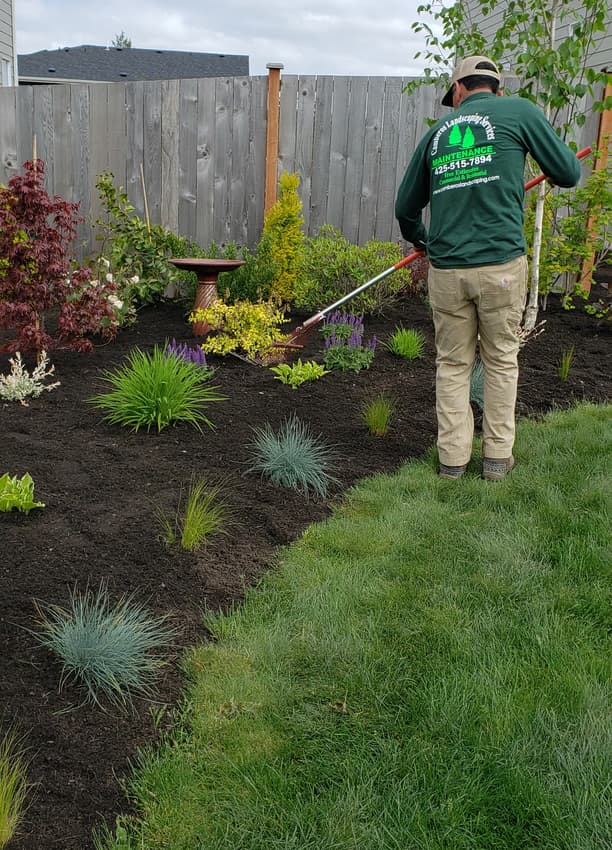
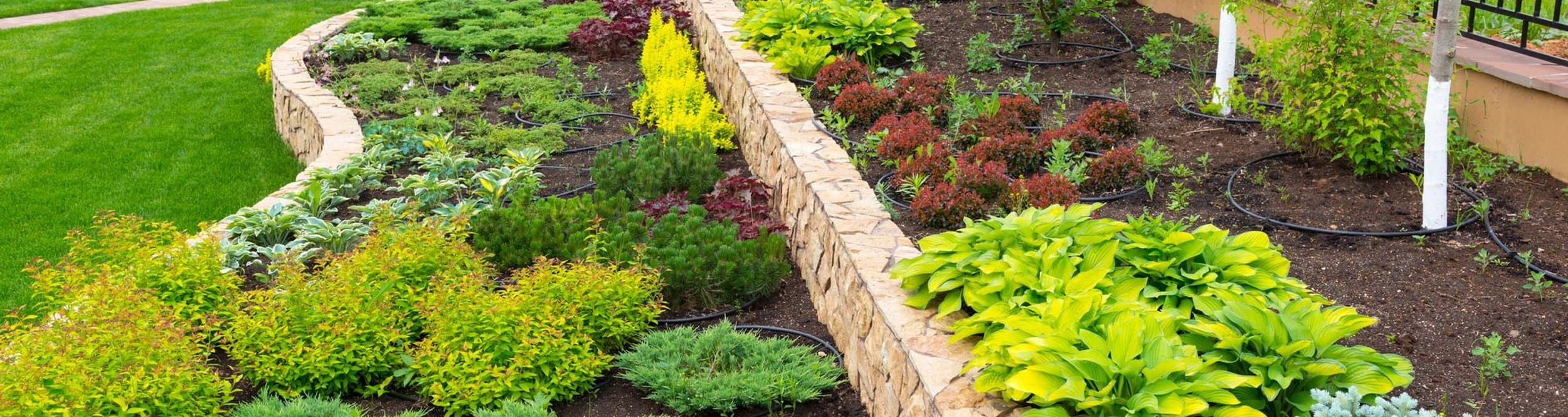
On the water, the work is the bank and the view. A retaining edge, native shoreline plants such as red osier dogwood, and a rain garden or a drain that slows runoff before it hits the lake do more for the property than a strip of sod at the top of an eroding slope. Fertilizer and bare soil washing into the lake are how a nice lawn becomes a neighbor problem.
Off the water, in the newer neighborhoods, the soils were compacted during construction and the lawns were rolled out on top. They look fine in July and sour in February. Aeration, a real topdressing, and getting the downspouts away from the foundation are the unglamorous jobs that keep those yards from turning to moss. Patios here are for the view. We build the base as if it will be wet half the year, because it will.
How we do the work
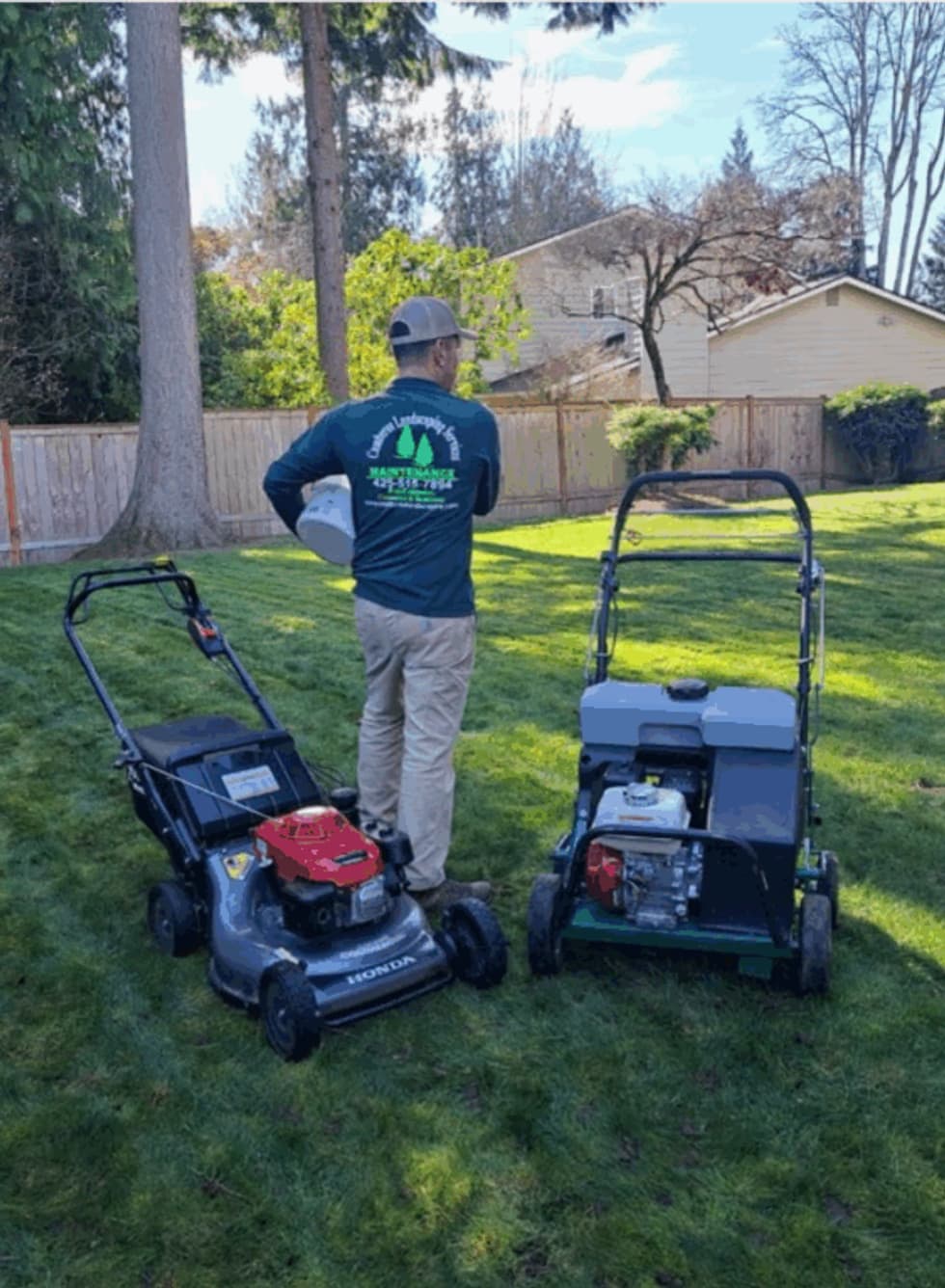
We mow higher than most people expect, especially from October through May, because a short lawn in this climate is a moss invitation. Blades stay sharp. Dull mowing tears wet grass and leaves the gray tips everyone blames on fertilizer.
Clippings stay on the lawn when they are short. They are not thatch. Bags come out when the grass is long and wet and would clump. We do not mow a saturated yard into ruts and call it service. We skip or we reschedule that corner.
Edges are trimmed. Walks are blown. A mow that leaves a windrow on the sidewalk is not finished.
What we look at first
- How soft the ground is that morning
- Obstacles, toys, and the wet spot we should walk around
- Edges that need a trimmer without scalping the tree wells
- Whether the lawn wants a higher set this month
What weekly means here
In the surge of spring, weekly. In a dry August, often every other week. In a soaked January, sometimes not at all. A rigid calendar ruts wet lawns and scalps dormant ones. We mow when the grass is growing and the ground can take the machine.
Clippings
Short clippings stay. They feed the lawn. Long wet clumps get removed because they smother and they track into the house. Bagging every light mow just to have a empty look is how the lawn gets hungry.
Edges
Trimmer lines along walks and beds, kept vertical. We do not trench the edge a little deeper every visit. When the bed line is lost, that is an edging job with a blade, once, not a weekly excavation.
More from this crew
- Lawn mowing across Snohomish County
- Lawn aeration in Lake Stevens
- Lawn fertilization in Lake Stevens
- Lawn weed control in Lake Stevens
- Yard cleanup in Lake Stevens
- Lawn mowing in Everett
- Lawn mowing in Marysville
- Lawn mowing in Snohomish
Sources for the climate and the water
- USDA plant hardiness map for choosing plants that can take a Snohomish County winter.
- EPA WaterSense on watering less once a lawn or a new planting is established.
- EPA Soak Up the Rain on keeping roof and yard water from becoming someone else’s problem.