.png&w=3840&q=75)
The lake is the point of the town, and it is also the drainage problem. Shoreline lots shed water toward the water, banks erode where wakes and winter rain meet a soft edge, and inland yards stay damp because the water table and the clay do not let a storm leave quickly. The easy wrong move on a lake lot is to blow leaves and cut brush down the bank. We carry debris up and out.
Snohomish County · ZIP 98258 · 2020 population 34,385
Haul it out, do not push it downhill
The upper yard gets a normal cleanup. The bank gets invasive plants cut and the native shrubs left. Erosion is not a side effect we accept for a tidier photo.
If the dock path is the reason for the visit, we clear that route and stop. Turning a shoreline cleanup into a clearing is how you lose the plants holding the soil.
The ground in Lake Stevens
On the water, the work is the bank and the view. A retaining edge, native shoreline plants such as red osier dogwood, and a rain garden or a drain that slows runoff before it hits the lake do more for the property than a strip of sod at the top of an eroding slope. Fertilizer and bare soil washing into the lake are how a nice lawn becomes a neighbor problem.
Off the water, in the newer neighborhoods, the soils were compacted during construction and the lawns were rolled out on top. They look fine in July and sour in February. Aeration, a real topdressing, and getting the downspouts away from the foundation are the unglamorous jobs that keep those yards from turning to moss. Patios here are for the view. We build the base as if it will be wet half the year, because it will.
How we do the work
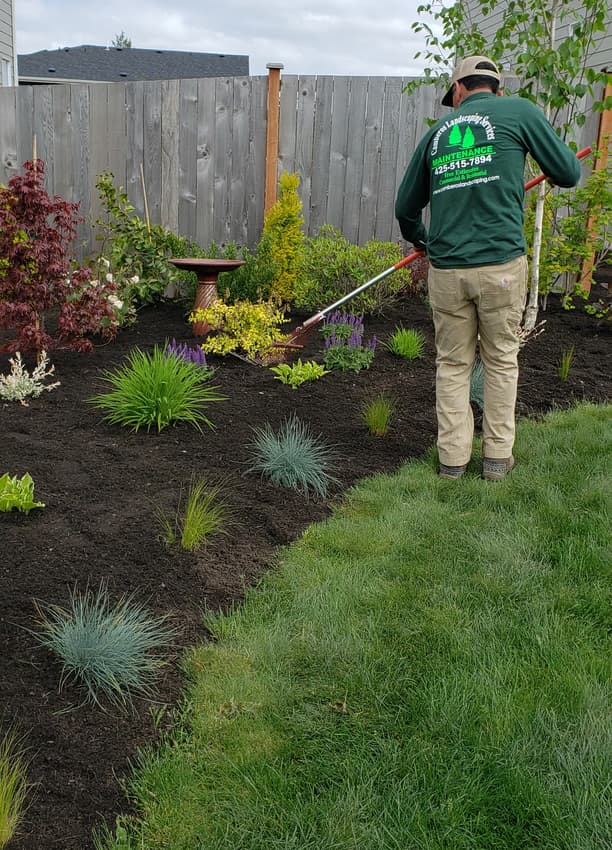
A cleanup is debris gone, beds redefined, and the hazards cut. We haul. A pile at the curb that sits for a month is not a finish. Brush, rotten wood, the fallen fence panel, the blackberries that took the side yard: that is the work.
We do not “clean” a yard by blowing leaves into the beds and covering them with a thin coat of bark. If bark is part of the visit, the bed is weeded first. If it is not in the bid, we do not fake it.
The walk-through is the scope. A bigger pile, a surprise blackberry thicket, or a tree that needs a climber changes the day, and we say that before we start rather than after the trailer is full.
What we look at first
- What is actually being hauled
- Blackberries, downed limbs, and junk versus a normal leaf drop
- Access for a trailer
- Whether you want it bare and ready, or just safe and tidy
Ready for the next thing
A good cleanup ends with edges you can mow and beds you could bark. If the next step is renovation, we leave the yard ready for that instead of dressing it with mulch we are about to dig through.
Blackberries
Cut to the ground and hauled, with the understanding they return from the roots. A cleanup is not eradication. A follow-up, or a dig-out if the patch is small, is how you actually get rid of them. We will say which you bought.
Leaves
Off the lawn, off the beds you care about, off the walks. Into the trailer. A wooded corner can keep its duff. Blowing every leaf out of a natural area is busywork, and we will not pretend it is horticulture.
More from this crew
- Yard cleanup across Snohomish County
- Tree and shrub pruning in Lake Stevens
- Beauty bark in Lake Stevens
- Landscaping in Lake Stevens
- Pressure washing in Lake Stevens
- Yard cleanup in Everett
- Yard cleanup in Marysville
- Yard cleanup in Snohomish
Sources for the climate and the water
- USDA plant hardiness map for choosing plants that can take a Snohomish County winter.
- EPA WaterSense on watering less once a lawn or a new planting is established.
- EPA Soak Up the Rain on keeping roof and yard water from becoming someone else’s problem.