Snohomish is the old river town. Downtown sits above the Snohomish River, the houses have mature trees, and a lot of the gardens were planted decades ago and then left to get big. The ground near the river stays wet. The hills just south of it do not. A lawn that sat soft all winter grows a moss layer and a layer of rotted blades. Both have to come off before anything new can root.
Snohomish County · ZIP 98290 · 2020 population 10,091
Matted grass on ground that stayed wet
We stay off the lowest ground. Dethatching a spot that floods just creates a bare muddy pan that washes. On the higher lawn, the mat comes up in sheets. Under it, the grass is pale. We seed and we keep foot traffic off it.
River lots also collect leaves in the same corner every fall. If that corner is where the thatch is always worst, the leaf habit is the cause. We will say that. A rake in November saves a power rake in April.
The ground in Snohomish
Historic lots come with plants nobody planned: a cedar too close to the porch, a lilac that has swallowed the walk, beds that were neat in 1998 and are roots and bindweed now. Pruning and a hard cleanup are often the whole first phase. Bark, used with a little restraint, puts a finished line back on a Victorian front without covering the problem.
Closer to the river, drains matter. Riparian edges want native plants that can take wet soil, not a sod lawn rolled to the bank. We do not haul fill into the floodplain to “raise the yard” without understanding where that water will go next. Uphill, in the newer pockets, the work looks more like the rest of the county: lawns, small patios, and moss.
How we do the work
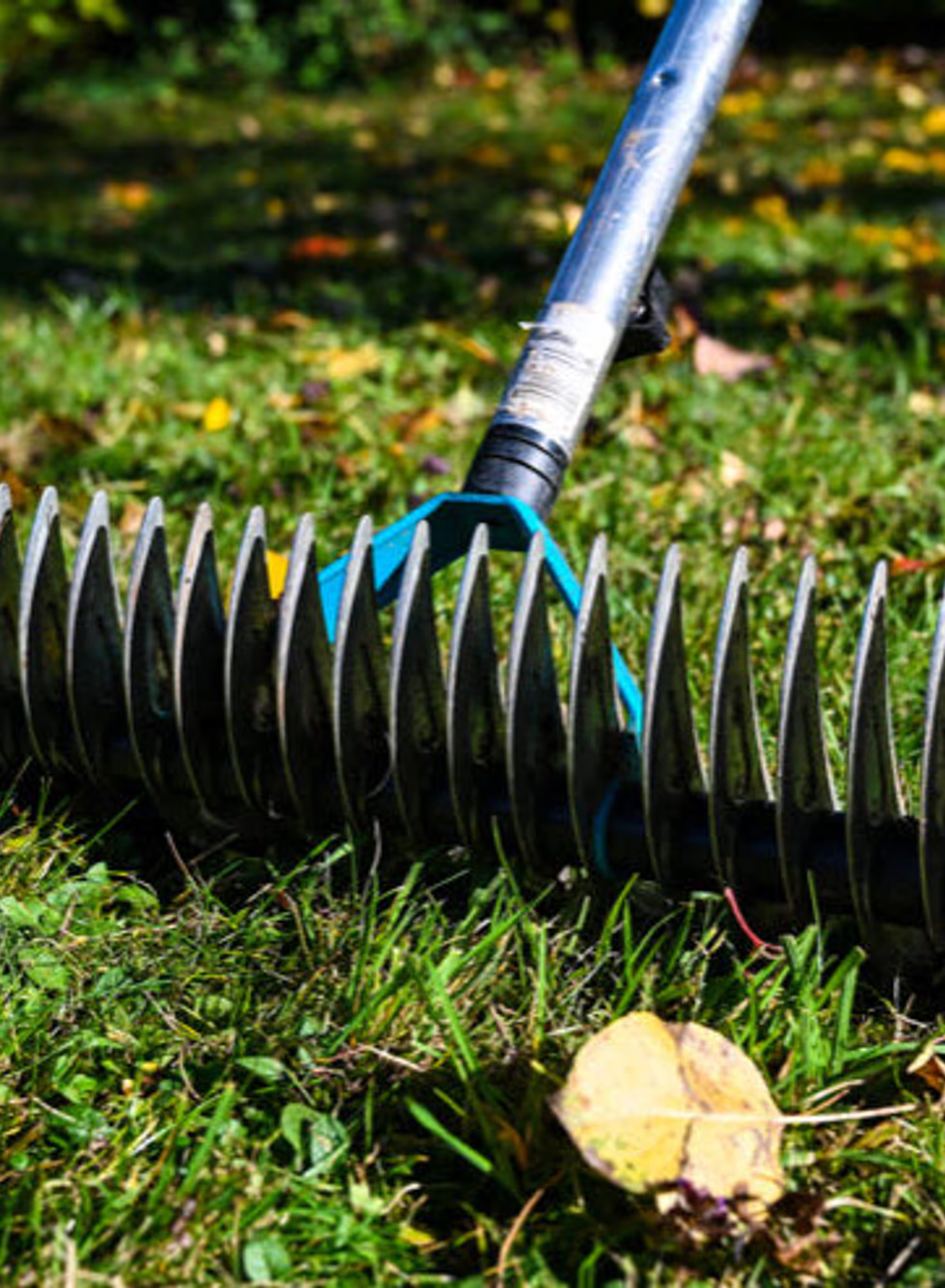
Thatch here is usually moss plus a layer of dead stems, not the classic Midwest straw mat. A power rake set too deep tears out the live grass and leaves a scar. We set the blades to lift the mat and stop when we are in soil.
The debris has to leave the property. A thatch layer raked into the bed or left in windrows just moves the problem. We haul it. If the lawn underneath is mostly dirt and shade, dethatching is the start of a different plan, not a greener lawn by itself.
What we look at first
- How thick the moss mat is
- Whether live grass is under it or the mat is the whole lawn
- Irrigation and mowing height that are growing the thatch back
- A place to stage the trailer so we are not blocking a tight drive
Pairing it with aeration
On clay and fill we dethatch and then core, in that order. Cores through a mat waste the tines. Seed goes into the opened ground the same day when the season allows.
How deep we go
Shallow enough to save the crowns of the grass. If the lawn is thin, a second light pass beats one aggressive pass that pulls the plants out by the roots. You should see soil in places and live grass still standing.
Mowing height afterward
Cutting to the dirt is how the mat comes back. We leave the grass taller than a golf collar, especially in shade. Tall enough to shade its own soil, short enough to walk.
More from this crew
- Lawn dethatching across Snohomish County
- Lawn aeration in Snohomish
- Lawn seeding in Snohomish
- Lawn mowing in Snohomish
- Lawn fertilization in Snohomish
- Lawn dethatching in Monroe
- Lawn dethatching in Everett
- Lawn dethatching in Lake Stevens
Sources for the climate and the water
- USDA plant hardiness map for choosing plants that can take a Snohomish County winter.
- EPA WaterSense on watering less once a lawn or a new planting is established.
- EPA Soak Up the Rain on keeping roof and yard water from becoming someone else’s problem.