Snohomish is the old river town. Downtown sits above the Snohomish River, the houses have mature trees, and a lot of the gardens were planted decades ago and then left to get big. The ground near the river stays wet. The hills just south of it do not. River-bottom lawns stay soft late into spring. Coring them early makes trenches. We wait, and we do not aerate ground that spent the winter underwater.
Snohomish County · ZIP 98290 · 2020 population 10,091
Do not core the part that floods
Low yards near the river have two surfaces: a bench that drains, and a corner that holds water until April. Only the bench is a lawn. The corner is a wet spot we should drain or plant as wet ground. Aerating it drives organic trash deeper and ruts the route we walked.
When the bench firms up, cores are useful because river soils can be fine and tight. We leave the plugs, overseed the thin spots, and stay off it for a week. A mower the next morning presses the holes shut.
The ground in Snohomish
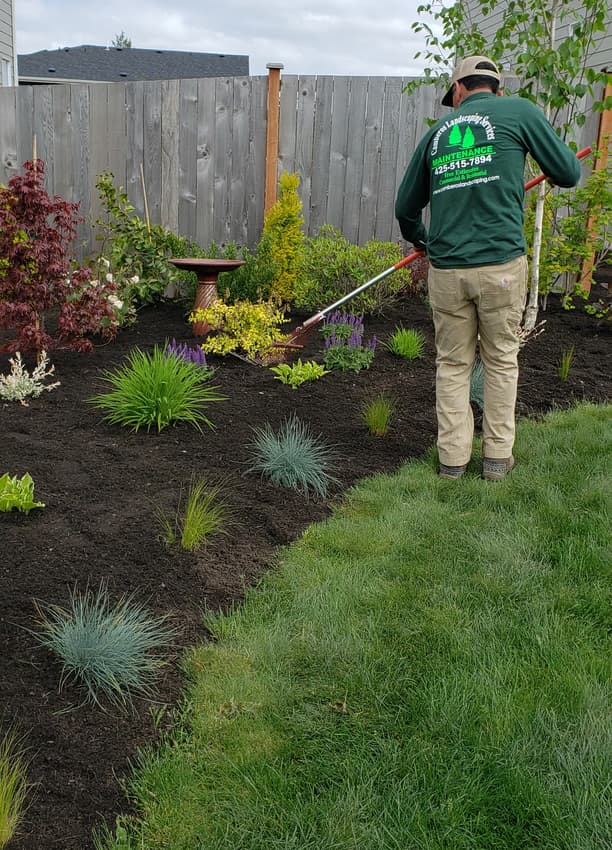
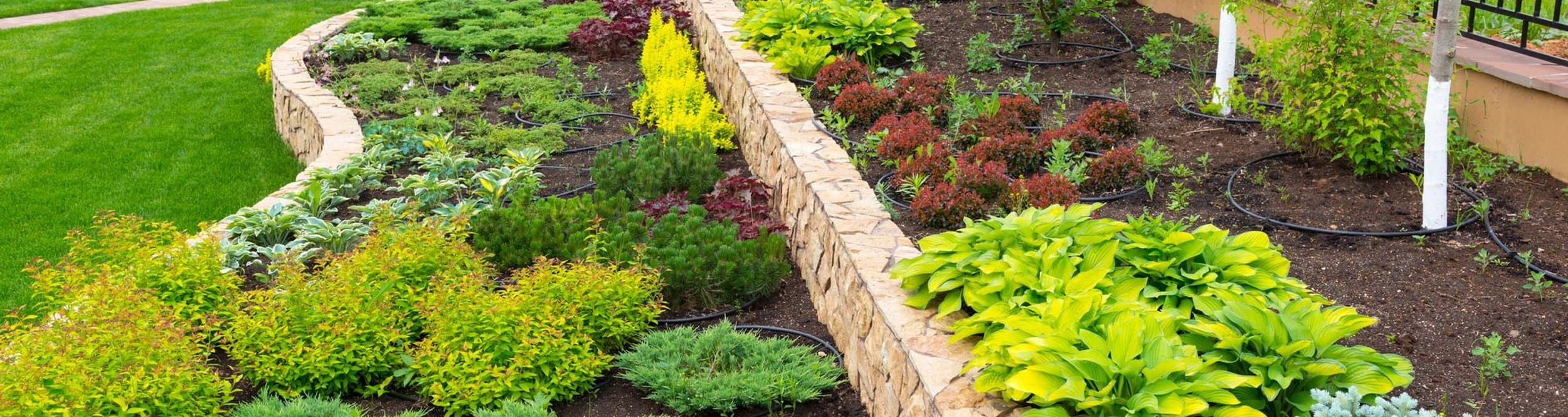
Historic lots come with plants nobody planned: a cedar too close to the porch, a lilac that has swallowed the walk, beds that were neat in 1998 and are roots and bindweed now. Pruning and a hard cleanup are often the whole first phase. Bark, used with a little restraint, puts a finished line back on a Victorian front without covering the problem.
Closer to the river, drains matter. Riparian edges want native plants that can take wet soil, not a sod lawn rolled to the bank. We do not haul fill into the floodplain to “raise the yard” without understanding where that water will go next. Uphill, in the newer pockets, the work looks more like the rest of the county: lawns, small patios, and moss.
How we do the work
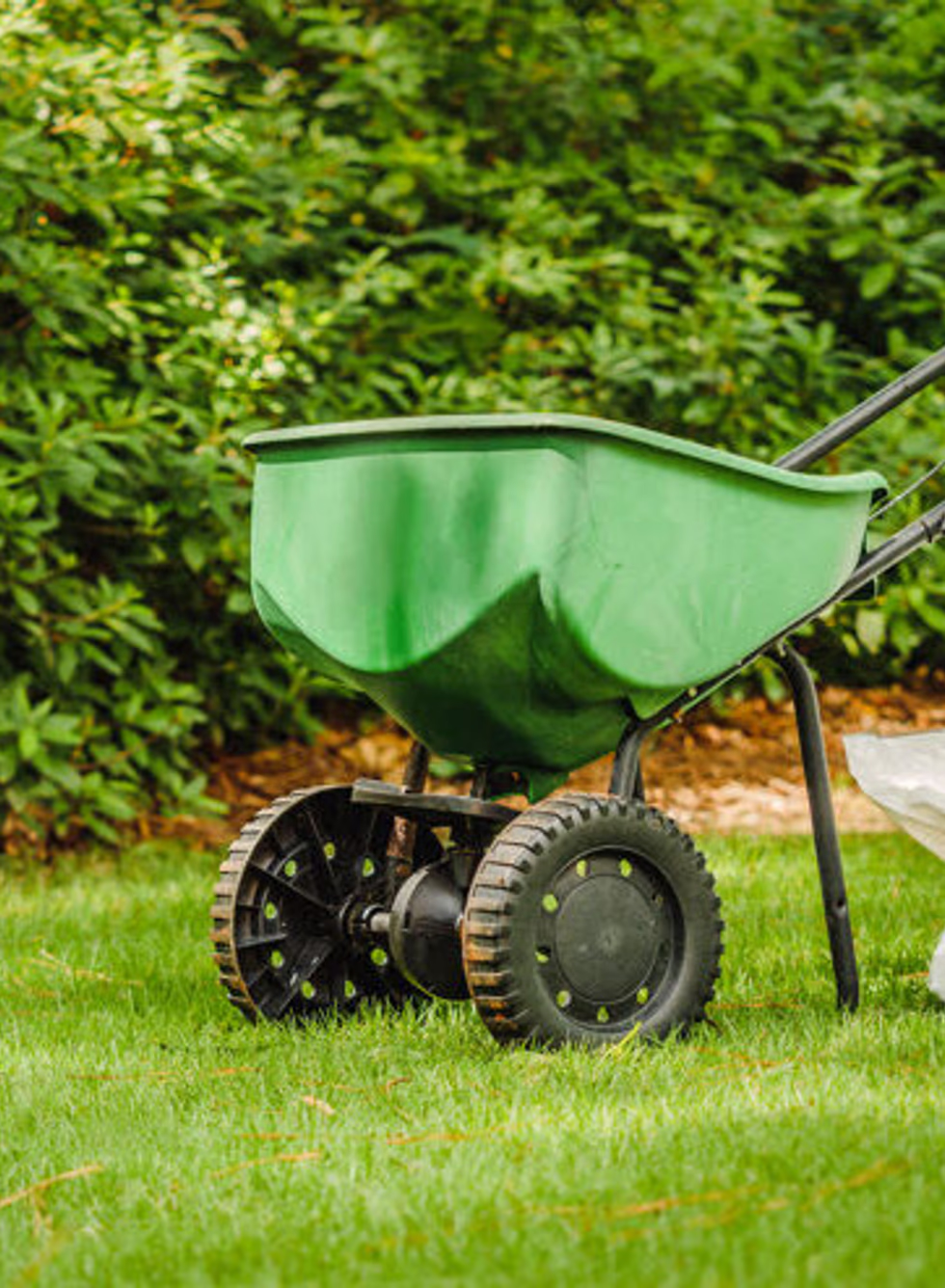
We pull cores, we do not poke holes. A spike aerator squeezes the soil tighter around each puncture, which is the opposite of what a Western Washington lawn needs. Cores are about three inches, left on the grass to break apart in the rain. The visit is timed for soil that is moist enough to take the tine and dry enough that the machine does not leave ruts.
If the thatch is thicker than a finger, aerating through it only decorates the moss. Those lawns get dethatched first. Lime is a separate decision. A lot of local soil is sour, and we spread lime when the lawn shows it, not because a calendar said March.
What we look at first
- Thatch depth before we core
- Whether the ground ruts under foot
- Shade from trees that will keep the lawn thin no matter how often we aerate
- Downspouts dumping onto the same corner every winter
When we show up
The useful months are April into early June, and again in September. Midsummer cores on a dry lawn shatter and the holes collapse. January cores on saturated ground are ruts. We would rather wait a week than leave you with tracks.
What aeration will not fix
It will not move a downspout, kill a cedar’s shade, or drain a dish in the grade. If the lawn fails in the same circle every winter, we look at water and light before we sell you a third visit.
What we leave behind
Plugs on the grass for a few days, then they fall apart. You can mow when they crumble. Watering is only needed if we seeded and the week turned dry, which is rare here. Stay off the soft spots until the footprints disappear.
More from this crew
- Lawn aeration across Snohomish County
- Lawn dethatching in Snohomish
- Lawn seeding in Snohomish
- Lawn fertilization in Snohomish
- Lawn mowing in Snohomish
- Lawn aeration in Monroe
- Lawn aeration in Everett
- Lawn aeration in Lake Stevens
Sources for the climate and the water
- USDA plant hardiness map for choosing plants that can take a Snohomish County winter.
- EPA WaterSense on watering less once a lawn or a new planting is established.
- EPA Soak Up the Rain on keeping roof and yard water from becoming someone else’s problem.