The lake is the point of the town, and it is also the drainage problem. Shoreline lots shed water toward the water, banks erode where wakes and winter rain meet a soft edge, and inland yards stay damp because the water table and the clay do not let a storm leave quickly. Moisture from the lake and from clay keeps moss alive. Dethatching a lawn that is still squishy tears it out in chunks and leaves mud.
Snohomish County · ZIP 98258 · 2020 population 34,385
A wet mat next to wetter ground
We wait until the surface holds us. Then we lift the mat and get it off the property before a rain sticks it down again. If the “lawn” is a sponge that drains toward the water, raking is cosmetic. The grade or a drain has to change, and we should not be blowing moss and soil down the bank.
Inland from the shore, in the newer yards, the mat is ordinary and the fix is ordinary: rake, core, seed, and stop cutting it to the dirt.
The ground in Lake Stevens
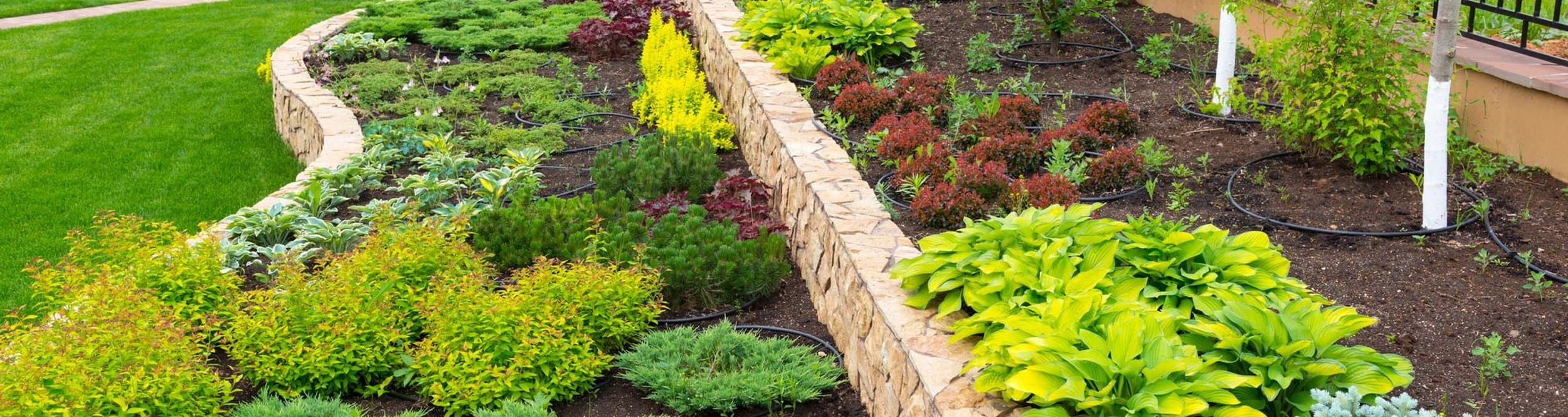
On the water, the work is the bank and the view. A retaining edge, native shoreline plants such as red osier dogwood, and a rain garden or a drain that slows runoff before it hits the lake do more for the property than a strip of sod at the top of an eroding slope. Fertilizer and bare soil washing into the lake are how a nice lawn becomes a neighbor problem.
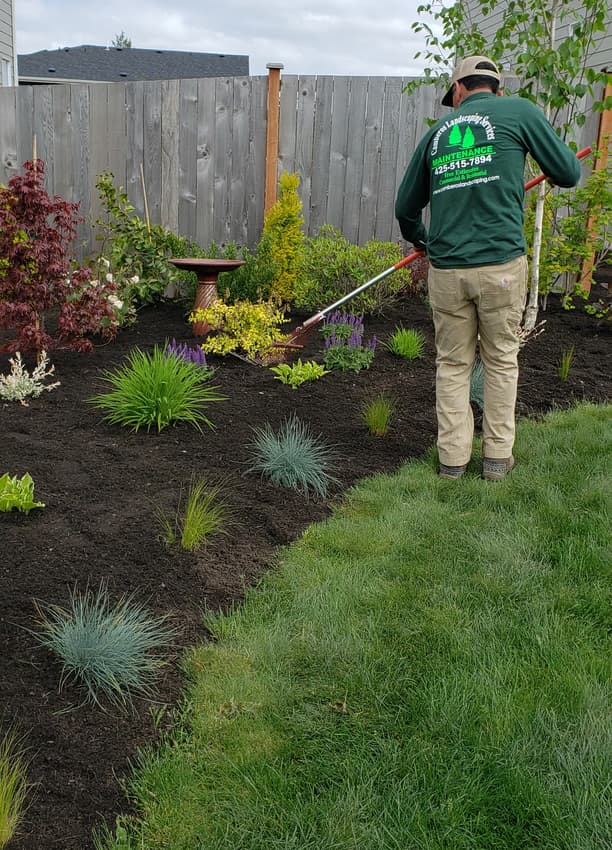
Off the water, in the newer neighborhoods, the soils were compacted during construction and the lawns were rolled out on top. They look fine in July and sour in February. Aeration, a real topdressing, and getting the downspouts away from the foundation are the unglamorous jobs that keep those yards from turning to moss. Patios here are for the view. We build the base as if it will be wet half the year, because it will.
How we do the work
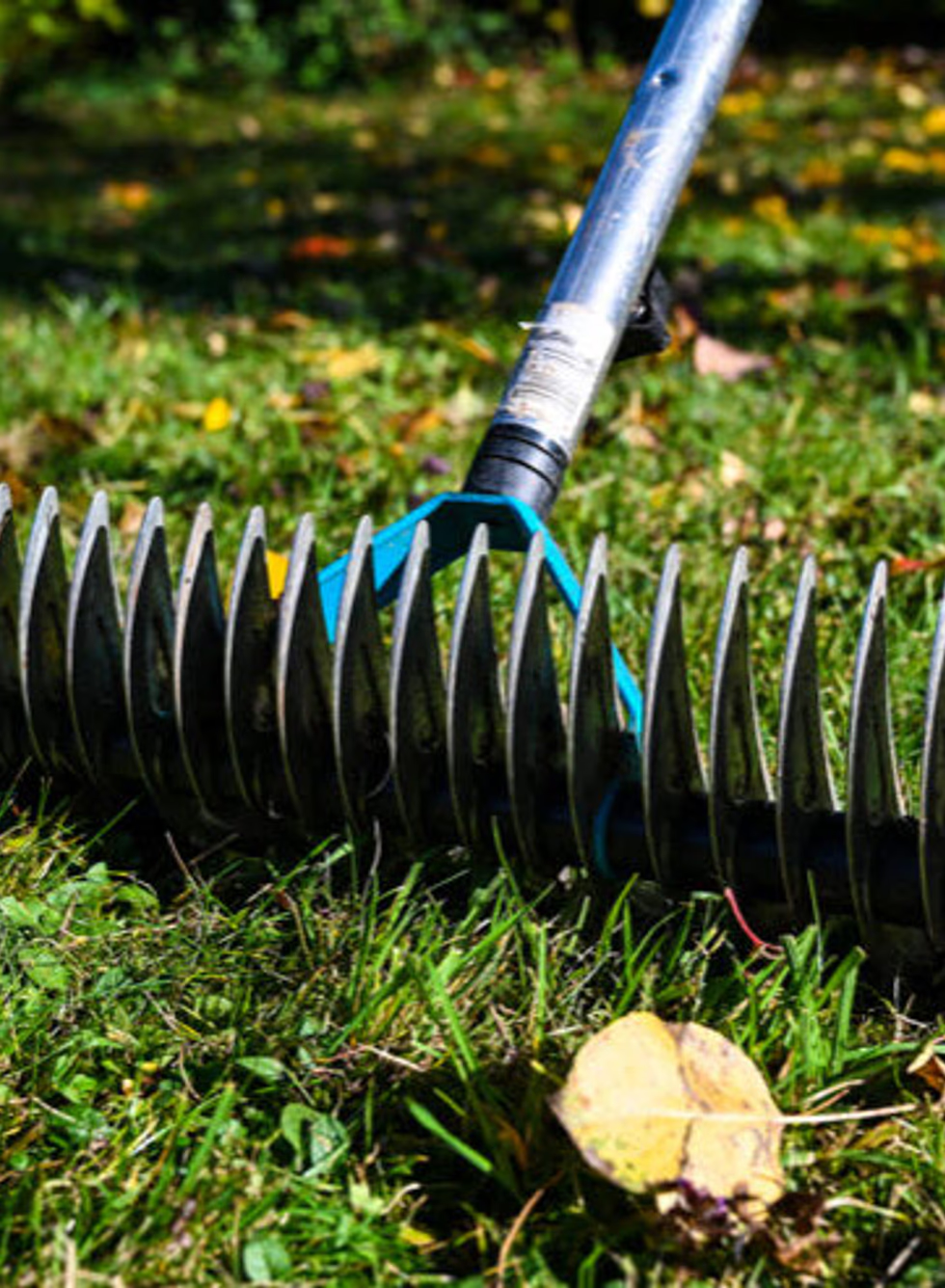
Thatch here is usually moss plus a layer of dead stems, not the classic Midwest straw mat. A power rake set too deep tears out the live grass and leaves a scar. We set the blades to lift the mat and stop when we are in soil.
The debris has to leave the property. A thatch layer raked into the bed or left in windrows just moves the problem. We haul it. If the lawn underneath is mostly dirt and shade, dethatching is the start of a different plan, not a greener lawn by itself.
What we look at first
- How thick the moss mat is
- Whether live grass is under it or the mat is the whole lawn
- Irrigation and mowing height that are growing the thatch back
- A place to stage the trailer so we are not blocking a tight drive
Pairing it with aeration
On clay and fill we dethatch and then core, in that order. Cores through a mat waste the tines. Seed goes into the opened ground the same day when the season allows.
Mowing height afterward
Cutting to the dirt is how the mat comes back. We leave the grass taller than a golf collar, especially in shade. Tall enough to shade its own soil, short enough to walk.
Hauling is part of the job
A dethatched lawn produces a surprising pile, wet and heavy. We load and remove it. Spreading it in the beds plants the moss and the weed seed you just paid to lift.
More from this crew
- Lawn dethatching across Snohomish County
- Lawn aeration in Lake Stevens
- Lawn seeding in Lake Stevens
- Lawn mowing in Lake Stevens
- Lawn fertilization in Lake Stevens
- Lawn dethatching in Everett
- Lawn dethatching in Marysville
- Lawn dethatching in Snohomish
Sources for the climate and the water
- USDA plant hardiness map for choosing plants that can take a Snohomish County winter.
- EPA WaterSense on watering less once a lawn or a new planting is established.
- EPA Soak Up the Rain on keeping roof and yard water from becoming someone else’s problem.