Stanwood is where the subdivisions run out and the fields start. Lots are larger, drives are longer, and the ground is the open, often heavy soil of a farm edge rather than a city fill pad. A large cleared area is a hydroseed job. A strip by the porch is not. Using the wrong method is how the edges look starved and the middle looks fine, or the reverse.
Snohomish County · ZIP 98292 · 2020 population 7,915
Seed the house yard, hydroseed the bare acre
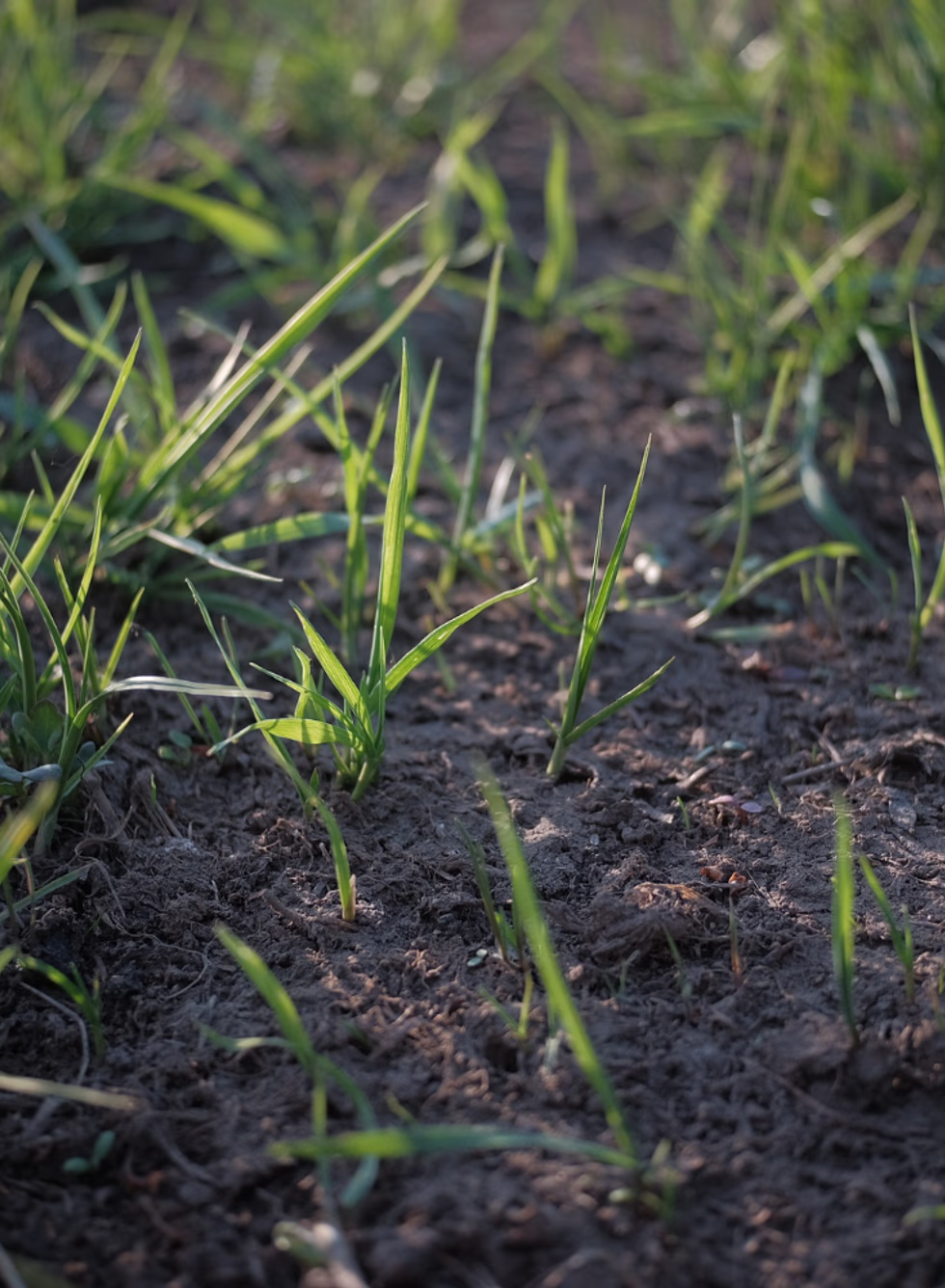
Open ground at the edge of fields takes a tougher mix, and it takes weed pressure from the neighboring grass. We set that expectation. You will mow weeds in the first month. That is germination, not a failed seeding, as long as the lawn species are in there too.
We do not hydroseed into standing water or onto a drive that should have been graveled. The house lawn, if it is thin, gets a regular overseed after a dethatch. One price does not cover both.
The ground in Stanwood
A Stanwood place might be a house, a lawn that is really a small pasture, a gravel drive, and a fence that has to mean something — keeping a view open, marking a line, holding a gentle slope. We mow and aerate at a scale that does not make sense on a Lynnwood lot. Weed pressure is real because the seed source is the field next door, not a crack in a sidewalk.
Drainage still matters. Flat or gently sloping heavy ground will sit wet. We use gravel where a paved drive would be wasted money, and a low wall where a bank needs a clean edge. Plantings can be simpler and tougher. The goal on a lot this size is a yard you can live in without a crew every week, with the edges kept and the drive solid.
How we do the work
Seed fails here for three boring reasons: it lands on moss, it lands in the dry week of July, or it is a variety that wants a Midwest summer. We use mixes that can take cool, wet winters and our weak sun. The ground is opened first, by dethatching or cores, or the seed is just decoration.
Hydroseed makes sense on a bare area big enough to justify the tank, especially a cleared bench or a new grade. A small backyard is hand seeded or slit seeded. We say which one when we see the square footage, not from the truck.
What we look at first
- Bare soil versus a mat the seed cannot touch
- Sun hours, because no mix grows under a solid canopy
- How the water leaves the area
- Whether hydroseed or a slit seeder fits the gate and the size
When to mow new grass
At about three inches, with a sharp blade, and not shorter than two. The first mows are slow. Turning the mower on a dime on day ten pulls the seedlings out in a clump.
Water for the first two weeks
Rain usually does it in September. If it does not, the surface needs to stay damp, not flooded. Once the grass is up, we stretch the watering out. A seedling that is misted forever never roots.
Hydroseed, plainly
A slurry of seed, mulch, and tackifier, sprayed on bare soil. It holds on gentle grades better than dry seed. It still fails on a vertical bank, on moss, and on ground that is underwater. We look at those before we book the tank.
More from this crew
- Lawn seeding across Snohomish County
- Lawn aeration in Stanwood
- Sod installation in Stanwood
- Lawn dethatching in Stanwood
- Lawn fertilization in Stanwood
- Lawn seeding in Arlington
- Lawn seeding in Marysville
Sources for the climate and the water
- USDA plant hardiness map for choosing plants that can take a Snohomish County winter.
- EPA WaterSense on watering less once a lawn or a new planting is established.
- EPA Soak Up the Rain on keeping roof and yard water from becoming someone else’s problem.