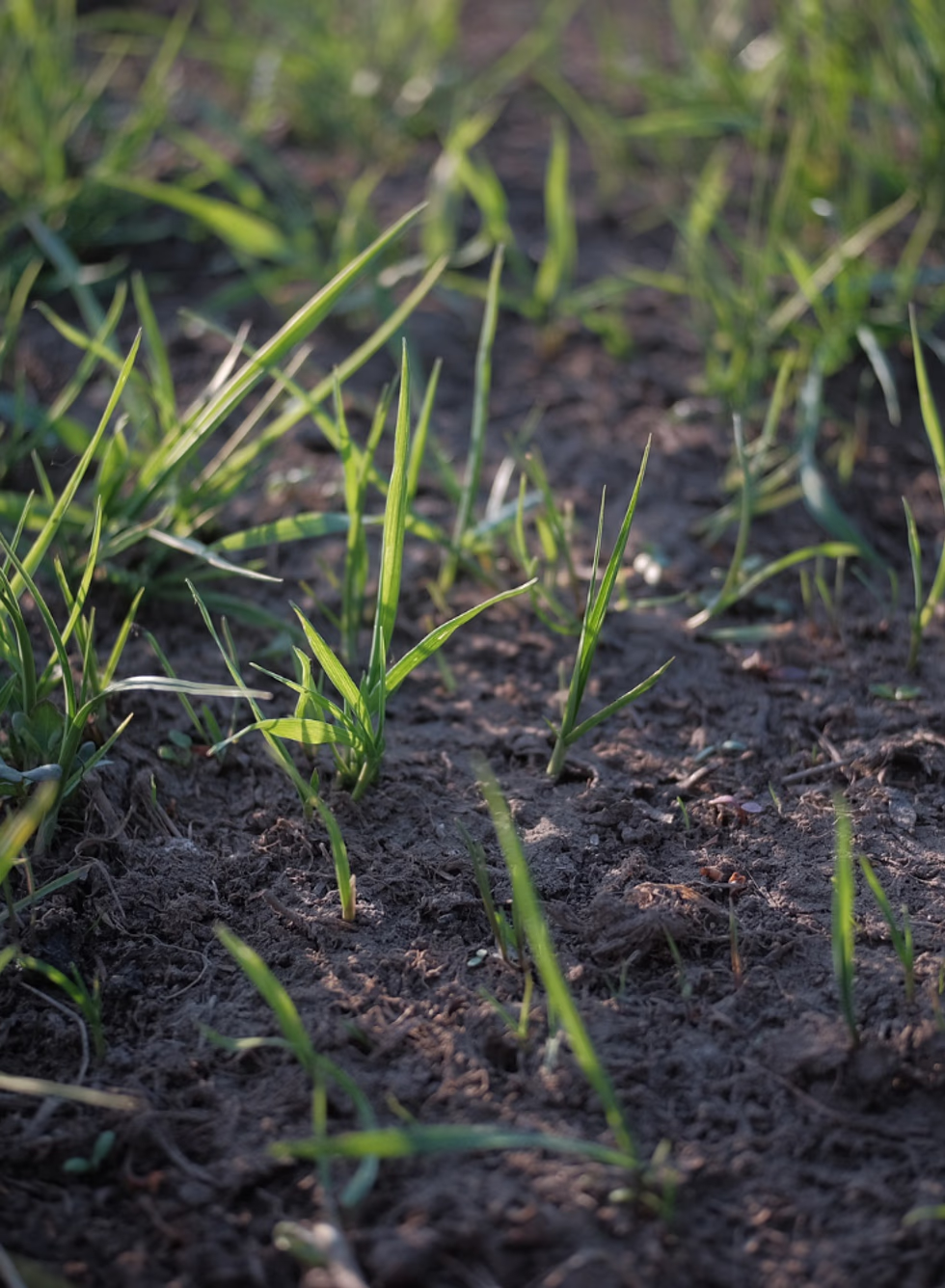
Marysville spreads across flat ground north of Everett, out toward Tulalip. The lots are bigger than the city lots to the south, and the ground is slow to drain. Water does not run off a slope because there often is not a slope. Clay crusts over after a rain and the seed sits on top. We open the surface and keep the seed in contact with soil that can hold moisture without drowning it.
Snohomish County · ZIP 98270 · 2020 population 70,714
Seed on clay, not on a crust
The right weeks are September and early October, and a careful window in spring if the clay is not still soup. We rough the surface, seed, and press it. A light compost topdressing keeps the clay from sealing over the seed.
We do not seed a low corner that holds water. That corner grows moss and buttercup. Raise it, drain it, or plant something else. The rest of a valley lawn takes perennial rye and fine fescue and fills in before the winter if we are not late.
The ground in Marysville
Flat ground sounds easy until a winter storm sits on it. French drains and permeable surfaces matter here more than tall walls. Yards are family yards: room for a lawn, a play set, fruit trees that people already have and want kept, and a patio that can take a barbecue without turning into a pond.
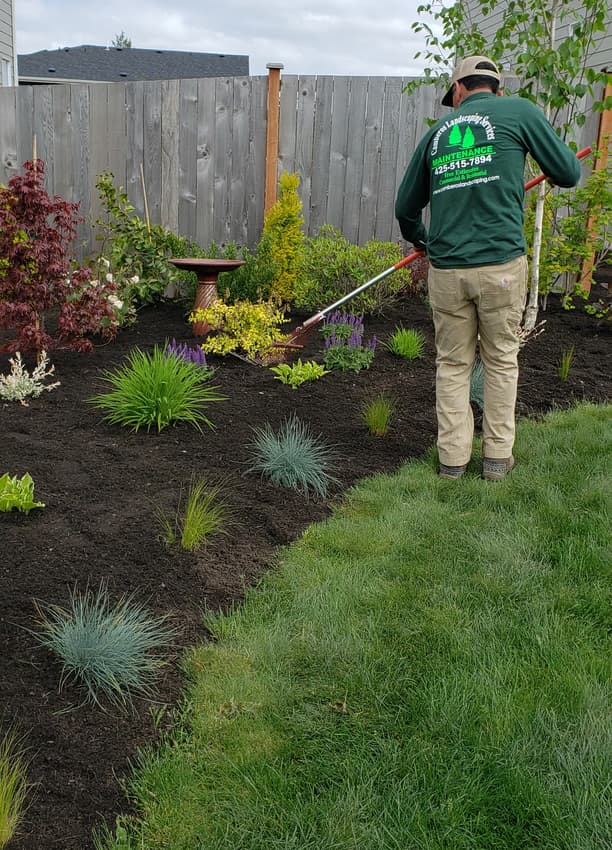
The soil is the kind that grows a decent lawn if it can breathe, and moss if it cannot. We mow, aerate, and seed the open lawns, and we bark the beds so the weed cycle slows down. Drainage is the job we would rather do first. A new sod lawn laid over undrained flat clay is a replacement lawn in two years. Fruit trees get pruned for light and for the fruit, not sheared into balls.
How we do the work
Seed fails here for three boring reasons: it lands on moss, it lands in the dry week of July, or it is a variety that wants a Midwest summer. We use mixes that can take cool, wet winters and our weak sun. The ground is opened first, by dethatching or cores, or the seed is just decoration.
Hydroseed makes sense on a bare area big enough to justify the tank, especially a cleared bench or a new grade. A small backyard is hand seeded or slit seeded. We say which one when we see the square footage, not from the truck.
What we look at first
- Bare soil versus a mat the seed cannot touch
- Sun hours, because no mix grows under a solid canopy
- How the water leaves the area
- Whether hydroseed or a slit seeder fits the gate and the size
The mix we actually use
Perennial rye for speed and wear, fine fescues for shade and for the wet. We do not push a bluegrass lawn that wants heat we do not get. The bag is matched to the light on that yard, not to a single recipe for the whole county.
Water for the first two weeks
Rain usually does it in September. If it does not, the surface needs to stay damp, not flooded. Once the grass is up, we stretch the watering out. A seedling that is misted forever never roots.
Hydroseed, plainly
A slurry of seed, mulch, and tackifier, sprayed on bare soil. It holds on gentle grades better than dry seed. It still fails on a vertical bank, on moss, and on ground that is underwater. We look at those before we book the tank.
More from this crew
- Lawn seeding across Snohomish County
- Lawn aeration in Marysville
- Sod installation in Marysville
- Lawn dethatching in Marysville
- Lawn fertilization in Marysville
- Lawn seeding in Everett
- Lawn seeding in Arlington
- Lawn seeding in Lake Stevens
Sources for the climate and the water
- USDA plant hardiness map for choosing plants that can take a Snohomish County winter.
- EPA WaterSense on watering less once a lawn or a new planting is established.
- EPA Soak Up the Rain on keeping roof and yard water from becoming someone else’s problem.