Stanwood is where the subdivisions run out and the fields start. Lots are larger, drives are longer, and the ground is the open, often heavy soil of a farm edge rather than a city fill pad. On a large lot the lawn is often a field that gets cut, not a turf that gets managed. We core the part you actually live on. The back acre does not need plugs.
Snohomish County · ZIP 98292 · 2020 population 7,915
Big lawns that are really small pastures
A tractor aerator earns its keep on a large open lawn, where a walk-behind would take all day and still miss the compacted lanes from the truck. We core the play area, the strip by the drive, and the ground in front of the house. The rough grass out back gets cut, not renovated, unless you want a lawn there.
Heavy ground still smears if we go too early. We look at the ruts from last winter and stay out of them until they are not holding water. Seed follows in the cores if the turf is thin. Weed pressure from the field next door is a different visit.
The ground in Stanwood
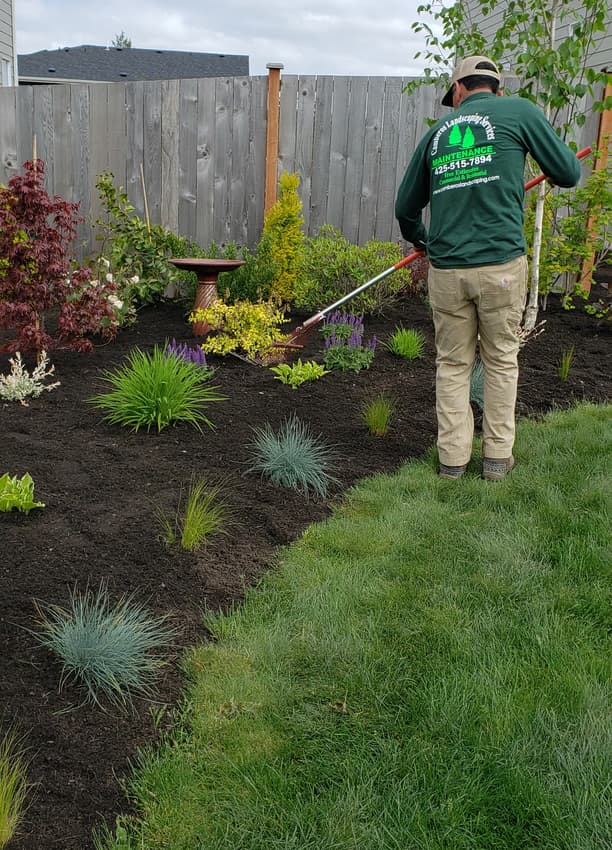
A Stanwood place might be a house, a lawn that is really a small pasture, a gravel drive, and a fence that has to mean something — keeping a view open, marking a line, holding a gentle slope. We mow and aerate at a scale that does not make sense on a Lynnwood lot. Weed pressure is real because the seed source is the field next door, not a crack in a sidewalk.
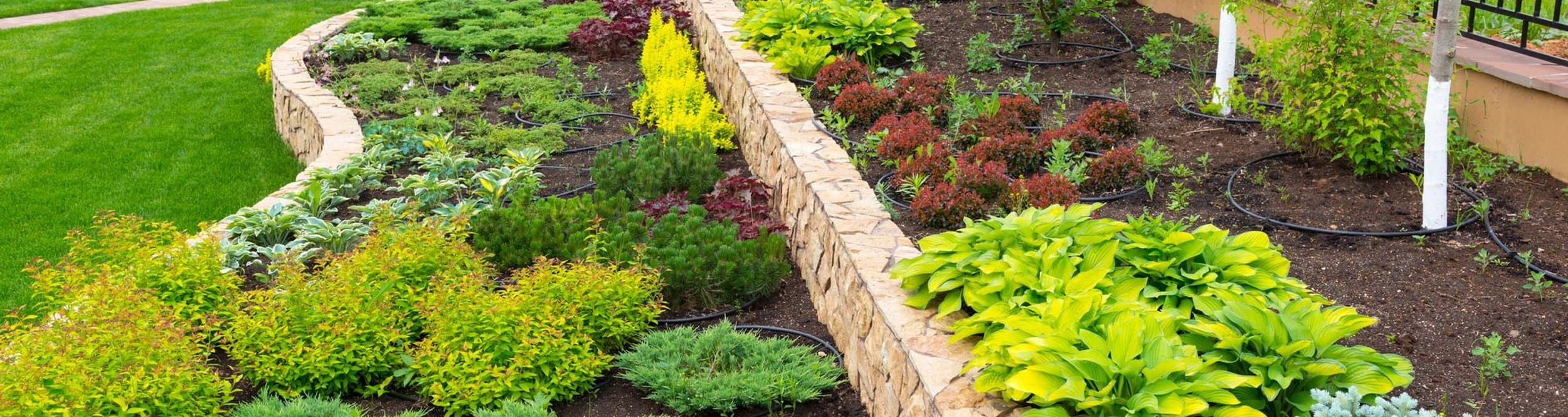
Drainage still matters. Flat or gently sloping heavy ground will sit wet. We use gravel where a paved drive would be wasted money, and a low wall where a bank needs a clean edge. Plantings can be simpler and tougher. The goal on a lot this size is a yard you can live in without a crew every week, with the edges kept and the drive solid.
How we do the work
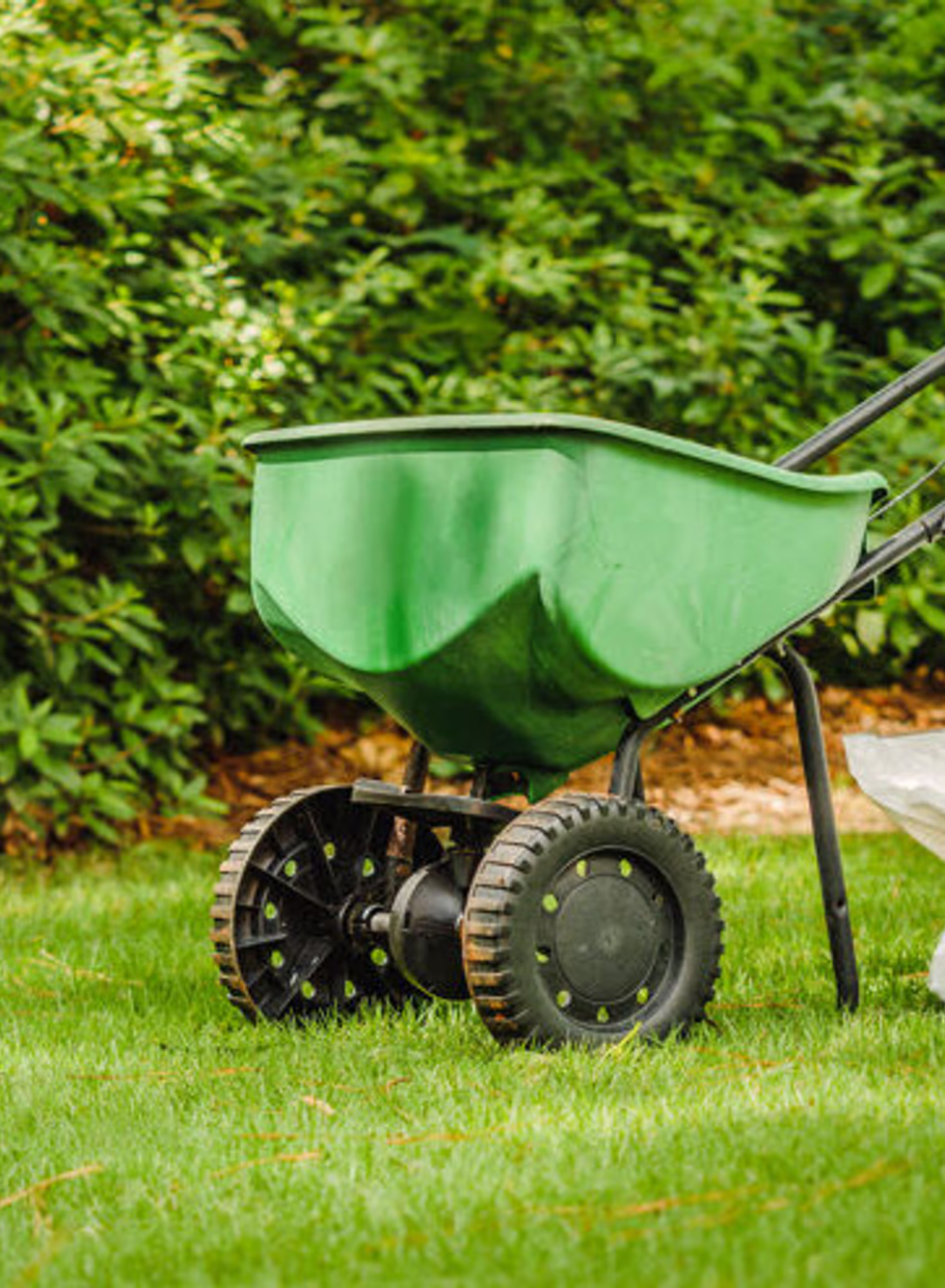
We pull cores, we do not poke holes. A spike aerator squeezes the soil tighter around each puncture, which is the opposite of what a Western Washington lawn needs. Cores are about three inches, left on the grass to break apart in the rain. The visit is timed for soil that is moist enough to take the tine and dry enough that the machine does not leave ruts.
If the thatch is thicker than a finger, aerating through it only decorates the moss. Those lawns get dethatched first. Lime is a separate decision. A lot of local soil is sour, and we spread lime when the lawn shows it, not because a calendar said March.
What we look at first
- Thatch depth before we core
- Whether the ground ruts under foot
- Shade from trees that will keep the lawn thin no matter how often we aerate
- Downspouts dumping onto the same corner every winter
What aeration will not fix
It will not move a downspout, kill a cedar’s shade, or drain a dish in the grade. If the lawn fails in the same circle every winter, we look at water and light before we sell you a third visit.
When we show up
The useful months are April into early June, and again in September. Midsummer cores on a dry lawn shatter and the holes collapse. January cores on saturated ground are ruts. We would rather wait a week than leave you with tracks.
Seed in the holes
Aeration without seed is enough when the lawn is thick and you are only relieving compaction. When you can see soil between the plants, we put seed in the openings the same day. Seed on an unaerated moss mat is bird food.
More from this crew
- Lawn aeration across Snohomish County
- Lawn dethatching in Stanwood
- Lawn seeding in Stanwood
- Lawn fertilization in Stanwood
- Lawn mowing in Stanwood
- Lawn aeration in Arlington
- Lawn aeration in Marysville
Sources for the climate and the water
- USDA plant hardiness map for choosing plants that can take a Snohomish County winter.
- EPA WaterSense on watering less once a lawn or a new planting is established.
- EPA Soak Up the Rain on keeping roof and yard water from becoming someone else’s problem.