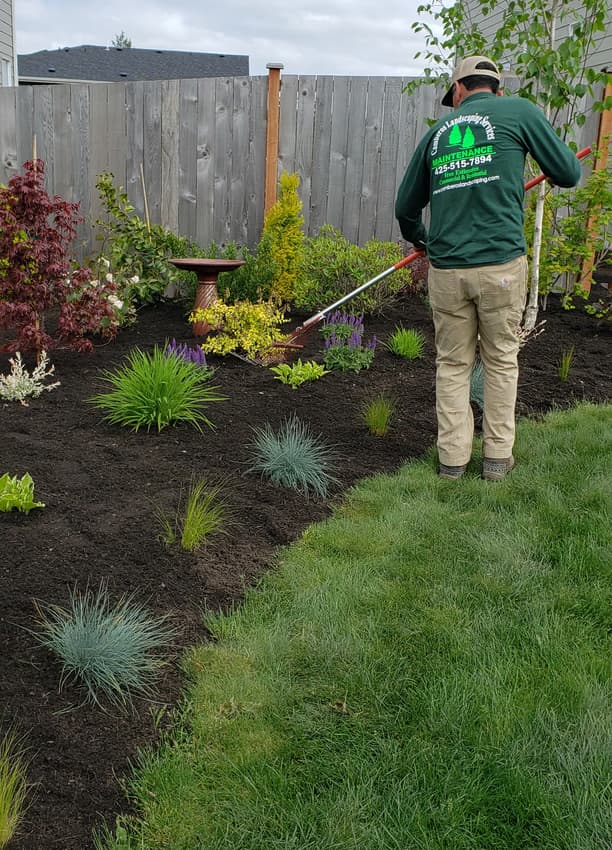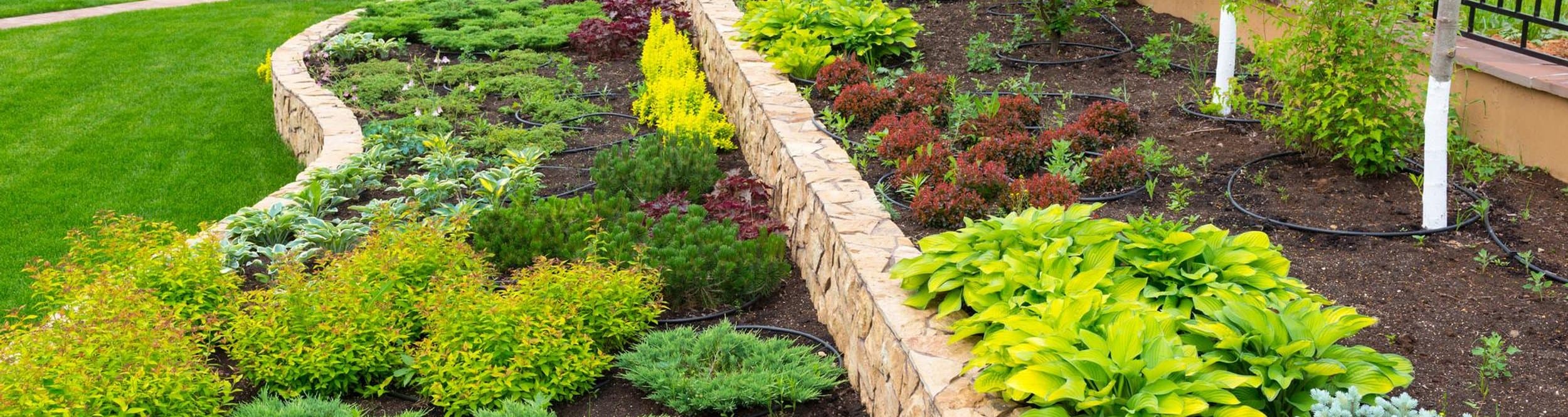
Mercer Island sits in the middle of Lake Washington, so almost every street runs downhill to the water. Lots are steep, the tree canopy is old and tall, and the shoreline lots have banks that move when runoff from the street above has nowhere else to go. Fresh seed and compost washing toward the lake help nobody. We seed ground that holds, and we keep the bank planted with natives instead of turf.
King County · ZIP 98040
Seed that stays on the lot
Inland lawns around the lake overseed well in September. The soil is cool, the rain is reliable, and a thin lawn thickens before winter. We still will not seed a dish that is green with algae.
The shoreline is red osier and other wet-edge plants, not a ryegrass fringe that dies and slides. If the project is “grass to the water,” we talk you out of it.
The ground in Mercer Island
Most of our work here is on slopes. A patio or terrace has to be cut into the hill with a real base and a drain behind any wall, or the first wet winter shows where the water wants to go. On the lakefront lots we keep native shrubs on the bank, because they hold the soil better than lawn, and we take runoff to a drain or a rain garden instead of letting it sheet over the edge.
The city is strict about removing large trees and about work near the shoreline. We check what needs a permit before we cut or dig, and we plan around the trees you have to keep. Under those firs and cedars the ground is shady and mossy, so we often turn worn-out lawn into planting beds and stone paths that stay clean year-round.
How we do the work
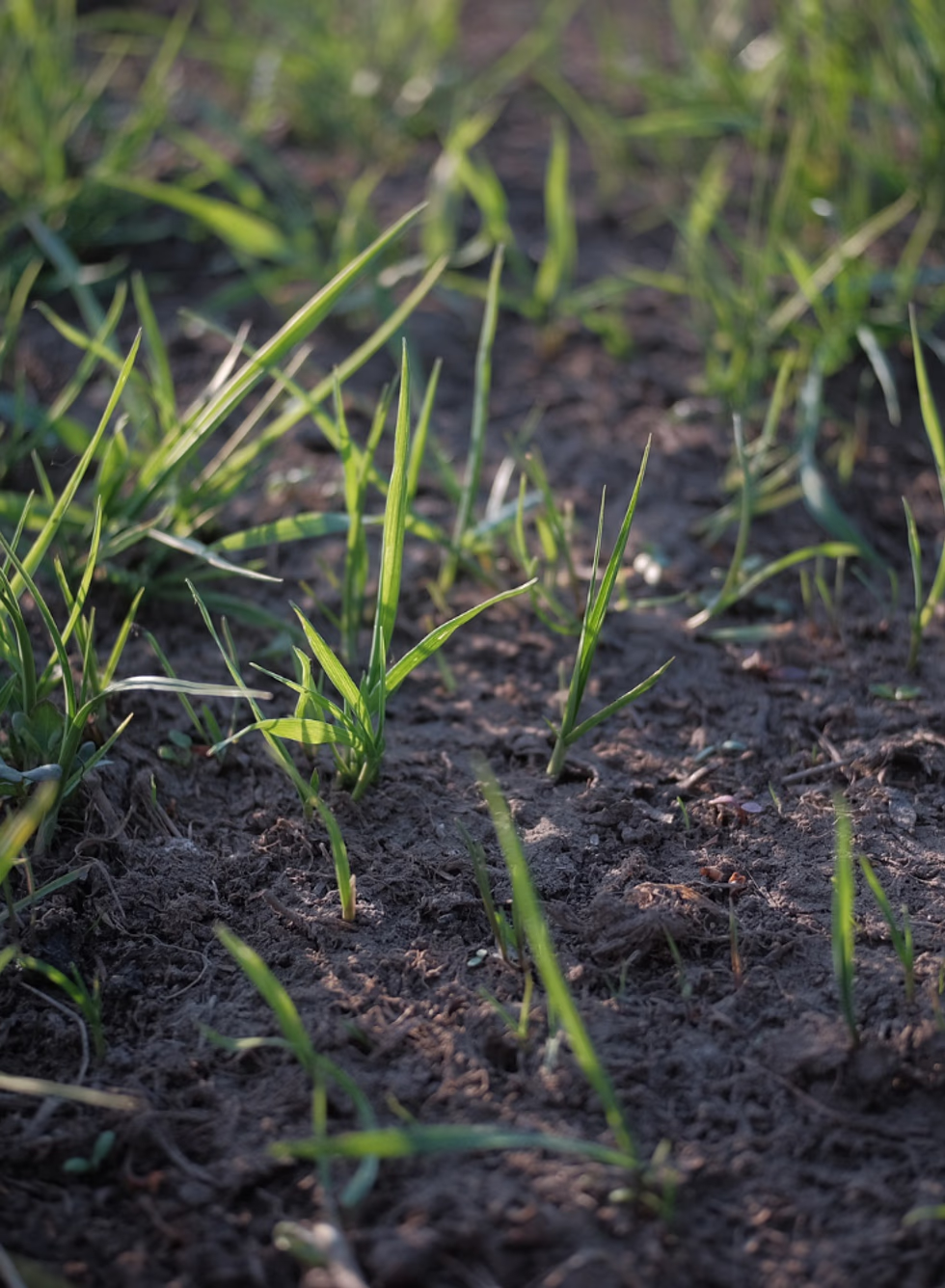
Seed fails here for three boring reasons: it lands on moss, it lands in the dry week of July, or it is a variety that wants a Midwest summer. We use mixes that can take cool, wet winters and our weak sun. The ground is opened first, by dethatching or cores, or the seed is just decoration.
Hydroseed makes sense on a bare area big enough to justify the tank, especially a cleared bench or a new grade. A small backyard is hand seeded or slit seeded. We say which one when we see the square footage, not from the truck.
What we look at first
- Bare soil versus a mat the seed cannot touch
- Sun hours, because no mix grows under a solid canopy
- How the water leaves the area
- Whether hydroseed or a slit seeder fits the gate and the size
Hydroseed, plainly
A slurry of seed, mulch, and tackifier, sprayed on bare soil. It holds on gentle grades better than dry seed. It still fails on a vertical bank, on moss, and on ground that is underwater. We look at those before we book the tank.
The mix we actually use
Perennial rye for speed and wear, fine fescues for shade and for the wet. We do not push a bluegrass lawn that wants heat we do not get. The bag is matched to the light on that yard, not to a single recipe for the whole county.
Water for the first two weeks
Rain usually does it in September. If it does not, the surface needs to stay damp, not flooded. Once the grass is up, we stretch the watering out. A seedling that is misted forever never roots.
More from this crew
- Lawn seeding across the region
- Lawn aeration in Mercer Island
- Sod installation in Mercer Island
- Lawn dethatching in Mercer Island
- Lawn fertilization in Mercer Island
- Lawn seeding in Sammamish
Sources for the climate and the water
- USDA plant hardiness map for choosing plants that can take a King County winter.
- EPA WaterSense on watering less once a lawn or a new planting is established.
- EPA Soak Up the Rain on keeping roof and yard water from becoming someone else’s problem.