Mercer Island sits in the middle of Lake Washington, so almost every street runs downhill to the water. Lots are steep, the tree canopy is old and tall, and the shoreline lots have banks that move when runoff from the street above has nowhere else to go. A lawn that drains toward the lake should not be fed hard, and should not be fed at all if the product can reach the water.
King County · ZIP 98040
Keep the nutrients in the yard
We use slow-release, we stay back from the bank, and we will not fertilize a slope that sheds into the lake. The upper lawn, if it is tired and the soil is open, gets a modest fall feeding.
If the color problem is moss and saturation, food is the wrong first step. We would rather aerate and fix the wet spot than green up a lawn that is leaking nutrients downhill.
The ground in Mercer Island
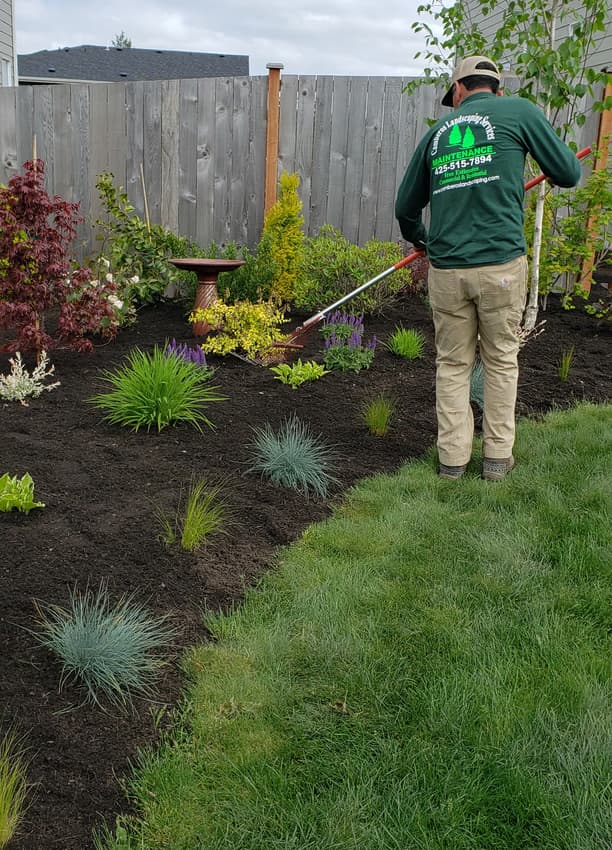
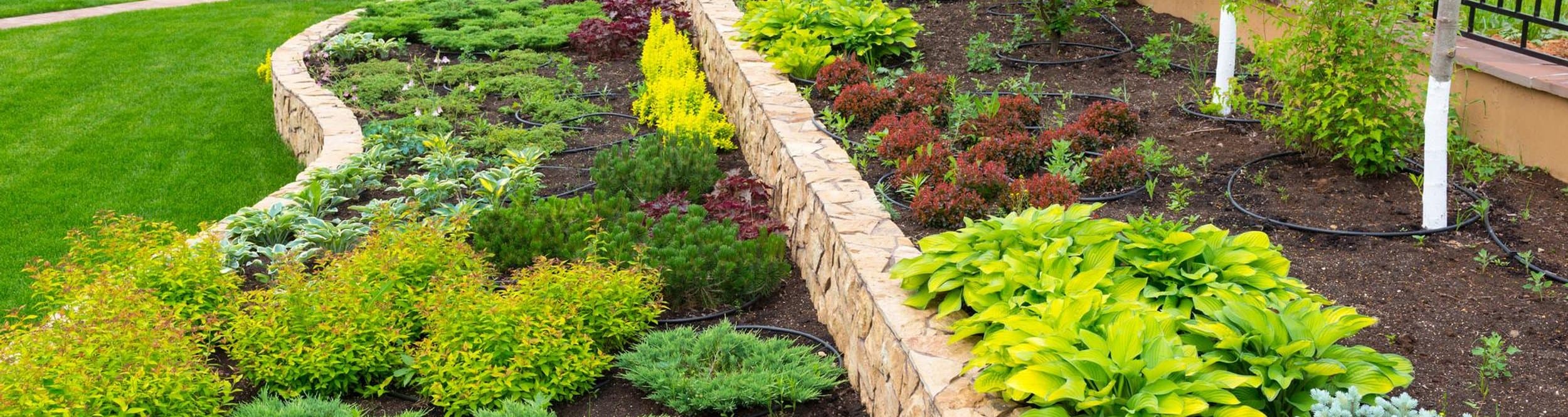
Most of our work here is on slopes. A patio or terrace has to be cut into the hill with a real base and a drain behind any wall, or the first wet winter shows where the water wants to go. On the lakefront lots we keep native shrubs on the bank, because they hold the soil better than lawn, and we take runoff to a drain or a rain garden instead of letting it sheet over the edge.
The city is strict about removing large trees and about work near the shoreline. We check what needs a permit before we cut or dig, and we plan around the trees you have to keep. Under those firs and cedars the ground is shady and mossy, so we often turn worn-out lawn into planting beds and stone paths that stay clean year-round.
How we do the work
Most “hungry” lawns we see are wet, shady, or mowed to the dirt. Fertilizer on that lawn feeds the moss and burns the grass if the rate is hot. We fertilize after we know the lawn has light, drainage, and a thatch layer thin enough for the product to reach soil.
We use slow feed, not a cheap quick green that is gone in three weeks and yellow after. Lime when the soil is sour. We do not stack lime and a heavy nitrogen app on the same afternoon and hope.
If the lawn is mostly moss, we say so and we sell the dethatch instead of a bag. Food is the last step, not the first.
What we look at first
- Moss versus thin grass
- How short it has been cut
- Whether the lawn drains
- A soil read before we lime, not a guess
What “green in a week” usually means
A fast soluble feed. It looks great, it fades, and it burns if the lawn was dry. We would rather you see a steady color over a month. If someone promised neon by Friday, ask what happens on the Friday after that.
Lime, separately
Western Washington soil is often acidic, and moss likes it that way. Lime changes the pH slowly. It is not a moss killer and it is not a fertilizer. We apply it when the lawn needs it, and we do not bury it under a heavy nitrogen app the same hour.
Moss products
Iron blacks the moss. It does not remove the shade or the water that grew it. We use it as a tool after the mat is managed, not as the whole plan. Dead moss still has to be raked out or you are looking at a black carpet.
More from this crew
- Lawn fertilization across the region
- Lawn weed control in Mercer Island
- Lawn aeration in Mercer Island
- Lawn seeding in Mercer Island
- Lawn mowing in Mercer Island
- Lawn fertilization in Sammamish
Sources for the climate and the water
- USDA plant hardiness map for choosing plants that can take a King County winter.
- EPA WaterSense on watering less once a lawn or a new planting is established.
- EPA Soak Up the Rain on keeping roof and yard water from becoming someone else’s problem.