Sammamish sits on a plateau above Lake Sammamish, and most of it was built out as subdivisions in the last thirty years. Under a thin layer of topsoil is glacial till, a hardpan that water barely soaks into, and many lots back onto tall stands of Douglas fir. Shade seed still needs hours of light. Scattering it under a cedar and hoping is how you pay twice.
King County · ZIP 98074
Seed only where the light reaches
We map the actual sun. Morning sun on the south edge of a wooded lot can hold fescue. The deep bed under the canopy cannot. Those areas come out of the lawn. We will not sell seed for them.
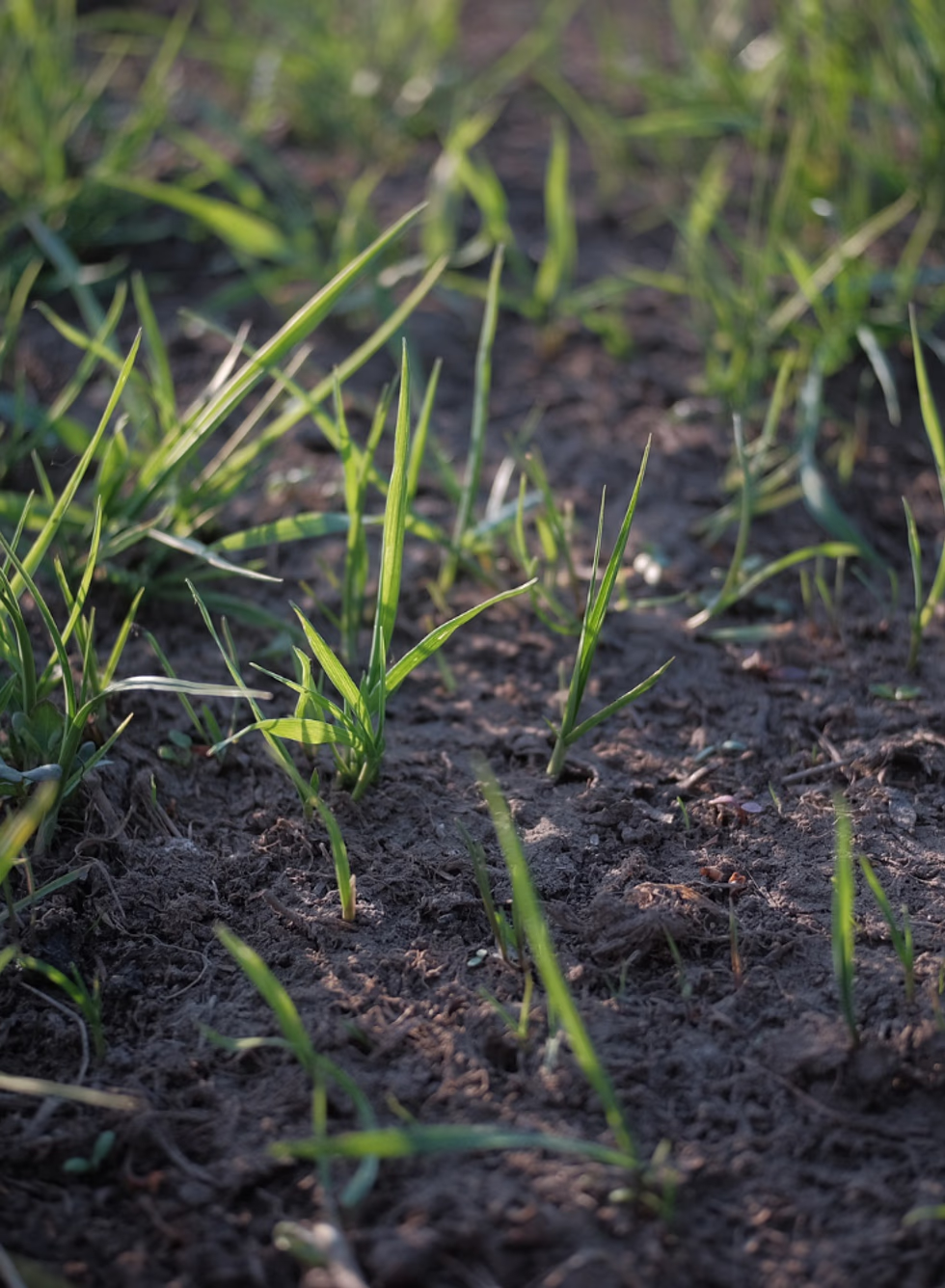
Where we do seed, the moss comes off first and the seed is pressed into soil, not into needles. Water is the rain, usually. If a dry spell hits in the first two weeks we ask you to water lightly, more than once a day, not a nightly flood that washes the seed to the path.
The ground in Sammamish
The till is the reason so many yards here stay soggy in winter and dry out fast in summer. Water sits on top of the hardpan, so a new lawn or patio needs drainage planned in from the start. We put in French drains, grade the yard away from the house, and build patio bases deep enough that they do not heave.
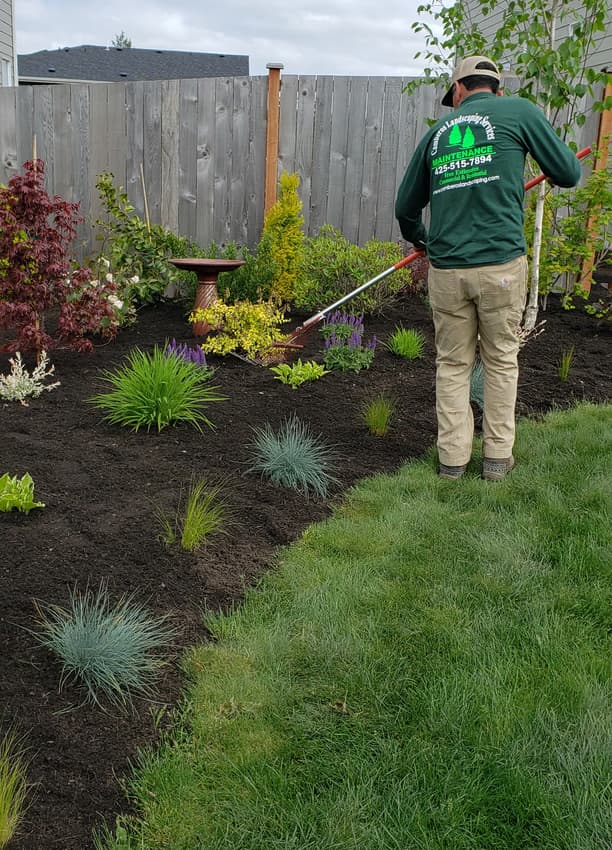
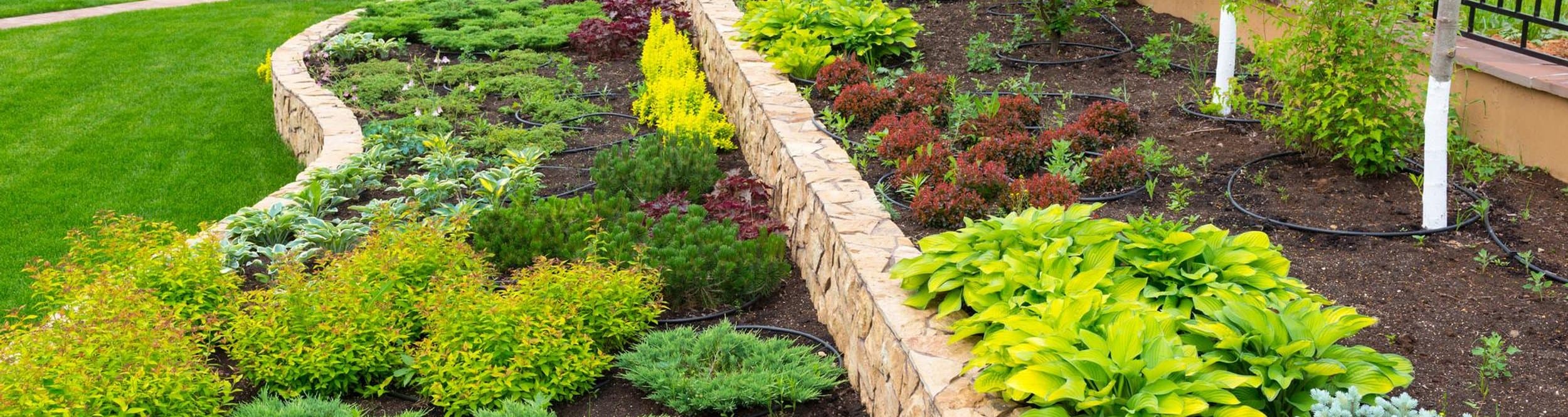
Many neighborhoods have HOA rules for fences, front yards, and plant choices, and we work to those standards. Lots along the greenbelts get heavy shade and needle drop, so we use shade-tolerant planting and bark where grass has given up. Larger backyards here are a good fit for a full redesign: a paver patio, a low retaining wall to level the slope, and irrigation on a timer for the dry months.
How we do the work
Seed fails here for three boring reasons: it lands on moss, it lands in the dry week of July, or it is a variety that wants a Midwest summer. We use mixes that can take cool, wet winters and our weak sun. The ground is opened first, by dethatching or cores, or the seed is just decoration.
Hydroseed makes sense on a bare area big enough to justify the tank, especially a cleared bench or a new grade. A small backyard is hand seeded or slit seeded. We say which one when we see the square footage, not from the truck.
What we look at first
- Bare soil versus a mat the seed cannot touch
- Sun hours, because no mix grows under a solid canopy
- How the water leaves the area
- Whether hydroseed or a slit seeder fits the gate and the size
Hydroseed, plainly
A slurry of seed, mulch, and tackifier, sprayed on bare soil. It holds on gentle grades better than dry seed. It still fails on a vertical bank, on moss, and on ground that is underwater. We look at those before we book the tank.
When to mow new grass
At about three inches, with a sharp blade, and not shorter than two. The first mows are slow. Turning the mower on a dime on day ten pulls the seedlings out in a clump.
The mix we actually use
Perennial rye for speed and wear, fine fescues for shade and for the wet. We do not push a bluegrass lawn that wants heat we do not get. The bag is matched to the light on that yard, not to a single recipe for the whole county.
More from this crew
- Lawn seeding across the region
- Lawn aeration in Sammamish
- Sod installation in Sammamish
- Lawn dethatching in Sammamish
- Lawn fertilization in Sammamish
- Lawn seeding in Mercer Island
Sources for the climate and the water
- USDA plant hardiness map for choosing plants that can take a King County winter.
- EPA WaterSense on watering less once a lawn or a new planting is established.
- EPA Soak Up the Rain on keeping roof and yard water from becoming someone else’s problem.