Stanwood is where the subdivisions run out and the fields start. Lots are larger, drives are longer, and the ground is the open, often heavy soil of a farm edge rather than a city fill pad. A farm edge does not need a boulder every foot. It needs mass where the drive or the pad is cutting, and a simpler line everywhere else.
Snohomish County · ZIP 98292 · 2020 population 7,915
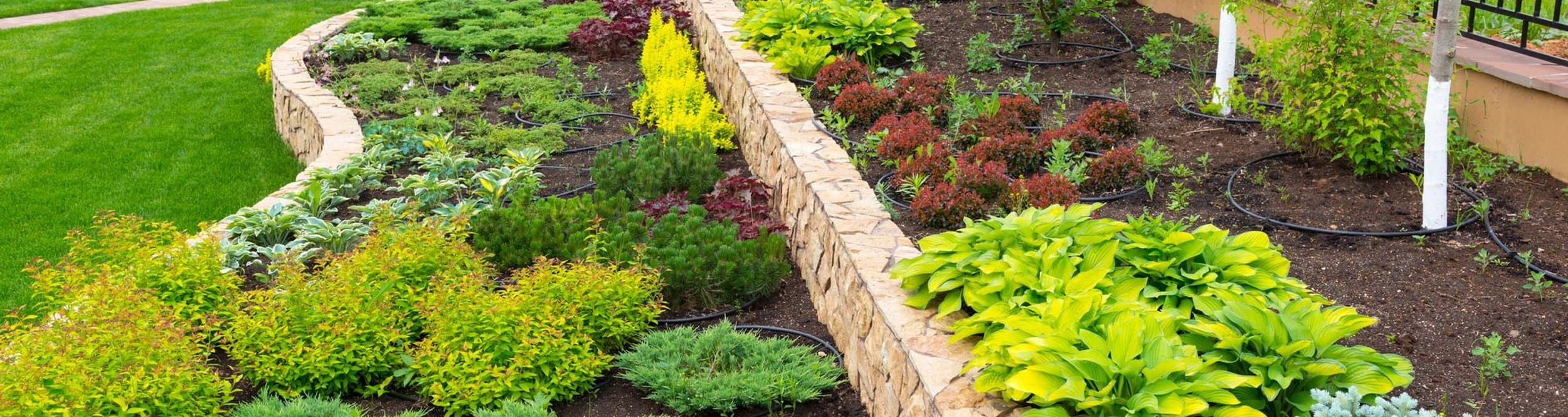
Long rock edges and a few real walls
We spend the stone on the structural bays. The rest might be a low windrow that a mower can live with, or nothing. Hauling ornamental rock the length of a long drive is an easy way to spend the budget before the wall that matters is built.
Equipment above the wall means the rock and the base are sized for that load. A garden rockery detail under a truck is the wrong detail.
The ground in Stanwood
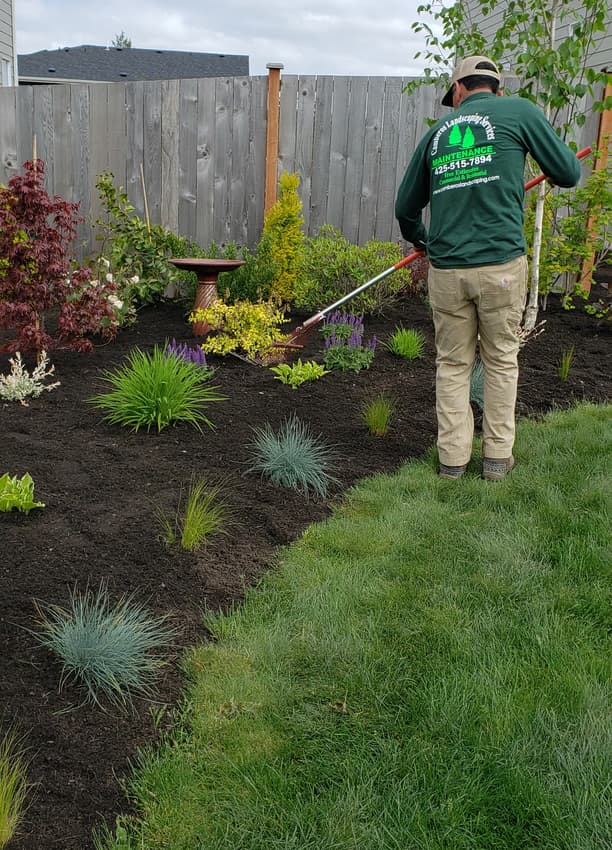
A Stanwood place might be a house, a lawn that is really a small pasture, a gravel drive, and a fence that has to mean something — keeping a view open, marking a line, holding a gentle slope. We mow and aerate at a scale that does not make sense on a Lynnwood lot. Weed pressure is real because the seed source is the field next door, not a crack in a sidewalk.
Drainage still matters. Flat or gently sloping heavy ground will sit wet. We use gravel where a paved drive would be wasted money, and a low wall where a bank needs a clean edge. Plantings can be simpler and tougher. The goal on a lot this size is a yard you can live in without a crew every week, with the edges kept and the drive solid.
How we do the work
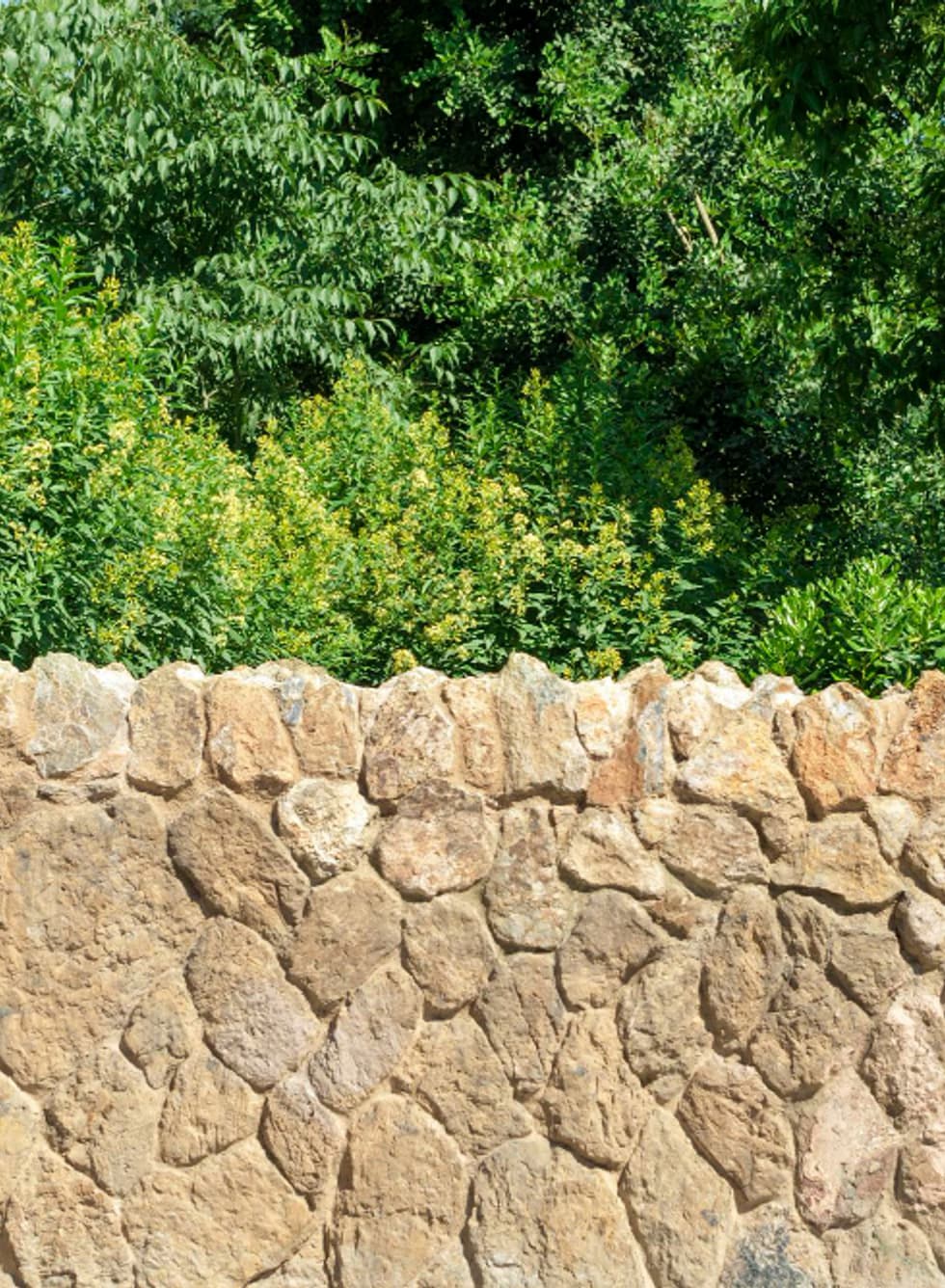
A rock wall is dry-stacked or lightly set, with the weight in the stone and the drainage in the voids. It is not a veneer glued to a failing timber wall. We use rock big enough for the height, with a face that leans back into the hill, and smaller rock locked behind so the soil does not pipe through.
Good rock work looks heavier at the bottom. If every stone is the same patio-sized block, it is not a wall, it is a stack. We source local stone and we will tell you when the access cannot take the boulder the job wants.
What we look at first
- Height and whether it is structural or a garden edge
- Machine access for real boulders
- The soil behind: clay that needs a drain, or rock that already sheds
- An existing wall we are tying into
What it will not do
A rock wall will not hold an engineered height it was not built for, and it will not stop a landslide. Past a certain height we involve an engineer or we change the grade so the wall can be shorter. That conversation happens before the stone is ordered.
The base course
The biggest stones, buried, on compacted rock or competent ground. If the first course is the one you can see sitting on the grass, the wall is already failing. You should see the second course at grade, not the bottom of the first.
Tying into old rockery
We can often continue an existing rockery if the old base is still honest. If the old wall is tipping, we take it down and use the good stone again. Matching a lean is how you extend a failure.
More from this crew
- Rock walls across Snohomish County
- Retaining walls in Stanwood
- Gravel installation in Stanwood
- Landscaping in Stanwood
- Hardscaping in Stanwood
- Rock walls in Arlington
- Rock walls in Marysville
Sources for the climate and the water
- USDA plant hardiness map for choosing plants that can take a Snohomish County winter.
- EPA WaterSense on watering less once a lawn or a new planting is established.
- EPA Soak Up the Rain on keeping roof and yard water from becoming someone else’s problem.