Stanwood is where the subdivisions run out and the fields start. Lots are larger, drives are longer, and the ground is the open, often heavy soil of a farm edge rather than a city fill pad. Hardscaping a rural place means the terrace, the steps, and the wall that holds the drive. It does not mean paving the view.
Snohomish County · ZIP 98292 · 2020 population 7,915
A durable core, gravel everywhere else
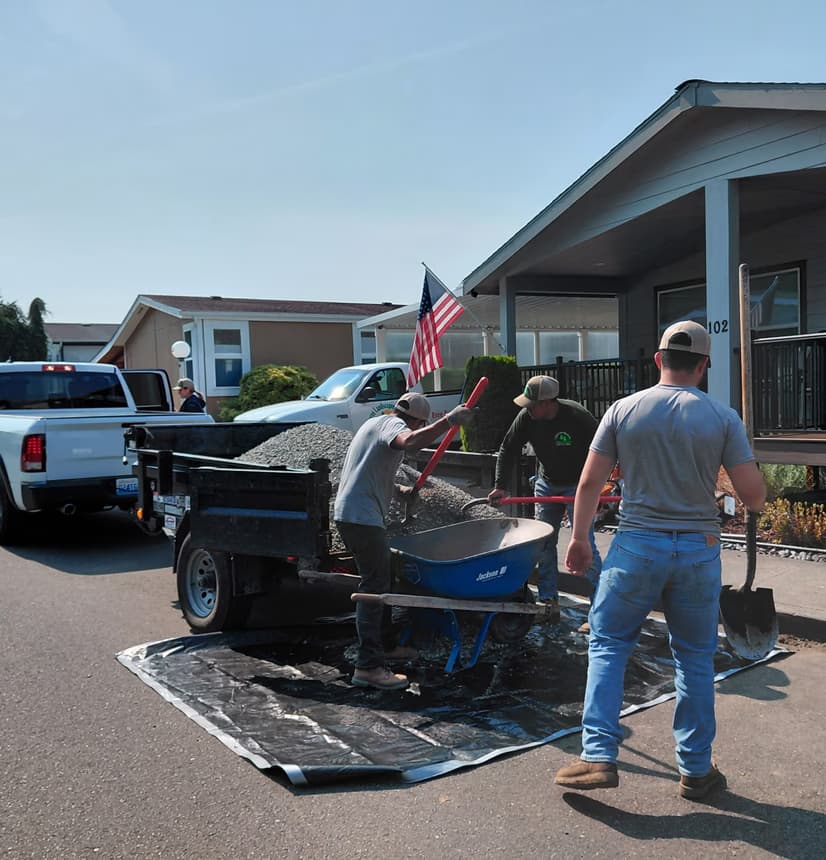
We build the pieces that get boots and weather, with bases that can take heavy ground and the occasional truck bumper. Edges are tough. The connection between buildings is gravel we also install, so the hardscape does not end in a mud hole.
Ornamental walls in the middle of a field are optional. The wall keeping the drive from slumping is not. We bid them differently so the useful one gets built.
The ground in Stanwood
A Stanwood place might be a house, a lawn that is really a small pasture, a gravel drive, and a fence that has to mean something — keeping a view open, marking a line, holding a gentle slope. We mow and aerate at a scale that does not make sense on a Lynnwood lot. Weed pressure is real because the seed source is the field next door, not a crack in a sidewalk.
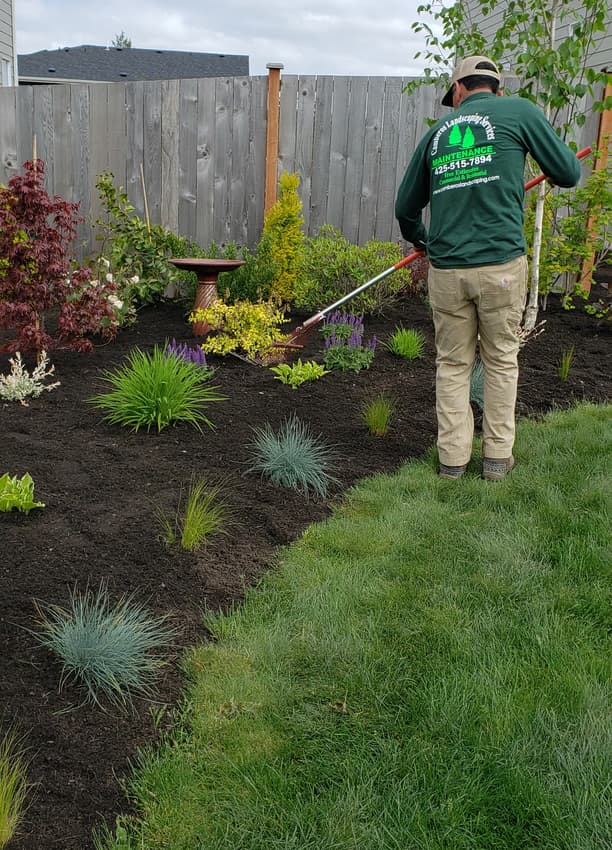
Drainage still matters. Flat or gently sloping heavy ground will sit wet. We use gravel where a paved drive would be wasted money, and a low wall where a bank needs a clean edge. Plantings can be simpler and tougher. The goal on a lot this size is a yard you can live in without a crew every week, with the edges kept and the drive solid.
How we do the work
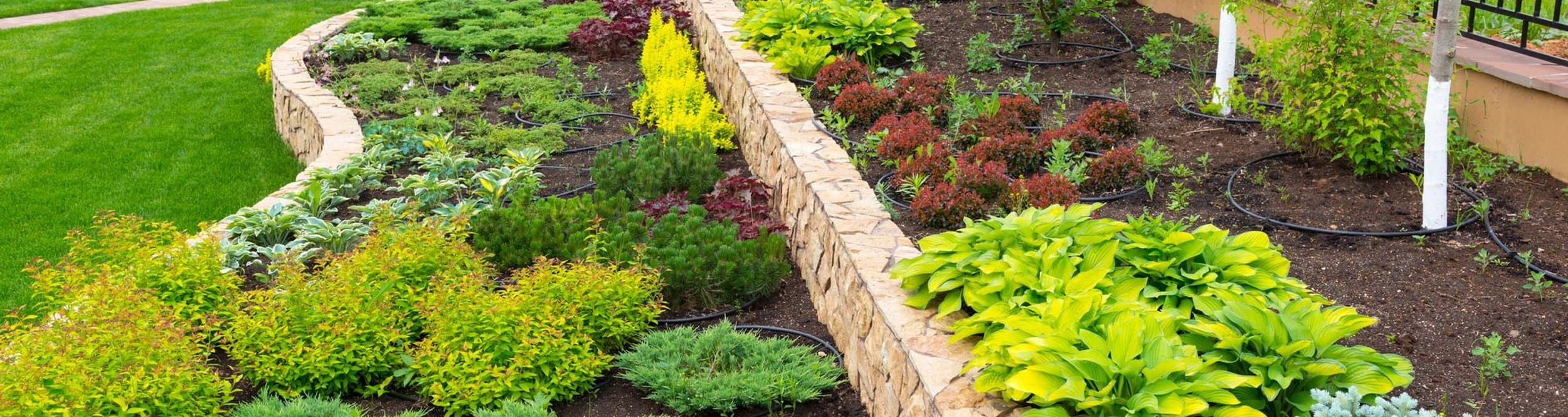
Hardscape is the permanent part of the yard: the floors you walk, the walls that hold soil, the steps between them. We design it around how water moves and how you move. A pretty patio with a stair that lands in the low spot is a collection of pieces, not a yard.
We would rather build less and have it drain than fill a lot with surfaces that all tip the wrong way. Materials stay limited. One stone, one wall type, so the place looks finished instead of like a showroom.
What we look at first
- The route from the door to the gate, the drive, and the part of the yard you use
- Every place water stands now
- Slopes that need a step or a wall before they need a plant
- What has to stay: trees, fences, the neighbor’s grade
Steps
Even risers, a tread you can put a whole foot on, and a surface that is not slick when it is wet. Landscape steps are where people fall. We build them like we will use them in the dark, in January.
Phasing
Drainage and walls first, floors second, plants last. Doing the plants first is how they get buried or trampled. If the budget is a phase, we stop at a stable, drained yard, not at a finished-looking corner that dumps water on the rest.
The grade drawing
We can usually do this on site without a formal plan set, and we still mark elevations. Water is a number, not a feeling. If the fall is not there, we add a drain or we change the floor. We do not squint and hope.
More from this crew
- Hardscaping across Snohomish County
- Paver installation in Stanwood
- Patio installation in Stanwood
- Retaining walls in Stanwood
- Landscape design in Stanwood
- Hardscaping in Arlington
- Hardscaping in Marysville
Sources for the climate and the water
- USDA plant hardiness map for choosing plants that can take a Snohomish County winter.
- EPA WaterSense on watering less once a lawn or a new planting is established.
- EPA Soak Up the Rain on keeping roof and yard water from becoming someone else’s problem.