Marysville spreads across flat ground north of Everett, out toward Tulalip. The lots are bigger than the city lots to the south, and the ground is slow to drain. Water does not run off a slope because there often is not a slope. A tight rock face in clay holds water like a wall. We leave the voids working and we give the water a path, or the stones walk forward.
Snohomish County · ZIP 98270 · 2020 population 70,714
Rock as an edge, not a dam
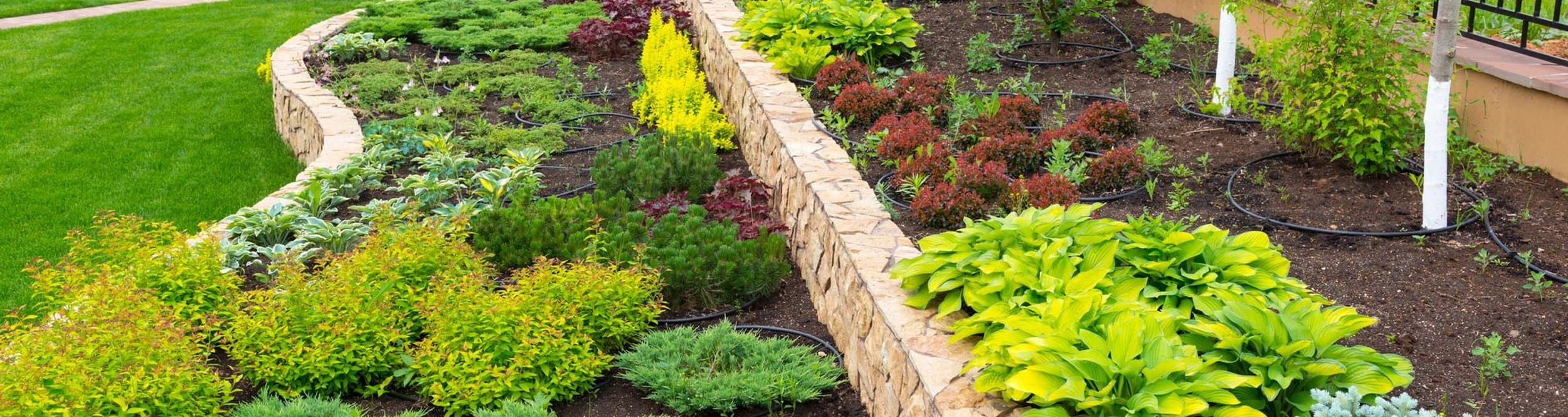
Valley rock walls are usually low: a bed edge, a short bank by the drive, a place to take up a foot of grade. We still bury the base course. Setting pretty stone on the grass is a border, and it will heave.
The stone looks right with vine maple and a gravel path. It looks wrong as a bright, uniform stack in a farm field. We pick rock that is the color of the dirt, not a showpiece from another state.
The ground in Marysville
Flat ground sounds easy until a winter storm sits on it. French drains and permeable surfaces matter here more than tall walls. Yards are family yards: room for a lawn, a play set, fruit trees that people already have and want kept, and a patio that can take a barbecue without turning into a pond.
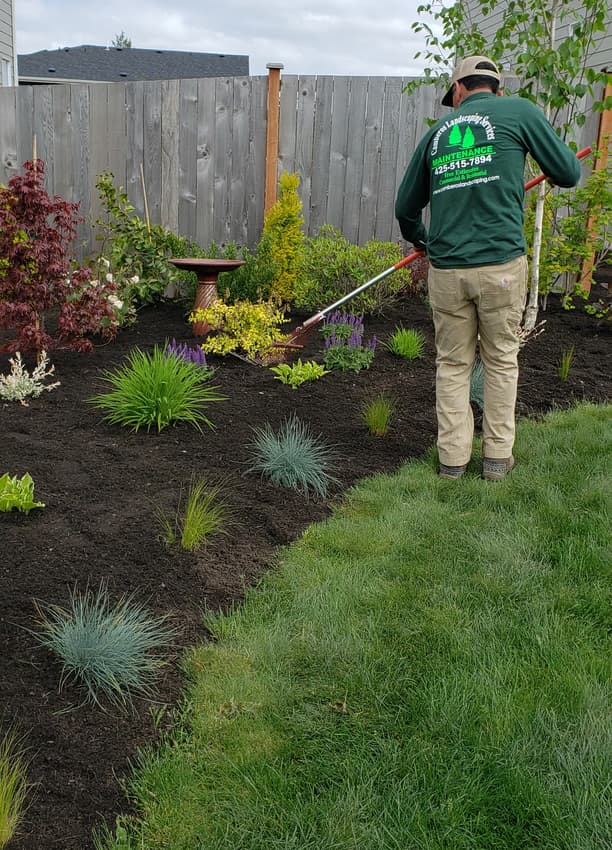
The soil is the kind that grows a decent lawn if it can breathe, and moss if it cannot. We mow, aerate, and seed the open lawns, and we bark the beds so the weed cycle slows down. Drainage is the job we would rather do first. A new sod lawn laid over undrained flat clay is a replacement lawn in two years. Fruit trees get pruned for light and for the fruit, not sheared into balls.
How we do the work
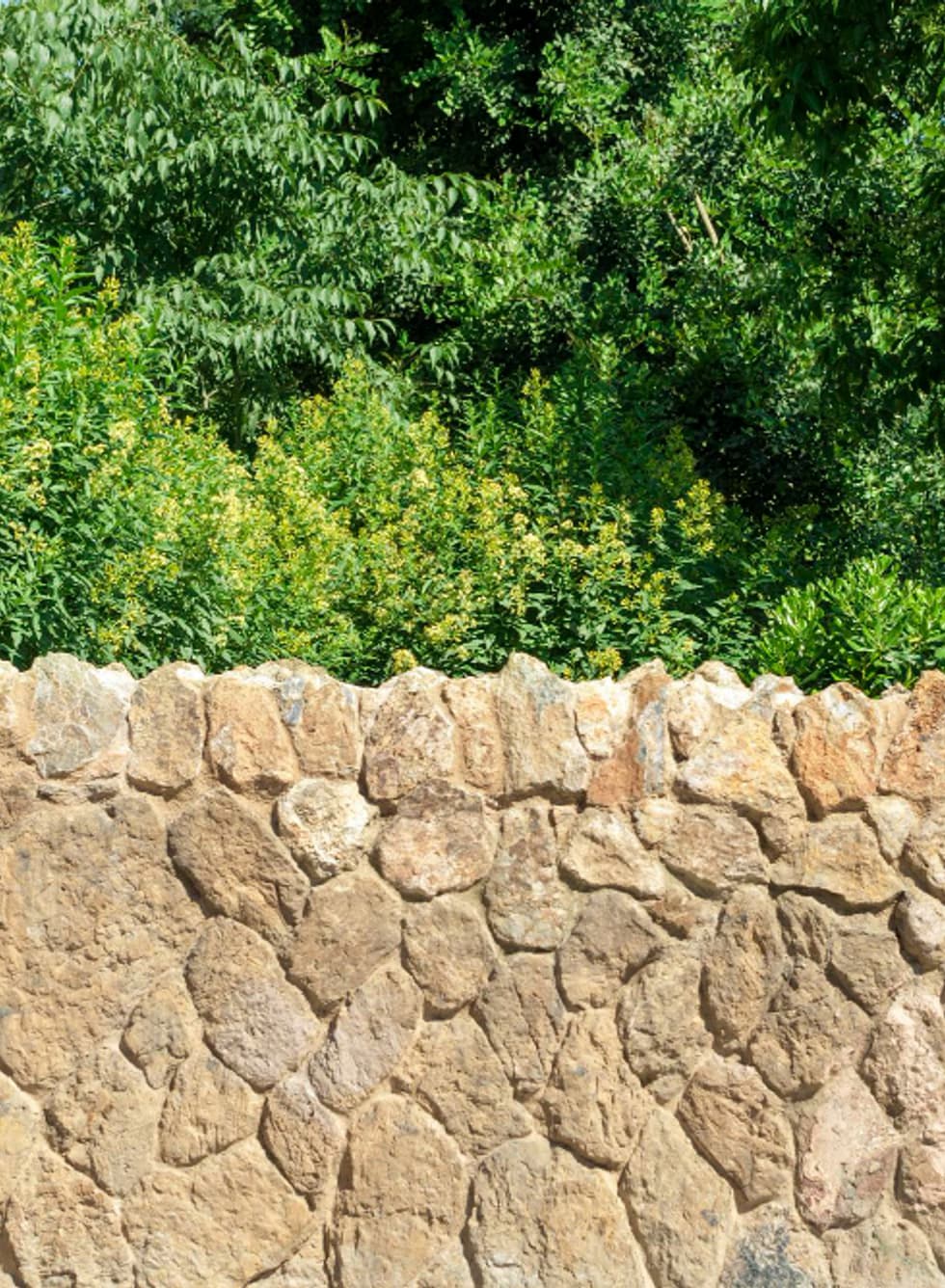
A rock wall is dry-stacked or lightly set, with the weight in the stone and the drainage in the voids. It is not a veneer glued to a failing timber wall. We use rock big enough for the height, with a face that leans back into the hill, and smaller rock locked behind so the soil does not pipe through.
Good rock work looks heavier at the bottom. If every stone is the same patio-sized block, it is not a wall, it is a stack. We source local stone and we will tell you when the access cannot take the boulder the job wants.
What we look at first
- Height and whether it is structural or a garden edge
- Machine access for real boulders
- The soil behind: clay that needs a drain, or rock that already sheds
- An existing wall we are tying into
Dry stack versus mortared
Most of our rock walls are dry, so water can leave and the wall can move a little without cracking a joint. Mortar is for a low, formal edge that is not holding a wet hill. We do not mortar a drainage problem shut.
What it will not do
A rock wall will not hold an engineered height it was not built for, and it will not stop a landslide. Past a certain height we involve an engineer or we change the grade so the wall can be shorter. That conversation happens before the stone is ordered.
The base course
The biggest stones, buried, on compacted rock or competent ground. If the first course is the one you can see sitting on the grass, the wall is already failing. You should see the second course at grade, not the bottom of the first.
More from this crew
- Rock walls across Snohomish County
- Retaining walls in Marysville
- Gravel installation in Marysville
- Landscaping in Marysville
- Hardscaping in Marysville
- Rock walls in Everett
- Rock walls in Arlington
- Rock walls in Lake Stevens
Sources for the climate and the water
- USDA plant hardiness map for choosing plants that can take a Snohomish County winter.
- EPA WaterSense on watering less once a lawn or a new planting is established.
- EPA Soak Up the Rain on keeping roof and yard water from becoming someone else’s problem.