Mill Creek was laid out as a planned city: curving streets, townhome slopes, golf-course edges, and lawns that were meant to look trimmed from the day the house sold. The soils are the soils of a graded subdivision, and the rain is the same county rain that finds every low corner. Small grade changes between units and patios. The wall is short and it is holding a walk people use every day, so the base still matters.
Snohomish County · ZIP 98012 · 2020 population 20,799
The townhome slope
We replace the failing timber or the loose block that came with the house. Drainage behind it is usually missing, which is why it tipped. The new wall is drained, and the patio above it is checked so it is not pouring water into the back of the block.
These yards are visible. Caps are straight, ends are finished, and we do not leave a cut slope for the neighbor to inherit.
The ground in Mill Creek
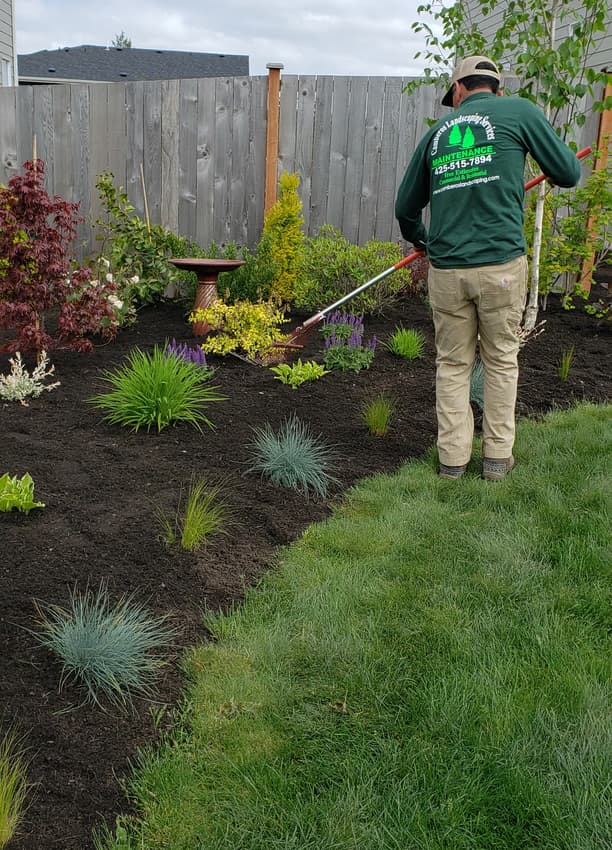
The expectation here is a clean edge. Lawns get mowed on a schedule, aerated before they mat down, and fertilized lightly enough that we are not just feeding the moss. Townhome and hillside lots need low walls and tight paver work more than they need a big landscape renovation. Bark beds are there to keep the mulch line straight and the weeds out of the front that faces the street.
We still find the same drainage mistakes as everywhere else: downspouts tied to nothing, and patios pitched back at the siding. The difference is that a small failure shows, because the rest of the street is kept. Native shrubs fit the greenbelts behind the houses. A tropical plant list does not survive the first wet winter, and it will not match the neighborhood even if it did.
How we do the work
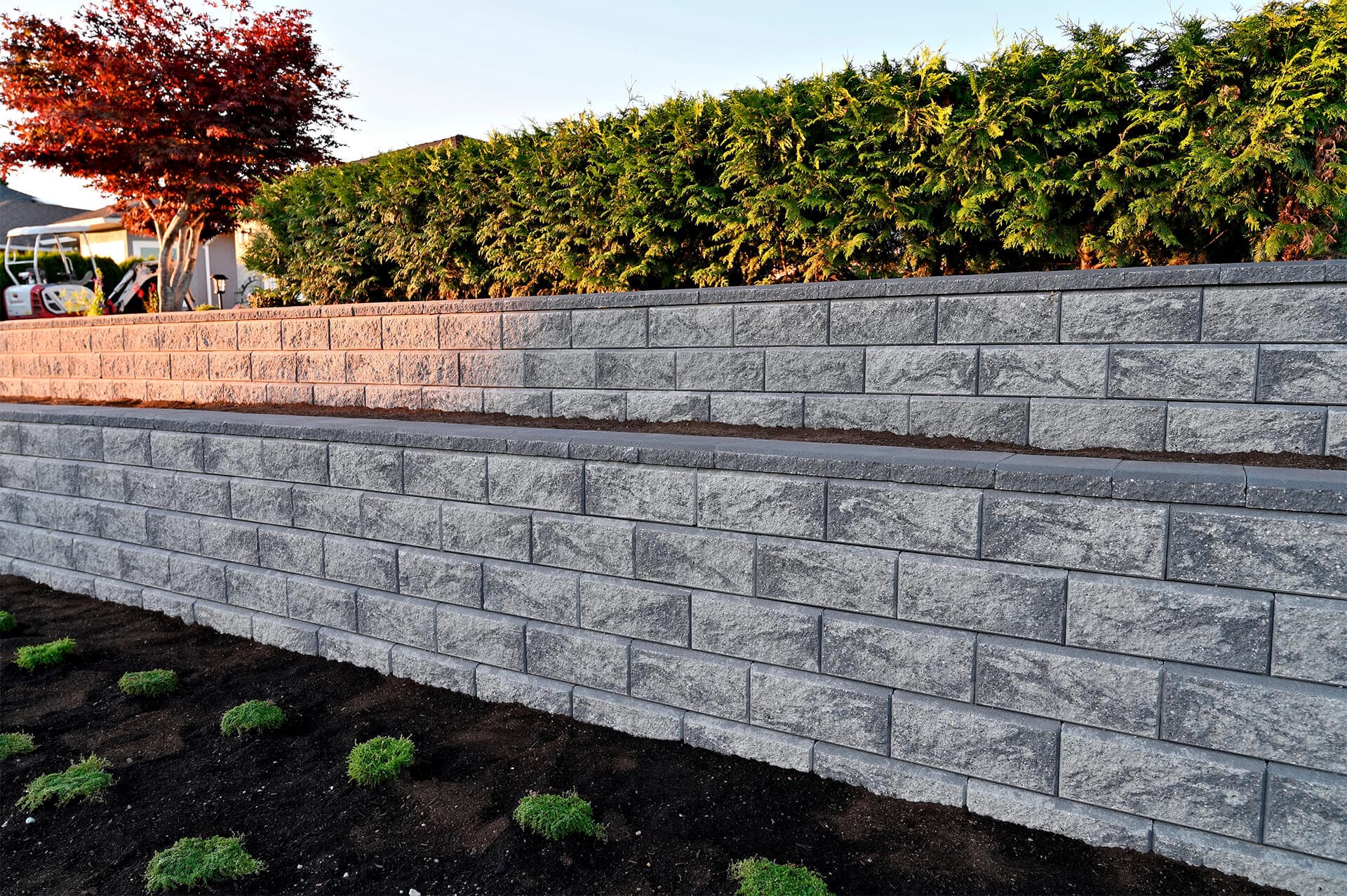
A retaining wall is a structure. The part you see is the block, the boulder, or the timber. The part that keeps it standing is the base, the batter or the geogrid, and the drain rock behind it. We do not stack block on the sod and call it a wall.
Height decides everything. A low garden wall and a wall holding a drive are not the same detail, the same permit, or the same price. We measure the retained dirt, not the face you wish it were.
What we look at first
- Retained height, at the tallest point
- What is above the wall: a lawn, a drive, a house
- Water coming down the slope
- Access for block or for boulders
Block, rock, or timber
Engineered block is predictable and what we use when the height or the permit wants an engineered system. Boulders fit the foothills and the older yards. Timber is a short-life choice in the wet, and we will say how many years you are buying.
What changes the price
Height, length, access, how much soil we have to move, and whether the wall holds a car or a flower bed. We measure those. A per-foot number shouted from the sidewalk ignores the tallest bay, which is the bay that costs the money.
The base
Compacted rock, buried enough that the first course is not sitting in the organic layer. A wall is not a stack. If the base is soft, we dig out and replace it. There is no fabric or foam that fixes a bad base.
More from this crew
- Retaining walls across Snohomish County
- Rock walls in Mill Creek
- French drain installation in Mill Creek
- Hardscaping in Mill Creek
- Patio installation in Mill Creek
- Retaining walls in Bothell
- Retaining walls in Lynnwood
- Retaining walls in Everett
Sources for the climate and the water
- USDA plant hardiness map for choosing plants that can take a Snohomish County winter.
- EPA WaterSense on watering less once a lawn or a new planting is established.
- EPA Soak Up the Rain on keeping roof and yard water from becoming someone else’s problem.