Lynnwood is built tight: retail around Alderwood, houses on smaller lots, and soils that were compacted when the neighborhood went in. Rain runs off roofs, walks, and the mall-side pavement faster than the yard can take it. City walls are often on the line, under a fence, with the neighbor’s grade on one side. We locate the line and the utilities before we excavate.
Snohomish County · ZIP 98036 · 2020 population 38,141
Short walls, close to the property line
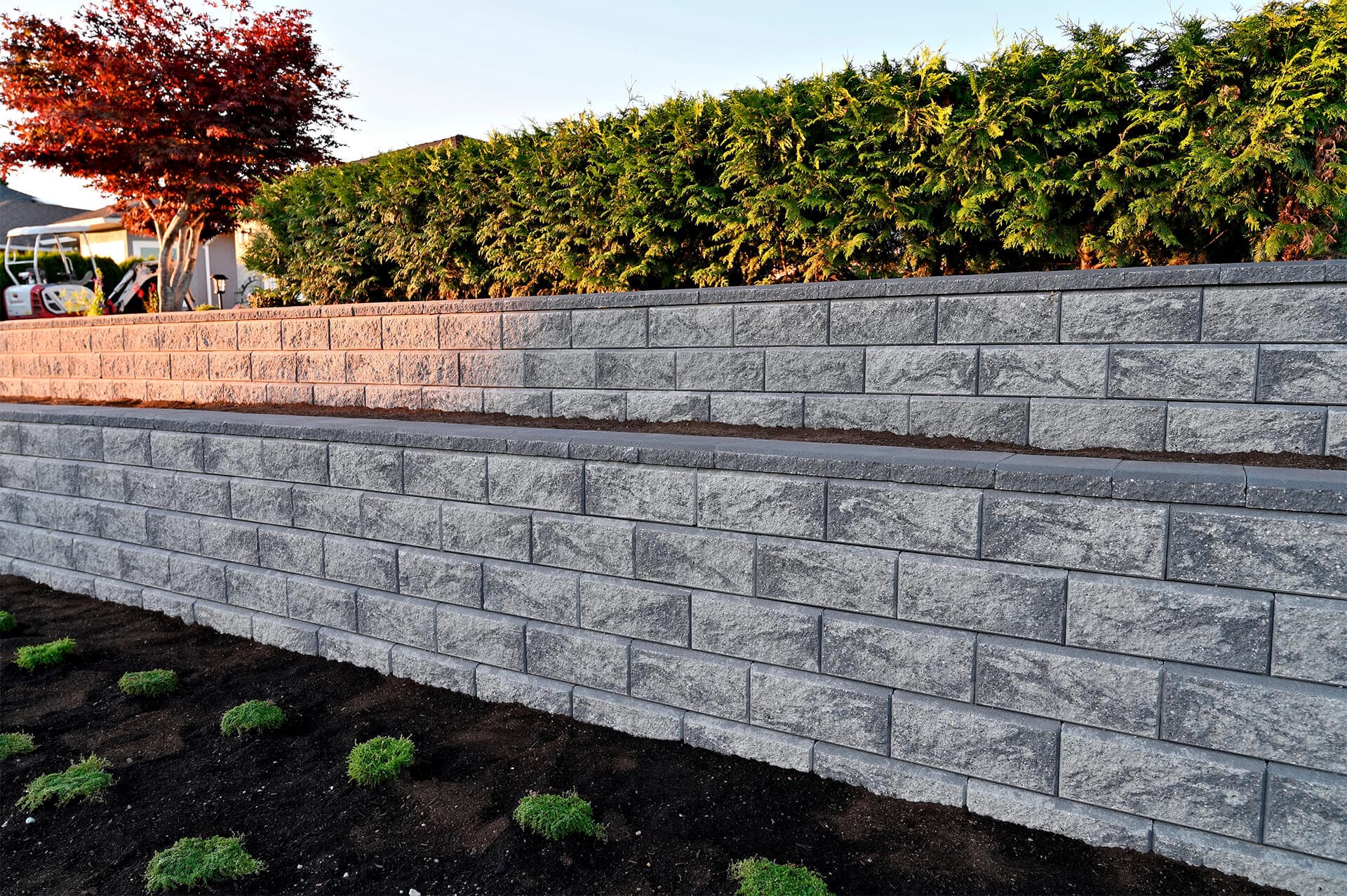
A two-foot wall that lets you flatten a side yard is a common city job. It still gets a base and a drain. Skipping them because the wall is short is why the fence above it leans in year five.
Machines may not fit. We bid the hand work if that is the access. A price that assumes a skid steer in a four-foot side yard is a price we will miss, so we do not write it.
The ground in Lynnwood
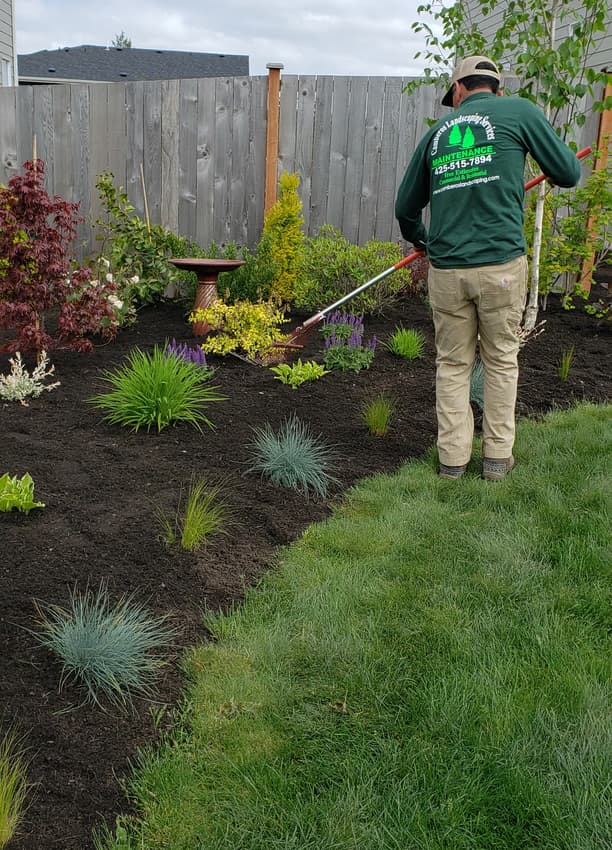
Residential yards here are often a rectangle of tired turf, a fence, and a patio slab that has settled toward the house. The soil underneath is dense. Water sits, moss follows, and a new plant put into that ground without loosening it just stalls.
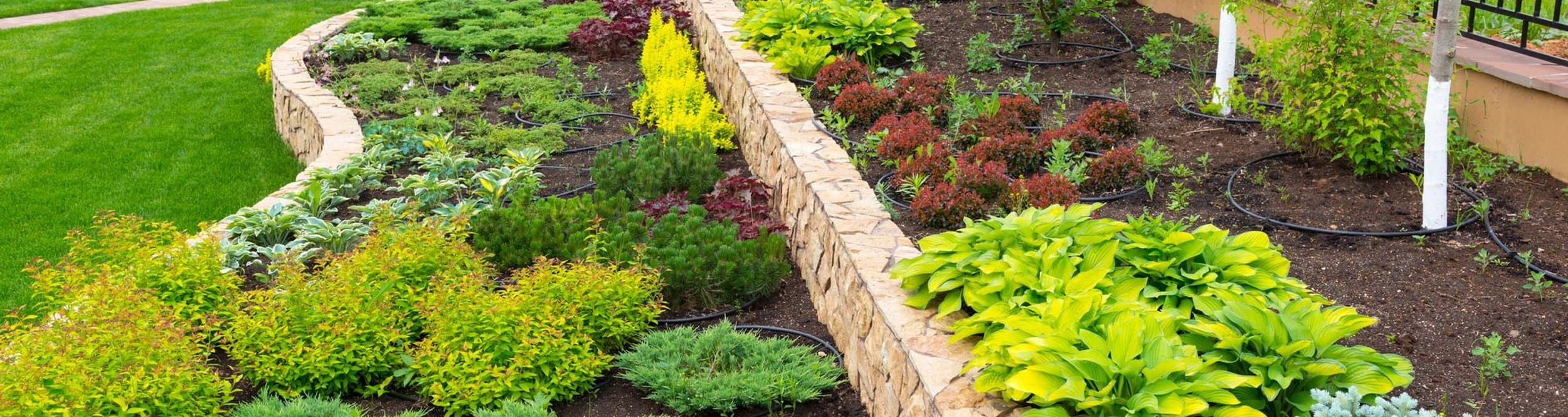
We aerate and dethatch before we promise a greener lawn, and we look at the downspouts before we sell a flower bed. Pavers and gravel show up on the small patios and the side yards where people actually walk. There is also commercial work along the retail streets — pruning, pressure washing, and beds that have to look kept without a full-time gardener. Native, lower-water plantings make more sense than a hedge that needs shearing every three weeks next to a busy road.
How we do the work
A retaining wall is a structure. The part you see is the block, the boulder, or the timber. The part that keeps it standing is the base, the batter or the geogrid, and the drain rock behind it. We do not stack block on the sod and call it a wall.
Height decides everything. A low garden wall and a wall holding a drive are not the same detail, the same permit, or the same price. We measure the retained dirt, not the face you wish it were.
What we look at first
- Retained height, at the tallest point
- What is above the wall: a lawn, a drive, a house
- Water coming down the slope
- Access for block or for boulders
The base
Compacted rock, buried enough that the first course is not sitting in the organic layer. A wall is not a stack. If the base is soft, we dig out and replace it. There is no fabric or foam that fixes a bad base.
What changes the price
Height, length, access, how much soil we have to move, and whether the wall holds a car or a flower bed. We measure those. A per-foot number shouted from the sidewalk ignores the tallest bay, which is the bay that costs the money.
Drainage is part of the wall
Rock behind the face, a pipe at the heel, and an outlet you can see. Weep holes alone, stuffed with the native clay, are not a drain. This is the step that gets skipped on walls that lean.
More from this crew
- Retaining walls across Snohomish County
- Rock walls in Lynnwood
- French drain installation in Lynnwood
- Hardscaping in Lynnwood
- Patio installation in Lynnwood
- Retaining walls in Edmonds
- Retaining walls in Brier
- Retaining walls in Mountlake Terrace
Sources for the climate and the water
- USDA plant hardiness map for choosing plants that can take a Snohomish County winter.
- EPA WaterSense on watering less once a lawn or a new planting is established.
- EPA Soak Up the Rain on keeping roof and yard water from becoming someone else’s problem.