Mill Creek was laid out as a planned city: curving streets, townhome slopes, golf-course edges, and lawns that were meant to look trimmed from the day the house sold. The soils are the soils of a graded subdivision, and the rain is the same county rain that finds every low corner. The architecture is already modern and repetitive. The yard fails when the patio is a busy pattern on a bad base.
Snohomish County · ZIP 98012 · 2020 population 20,799
Straight lines, small walls, a floor that fits the slider
We replace tired builder hardscape with a quieter version that drains. Low walls where the townhome grade needs them. Walks that reach the alley or the gate without a mud gap. Lighting if you want it, aimed down, not at the neighbor’s bedroom.
Irrigation and the new work get drawn together. Heads do not spray the glass door because nobody moved them.
The ground in Mill Creek
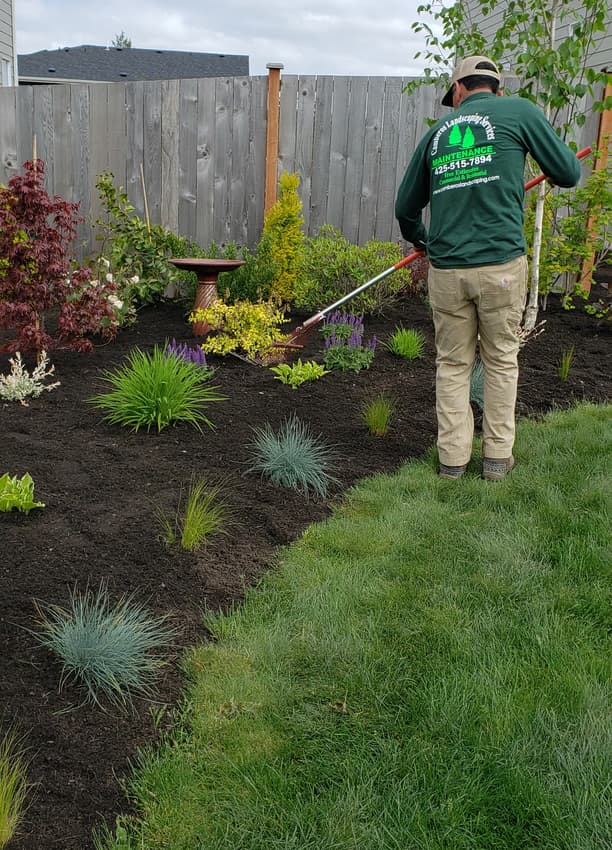
The expectation here is a clean edge. Lawns get mowed on a schedule, aerated before they mat down, and fertilized lightly enough that we are not just feeding the moss. Townhome and hillside lots need low walls and tight paver work more than they need a big landscape renovation. Bark beds are there to keep the mulch line straight and the weeds out of the front that faces the street.
We still find the same drainage mistakes as everywhere else: downspouts tied to nothing, and patios pitched back at the siding. The difference is that a small failure shows, because the rest of the street is kept. Native shrubs fit the greenbelts behind the houses. A tropical plant list does not survive the first wet winter, and it will not match the neighborhood even if it did.
How we do the work
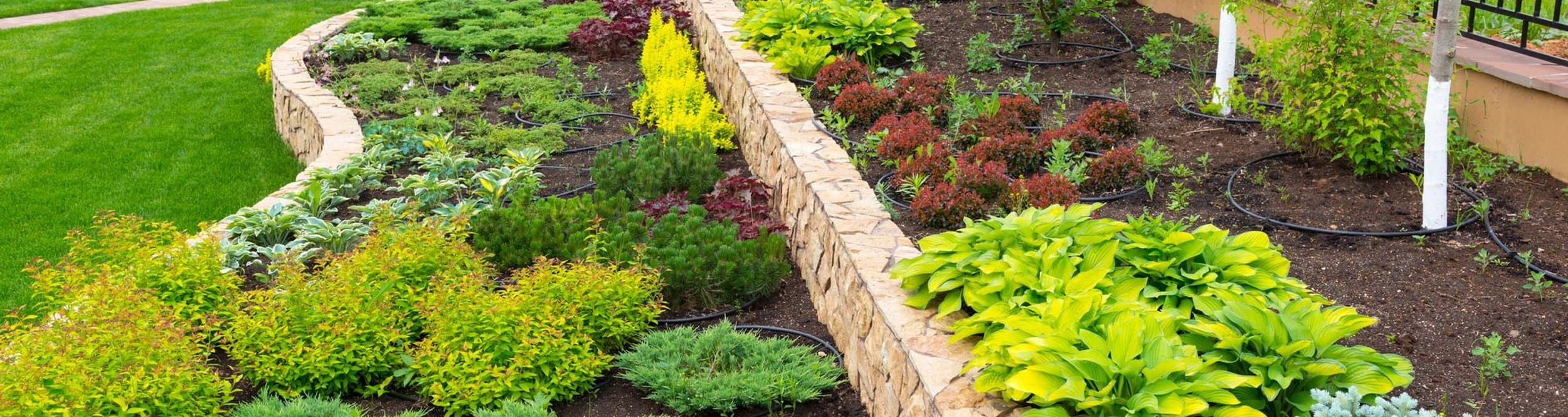
Hardscape is the permanent part of the yard: the floors you walk, the walls that hold soil, the steps between them. We design it around how water moves and how you move. A pretty patio with a stair that lands in the low spot is a collection of pieces, not a yard.
We would rather build less and have it drain than fill a lot with surfaces that all tip the wrong way. Materials stay limited. One stone, one wall type, so the place looks finished instead of like a showroom.
What we look at first
- The route from the door to the gate, the drive, and the part of the yard you use
- Every place water stands now
- Slopes that need a step or a wall before they need a plant
- What has to stay: trees, fences, the neighbor’s grade
Phasing
Drainage and walls first, floors second, plants last. Doing the plants first is how they get buried or trampled. If the budget is a phase, we stop at a stable, drained yard, not at a finished-looking corner that dumps water on the rest.
The grade drawing
We can usually do this on site without a formal plan set, and we still mark elevations. Water is a number, not a feeling. If the fall is not there, we add a drain or we change the floor. We do not squint and hope.
Steps
Even risers, a tread you can put a whole foot on, and a surface that is not slick when it is wet. Landscape steps are where people fall. We build them like we will use them in the dark, in January.
More from this crew
- Hardscaping across Snohomish County
- Paver installation in Mill Creek
- Patio installation in Mill Creek
- Retaining walls in Mill Creek
- Landscape design in Mill Creek
- Hardscaping in Bothell
- Hardscaping in Lynnwood
- Hardscaping in Everett
Sources for the climate and the water
- USDA plant hardiness map for choosing plants that can take a Snohomish County winter.
- EPA WaterSense on watering less once a lawn or a new planting is established.
- EPA Soak Up the Rain on keeping roof and yard water from becoming someone else’s problem.