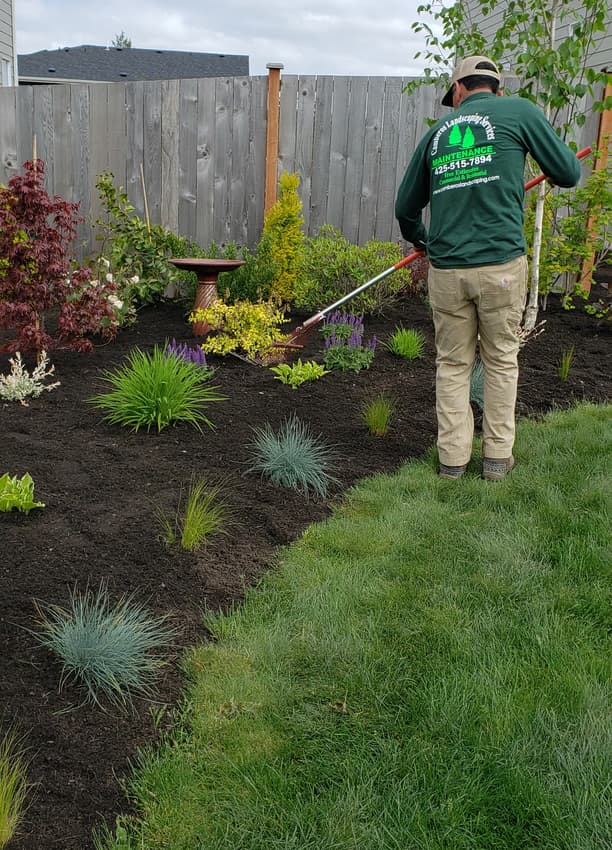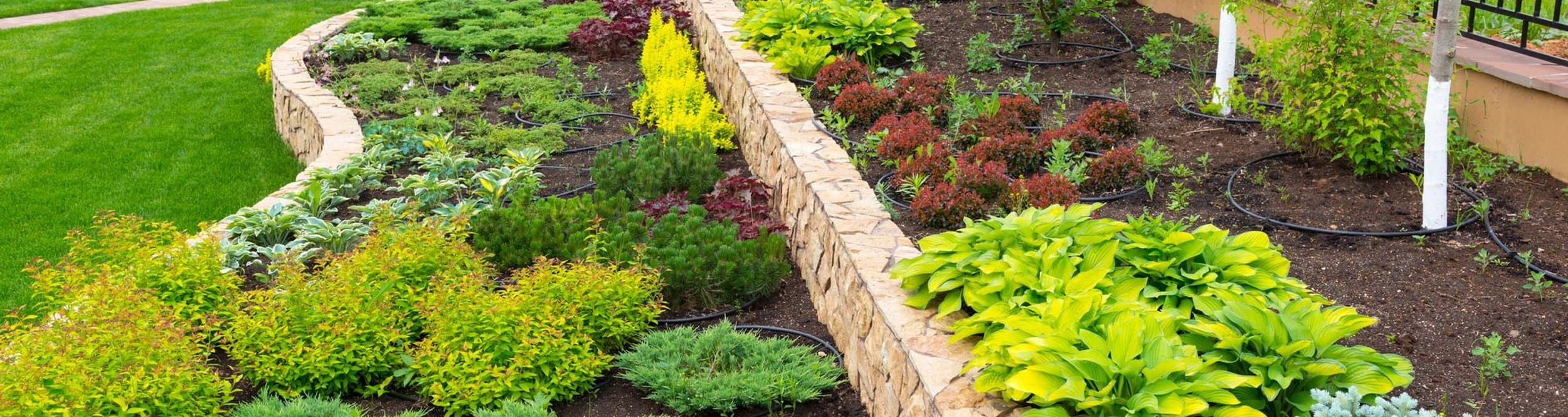
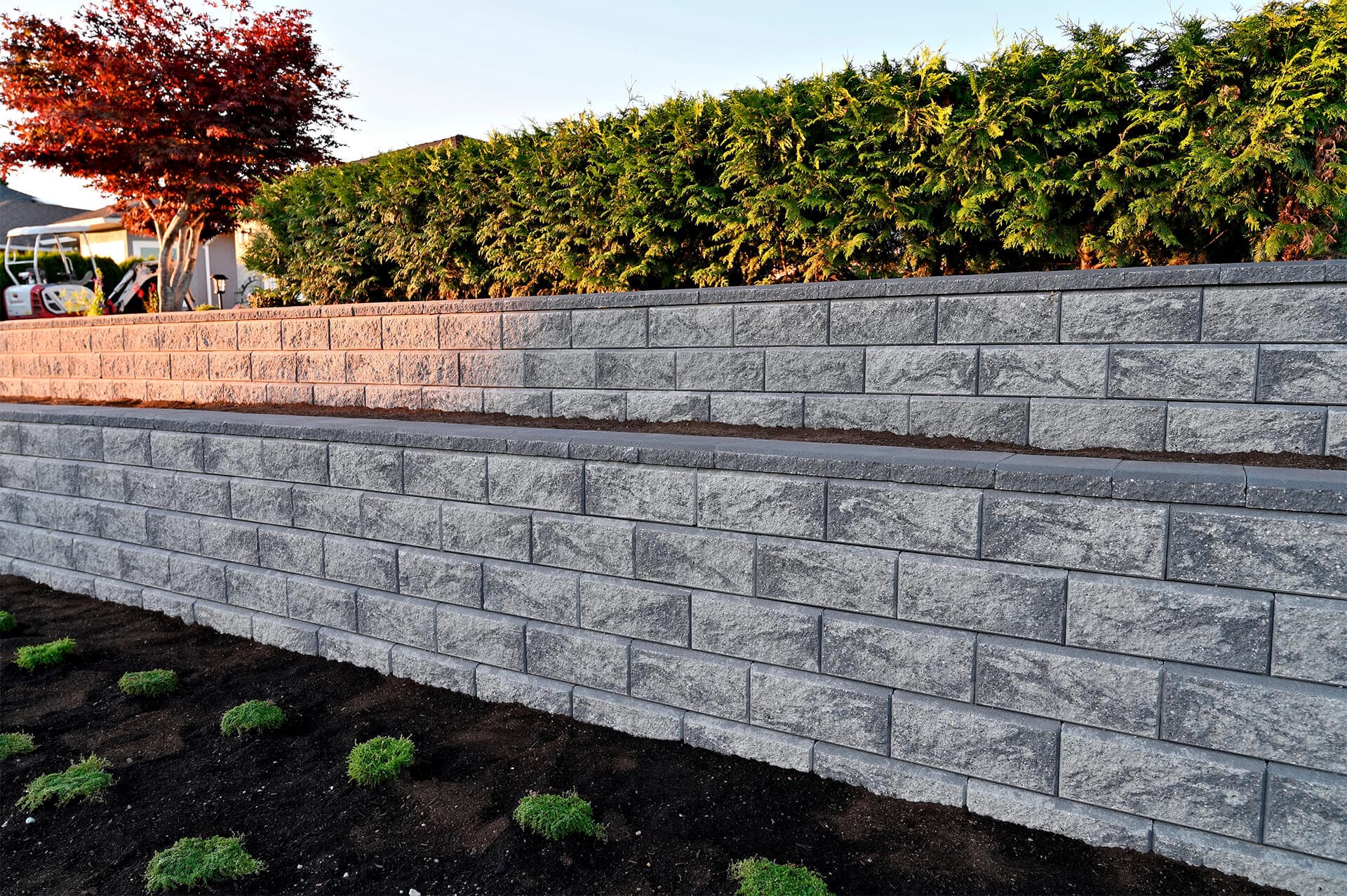
Everett is the big city in the county, and the ground changes block to block: waterfront fill, older neighborhoods with tired topsoil, and tighter lots where the roof and the driveway shed more water than the yard can swallow. Boeing and the working waterfront are the backdrop. The yards are ordinary residential lots with city drainage problems. City walls are often on the line, under a fence, with the neighbor’s grade on one side. We locate the line and the utilities before we excavate.
Snohomish County · ZIP 98201 · 2020 population 110,002
Short walls, close to the property line
A two-foot wall that lets you flatten a side yard is a common city job. It still gets a base and a drain. Skipping them because the wall is short is why the fence above it leans in year five.
Machines may not fit. We bid the hand work if that is the access. A price that assumes a skid steer in a four-foot side yard is a price we will miss, so we do not write it.
The ground in Everett
On a typical Everett lot the soil has been graded, driven on, and patched for years. It sheds or it puddles, and it rarely does the quiet middle thing a new lawn needs. Downspouts often end in a splash block ten inches from the foundation. That is the puddle by the basement window.
We work from the waterfront streets up into the neighborhoods near the naval station and out toward the valley. Access is the constraint people forget: a machine that fits a Mill Creek cul-de-sac may not fit a fenced backyard off Broadway. Permeable pavers and a short French drain solve more Everett problems than a bigger patio. Lawns here are for people who want the grass cut and the moss knocked back, not a show lawn. We schedule mowing and aeration around that.
How we do the work
A retaining wall is a structure. The part you see is the block, the boulder, or the timber. The part that keeps it standing is the base, the batter or the geogrid, and the drain rock behind it. We do not stack block on the sod and call it a wall.
Height decides everything. A low garden wall and a wall holding a drive are not the same detail, the same permit, or the same price. We measure the retained dirt, not the face you wish it were.
What we look at first
- Retained height, at the tallest point
- What is above the wall: a lawn, a drive, a house
- Water coming down the slope
- Access for block or for boulders
What changes the price
Height, length, access, how much soil we have to move, and whether the wall holds a car or a flower bed. We measure those. A per-foot number shouted from the sidewalk ignores the tallest bay, which is the bay that costs the money.
Drainage is part of the wall
Rock behind the face, a pipe at the heel, and an outlet you can see. Weep holes alone, stuffed with the native clay, are not a drain. This is the step that gets skipped on walls that lean.
The base
Compacted rock, buried enough that the first course is not sitting in the organic layer. A wall is not a stack. If the base is soft, we dig out and replace it. There is no fabric or foam that fixes a bad base.
More from this crew
- Retaining walls across Snohomish County
- Rock walls in Everett
- French drain installation in Everett
- Hardscaping in Everett
- Patio installation in Everett
- Retaining walls in Mukilteo
- Retaining walls in Marysville
- Retaining walls in Lake Stevens
Sources for the climate and the water
- USDA plant hardiness map for choosing plants that can take a Snohomish County winter.
- EPA WaterSense on watering less once a lawn or a new planting is established.
- EPA Soak Up the Rain on keeping roof and yard water from becoming someone else’s problem.