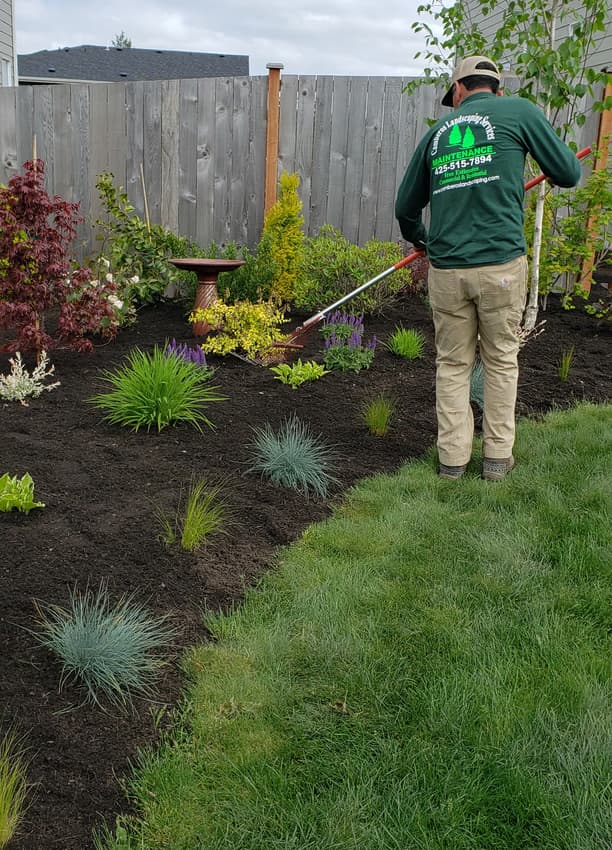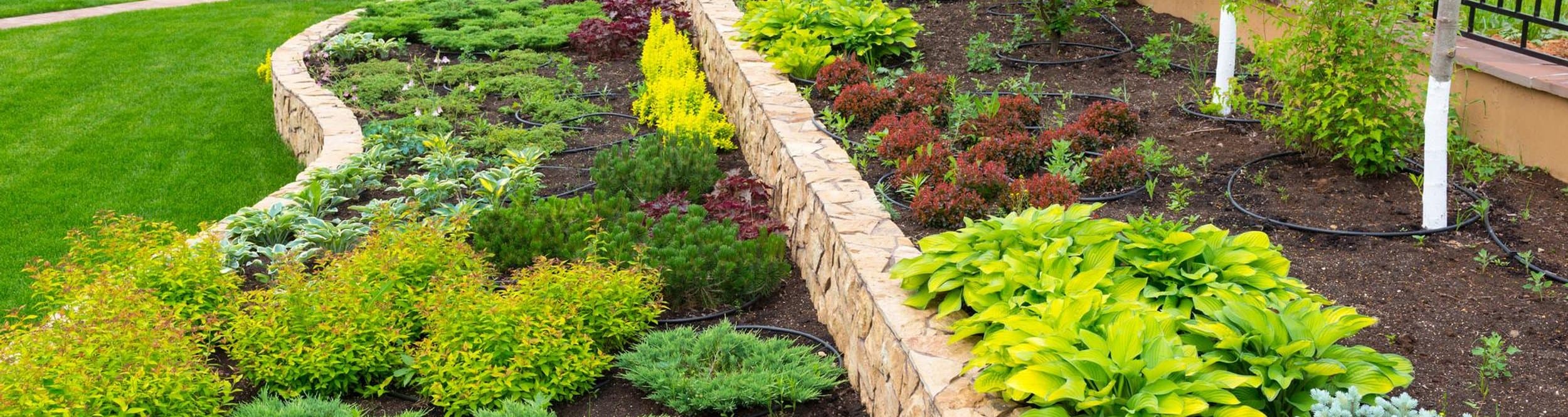

The lake is the point of the town, and it is also the drainage problem. Shoreline lots shed water toward the water, banks erode where wakes and winter rain meet a soft edge, and inland yards stay damp because the water table and the clay do not let a storm leave quickly. Landscaping that pushes lawn and feed to the water is a short-term look and a long-term bank problem. We split the property into those two ideas.
Snohomish County · ZIP 98258 · 2020 population 34,385
The yard up top, the shore planted
Upper yard: patio, lawn, ordinary planting, drainage that stays out of the lake. Bank: natives, no loose bark, no new bare soil if we can help it. Pruning opens windows without clearing the slope.
If the project you described is “just make it look like a golf edge to the water,” we redesign the ask before we accept it.
The ground in Lake Stevens
On the water, the work is the bank and the view. A retaining edge, native shoreline plants such as red osier dogwood, and a rain garden or a drain that slows runoff before it hits the lake do more for the property than a strip of sod at the top of an eroding slope. Fertilizer and bare soil washing into the lake are how a nice lawn becomes a neighbor problem.
Off the water, in the newer neighborhoods, the soils were compacted during construction and the lawns were rolled out on top. They look fine in July and sour in February. Aeration, a real topdressing, and getting the downspouts away from the foundation are the unglamorous jobs that keep those yards from turning to moss. Patios here are for the view. We build the base as if it will be wet half the year, because it will.
How we do the work
Landscaping, the way we mean it, is building the yard: dirt moved, water handled, plants in the ground, bark and edges finished. It is not a mow, and it is not only a patio. When a project is really just a patio or just a drain, we call it that and we price that.
We plant what can live through a wet winter and a dry August without a full-time gardener. The sequence is always the same. Get the water right, set the hard surfaces, then plant. Plants first is how they get buried or stood in a puddle.
What we look at first
- What you want to be able to do in the yard
- The thing that is failing now: water, a slope, a dead lawn, an empty bed
- Trees that stay
- A budget, so we phase instead of half-building everything
Phasing
If the whole yard does not fit the budget, we finish a piece that works: the drainage and the door area, for example. An even layer of unfinished everything looks like we left. A finished half looks like a plan. We prefer the second.
Warranty, plainly
We stand behind the build: pitch, drainage, and plants installed correctly. We do not warranty a plant against no water in August, a deer, or a freeze that splits a species we told you was marginal. Establishment watering is your job unless we are contracted to do it.
Plants we will not specify
Anything that wants a dry summer and no rain in winter, unless you understand it is a gamble. We plant for zone and for the wet. A plant you loved in California can be attempted in a pot. It should not be the backbone of the yard.
More from this crew
- Landscaping across Snohomish County
- Landscape design in Lake Stevens
- Yard cleanup in Lake Stevens
- Paver installation in Lake Stevens
- French drain installation in Lake Stevens
- Landscaping in Everett
- Landscaping in Marysville
- Landscaping in Snohomish
Sources for the climate and the water
- USDA plant hardiness map for choosing plants that can take a Snohomish County winter.
- EPA WaterSense on watering less once a lawn or a new planting is established.
- EPA Soak Up the Rain on keeping roof and yard water from becoming someone else’s problem.