
Everett is the big city in the county, and the ground changes block to block: waterfront fill, older neighborhoods with tired topsoil, and tighter lots where the roof and the driveway shed more water than the yard can swallow. Boeing and the working waterfront are the backdrop. The yards are ordinary residential lots with city drainage problems. City landscaping fails when every wish is included and the water is not. We edit the wish list to what fits, and we build the drain.
Snohomish County · ZIP 98201 · 2020 population 110,002
A complete small yard
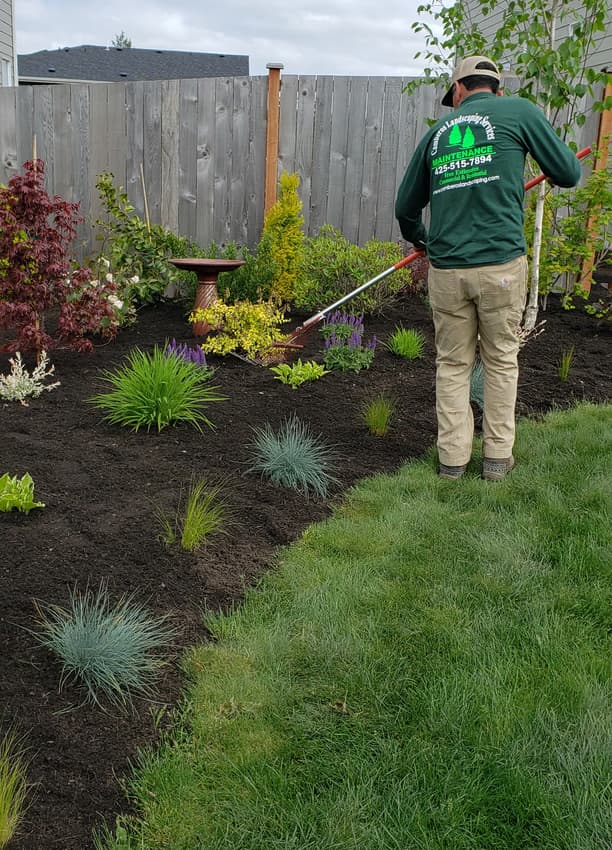
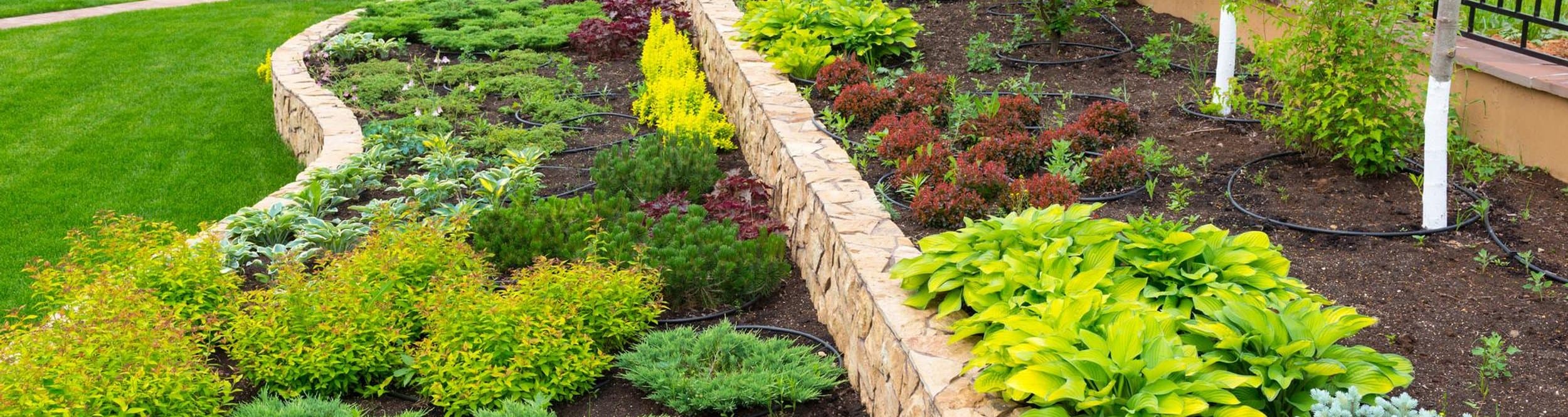
Patio or a repaired lawn, a bed you can maintain, one tree that will not wreck the walk, lighting if you need to see the steps, and a path to the gate. Bark and a clean edge make it look finished. The work is often done with a small machine or by hand. The price includes that labor instead of pretending a skid steer fits.
We leave you with something you can mow or walk the day we finish, not a mud lot “waiting on plants.”
The ground in Everett
On a typical Everett lot the soil has been graded, driven on, and patched for years. It sheds or it puddles, and it rarely does the quiet middle thing a new lawn needs. Downspouts often end in a splash block ten inches from the foundation. That is the puddle by the basement window.
We work from the waterfront streets up into the neighborhoods near the naval station and out toward the valley. Access is the constraint people forget: a machine that fits a Mill Creek cul-de-sac may not fit a fenced backyard off Broadway. Permeable pavers and a short French drain solve more Everett problems than a bigger patio. Lawns here are for people who want the grass cut and the moss knocked back, not a show lawn. We schedule mowing and aeration around that.
How we do the work
Landscaping, the way we mean it, is building the yard: dirt moved, water handled, plants in the ground, bark and edges finished. It is not a mow, and it is not only a patio. When a project is really just a patio or just a drain, we call it that and we price that.
We plant what can live through a wet winter and a dry August without a full-time gardener. The sequence is always the same. Get the water right, set the hard surfaces, then plant. Plants first is how they get buried or stood in a puddle.
What we look at first
- What you want to be able to do in the yard
- The thing that is failing now: water, a slope, a dead lawn, an empty bed
- Trees that stay
- A budget, so we phase instead of half-building everything
Order of work
Demo and haul, grade and drain, hardscape, soil, plants, bark, irrigation last or with the plants. We do not mulch a bed we are about to trench. You should see the yard get rougher before it gets finished. That is the sequence, not a delay.
Phasing
If the whole yard does not fit the budget, we finish a piece that works: the drainage and the door area, for example. An even layer of unfinished everything looks like we left. A finished half looks like a plan. We prefer the second.
Plants we will not specify
Anything that wants a dry summer and no rain in winter, unless you understand it is a gamble. We plant for zone and for the wet. A plant you loved in California can be attempted in a pot. It should not be the backbone of the yard.
More from this crew
- Landscaping across Snohomish County
- Landscape design in Everett
- Yard cleanup in Everett
- Paver installation in Everett
- French drain installation in Everett
- Landscaping in Mukilteo
- Landscaping in Marysville
- Landscaping in Lake Stevens
Sources for the climate and the water
- USDA plant hardiness map for choosing plants that can take a Snohomish County winter.
- EPA WaterSense on watering less once a lawn or a new planting is established.
- EPA Soak Up the Rain on keeping roof and yard water from becoming someone else’s problem.