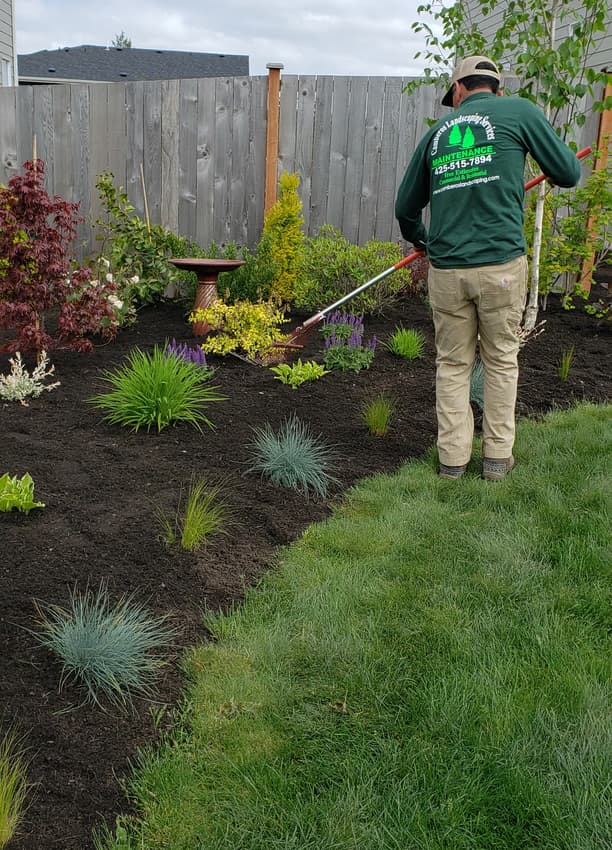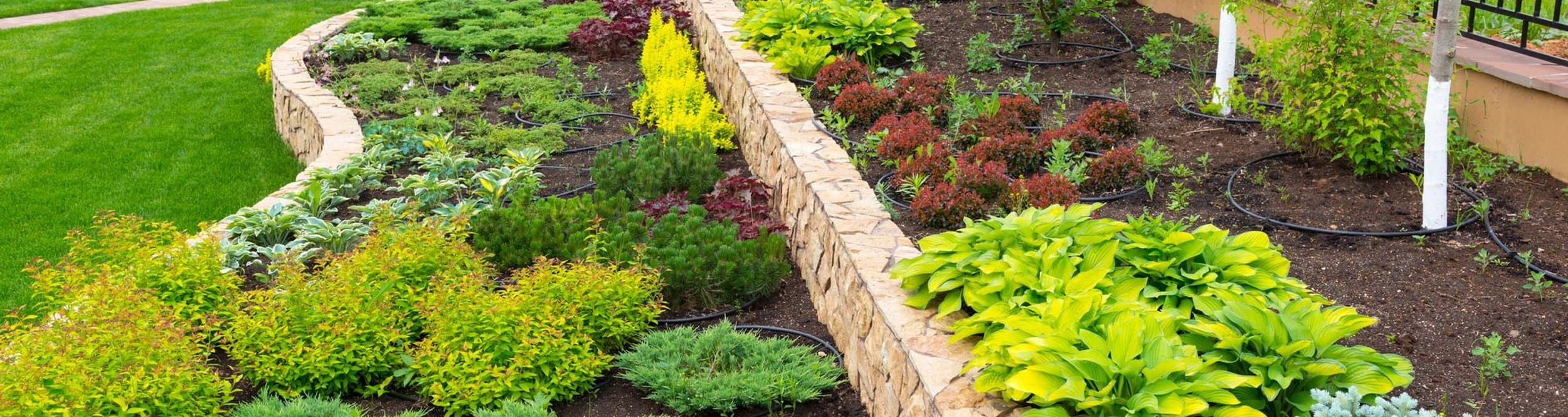
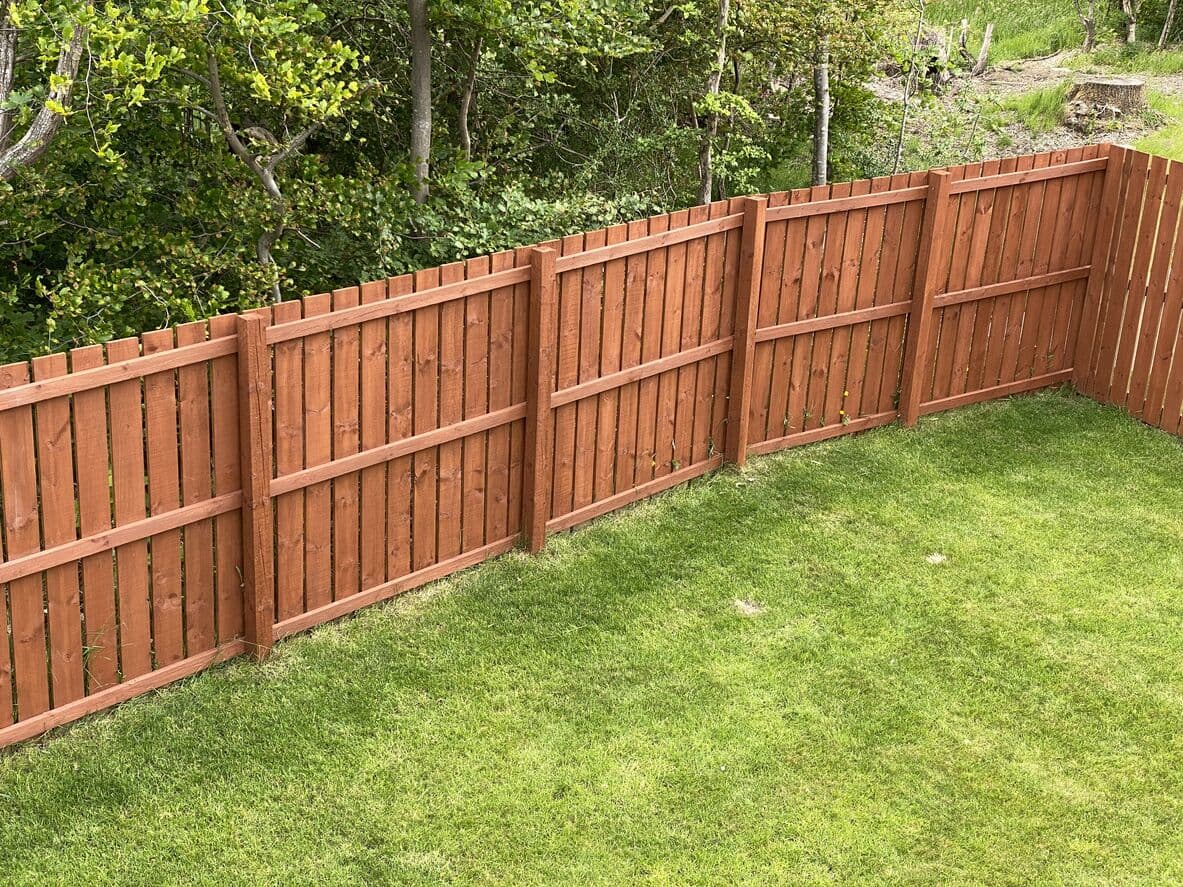
Everett is the big city in the county, and the ground changes block to block: waterfront fill, older neighborhoods with tired topsoil, and tighter lots where the roof and the driveway shed more water than the yard can swallow. Boeing and the working waterfront are the backdrop. The yards are ordinary residential lots with city drainage problems. City fences are disputes when the line is guessed. We want the pins or a survey, and we want you to have talked to the neighbor before we dig.
Snohomish County · ZIP 98201 · 2020 population 110,002
On the line, with the neighbor in mind
Side yards are tight. Posts go in by hand, holes are straight, and the fence does not block the drainage that currently runs along the line. A new solid fence set into a swale is a dam. We keep the bottom up or we leave a gap where the water runs.
Good side, gates, and the trash day path get decided before the first post. Moving a gate after the concrete is the expensive kind of change.
The ground in Everett
On a typical Everett lot the soil has been graded, driven on, and patched for years. It sheds or it puddles, and it rarely does the quiet middle thing a new lawn needs. Downspouts often end in a splash block ten inches from the foundation. That is the puddle by the basement window.
We work from the waterfront streets up into the neighborhoods near the naval station and out toward the valley. Access is the constraint people forget: a machine that fits a Mill Creek cul-de-sac may not fit a fenced backyard off Broadway. Permeable pavers and a short French drain solve more Everett problems than a bigger patio. Lawns here are for people who want the grass cut and the moss knocked back, not a show lawn. We schedule mowing and aeration around that.
How we do the work
A fence in this county fails at the post. Wood rots where it meets wet soil, and a post set in a soft hole leans when the clay shifts. We set posts deep, we crown the concrete or the rock so water does not pool on the wood, and we keep the bottom of a board fence off the ground so it is not wicking mud.
Cedar for the boards, pressure-treated or steel where it touches the soil. We do not bury untreated lumber. Gates are built as gates, with a brace, not as a short panel that sags by August.
What we look at first
- The property line, before we dig
- Slope, and whether the fence should step or rack
- Who keeps the good side, and where the gates need to swing
- Sprinklers and the neighbor’s grade
Posts
Deep, plumb, and crowned at the top of the footing so water sheds. The wood that touches soil is treated or it is steel. We do not set a cedar post in a soup of native clay and hope the gravel dust saves it.
Stepped or racked
Stepped panels on a real slope, so the boards stay plumb and the gaps stay even. Racking a flat panel down a hill twists the frame. We pick the method from the grade, not from a photo.
Gates
A diagonal brace in the right direction, hinges that can carry the weight, and a latch you can open with one hand. The gate post is bigger or deeper than the line posts. A sagging gate is a build problem, and it shows up fast.
More from this crew
- Fence installation across Snohomish County
- Retaining walls in Everett
- Gravel installation in Everett
- Hardscaping in Everett
- Landscaping in Everett
- Fence installation in Mukilteo
- Fence installation in Marysville
- Fence installation in Lake Stevens
Sources for the climate and the water
- USDA plant hardiness map for choosing plants that can take a Snohomish County winter.
- EPA WaterSense on watering less once a lawn or a new planting is established.
- EPA Soak Up the Rain on keeping roof and yard water from becoming someone else’s problem.