Mukilteo drops toward the ferry and the Sound. Salt reaches the lower streets, and the hills above the terminal shed water down through yards that were cut into the slope. A flat inland detail does not survive on these lots. An exposed fence takes weather on the face. Posts still fail from the ground, which is wetter than people think on a “well-drained” bluff lot.
Snohomish County · ZIP 98275 · 2020 population 21,246
Wind and salt on the boards
We set posts for wind, closer or deeper when the fence is a solid screen above the Sound. The style might be open if you want the view and the wind to pass. A privacy fence on the bluff edge is a structural question, not just a look.
Hardware is hot-dipped or stainless where the salt reaches it. Plated big-box hinges rust and stain the cedar, and then they fail. We spend the money on the hinges.
The ground in Mukilteo
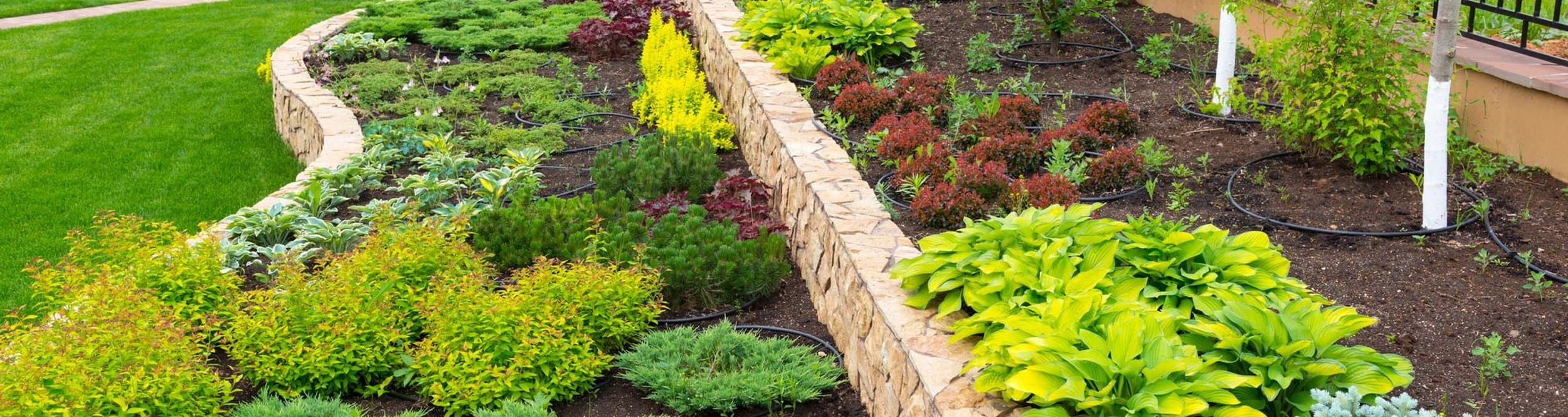
Hillside runoff is the job. A patio with a view is also a patio that can send water at the house if the base and the pitch are wrong. We build the drain before the pavers, and we hold the bank with a wall that has rock or drain tile behind it, not a decorative stack sitting on the sod.
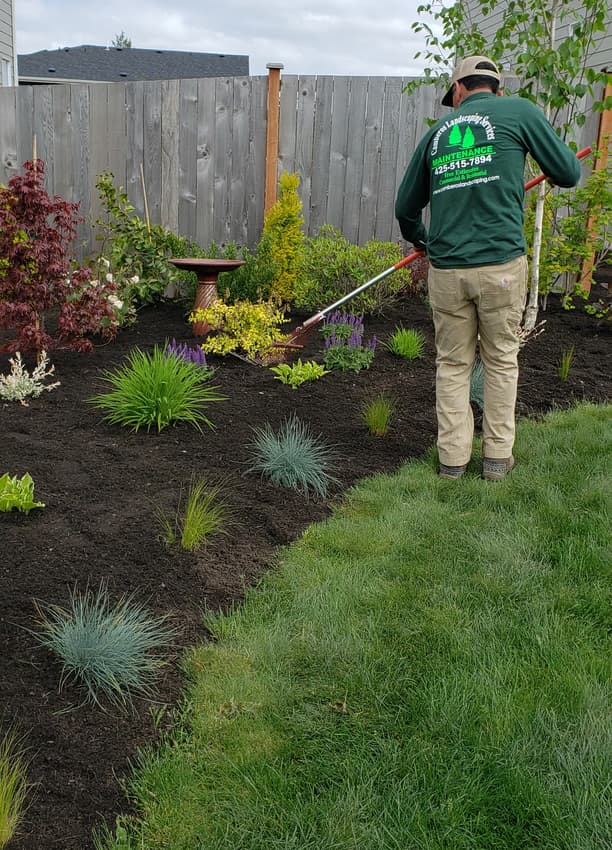
Salt-tolerant natives belong on the exposed edges. Pressure washing is how you get the marine film off a walk and a railing; it comes back, so we treat it as upkeep. Lawns on the upper, slightly flatter streets behave more like the rest of the county — clay, moss, shade from big trees — and we maintain them that way. The waterfront lots are a different trade: erosion, wind, and a view you do not want to block with a hedge.
How we do the work
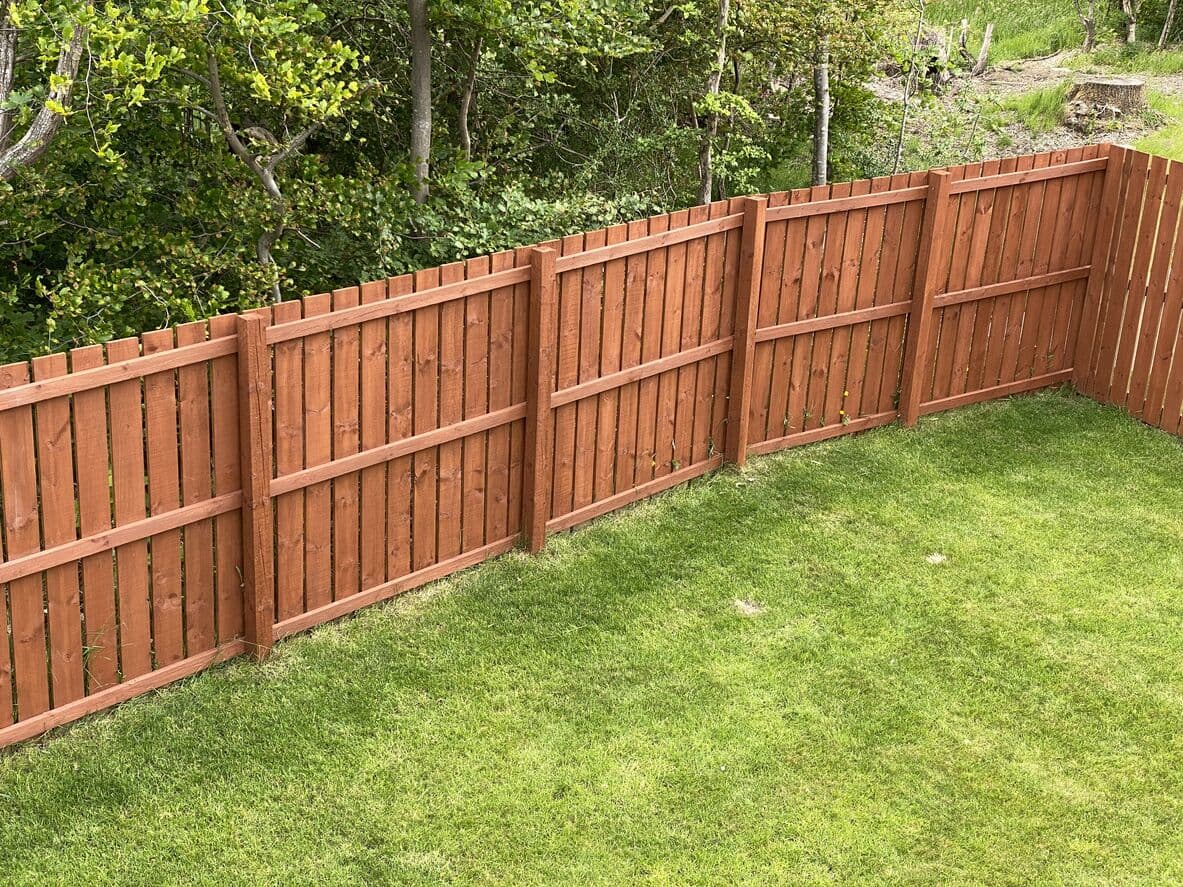
A fence in this county fails at the post. Wood rots where it meets wet soil, and a post set in a soft hole leans when the clay shifts. We set posts deep, we crown the concrete or the rock so water does not pool on the wood, and we keep the bottom of a board fence off the ground so it is not wicking mud.
Cedar for the boards, pressure-treated or steel where it touches the soil. We do not bury untreated lumber. Gates are built as gates, with a brace, not as a short panel that sags by August.
What we look at first
- The property line, before we dig
- Slope, and whether the fence should step or rack
- Who keeps the good side, and where the gates need to swing
- Sprinklers and the neighbor’s grade
How long cedar lasts
A well-set cedar fence in this rain is often in the fifteen to twenty year range, longer if the bottom stays dry and you stain it before it goes gray and split. The posts outlive a careless bottom board. We build so you can replace boards later without replacing the line.
Posts
Deep, plumb, and crowned at the top of the footing so water sheds. The wood that touches soil is treated or it is steel. We do not set a cedar post in a soup of native clay and hope the gravel dust saves it.
Stepped or racked
Stepped panels on a real slope, so the boards stay plumb and the gaps stay even. Racking a flat panel down a hill twists the frame. We pick the method from the grade, not from a photo.
More from this crew
- Fence installation across Snohomish County
- Retaining walls in Mukilteo
- Gravel installation in Mukilteo
- Hardscaping in Mukilteo
- Landscaping in Mukilteo
- Fence installation in Everett
- Fence installation in Edmonds
- Fence installation in Mill Creek
Sources for the climate and the water
- USDA plant hardiness map for choosing plants that can take a Snohomish County winter.
- EPA WaterSense on watering less once a lawn or a new planting is established.
- EPA Soak Up the Rain on keeping roof and yard water from becoming someone else’s problem.