Everett is the big city in the county, and the ground changes block to block: waterfront fill, older neighborhoods with tired topsoil, and tighter lots where the roof and the driveway shed more water than the yard can swallow. Boeing and the working waterfront are the backdrop. The yards are ordinary residential lots with city drainage problems. Tight access and clay. Gravel is often the right surface because water can get through it, but only if the base is open and the edges are held.
Snohomish County · ZIP 98201 · 2020 population 110,002
The side yard and the parking pad
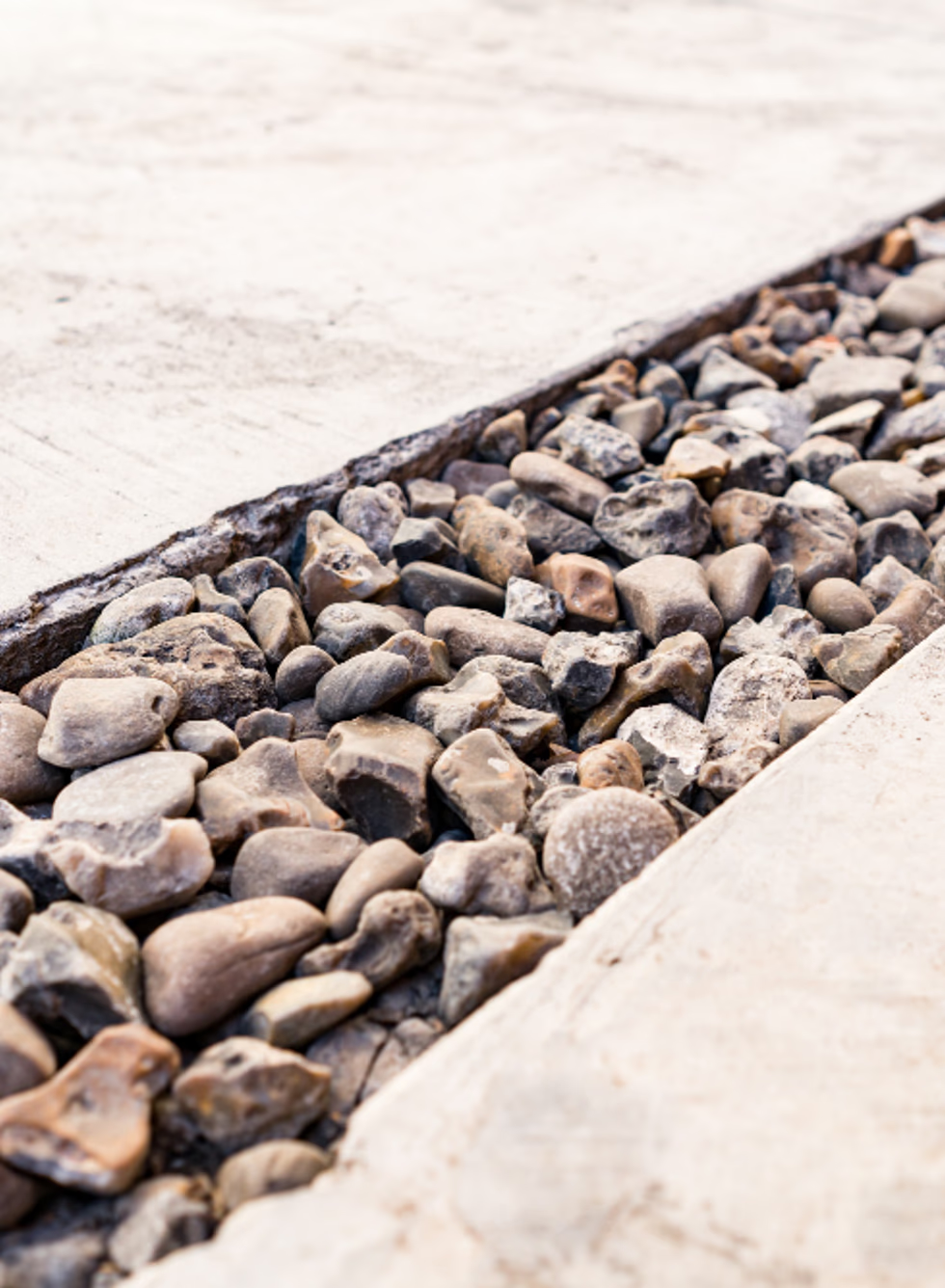
We use it for side paths, under gates, and for a pad where a full paver drive is more than the yard needs. Fabric, compacted base, a restrained edge against the lawn. Without the edge, you mow rocks forever.
Permeable is not the same as “dumped and forgotten.” The surface still needs weed maintenance. We can refresh it. We cannot make it zero work.
The ground in Everett
On a typical Everett lot the soil has been graded, driven on, and patched for years. It sheds or it puddles, and it rarely does the quiet middle thing a new lawn needs. Downspouts often end in a splash block ten inches from the foundation. That is the puddle by the basement window.
We work from the waterfront streets up into the neighborhoods near the naval station and out toward the valley. Access is the constraint people forget: a machine that fits a Mill Creek cul-de-sac may not fit a fenced backyard off Broadway. Permeable pavers and a short French drain solve more Everett problems than a bigger patio. Lawns here are for people who want the grass cut and the moss knocked back, not a show lawn. We schedule mowing and aeration around that.
How we do the work
Gravel stays put when it has a compacted base, a fabric or a separation from the clay, a slight crown or a cross slope, and an edge. A load of rock dumped on the grass is a mud pit by spring. We dig out the soft soil, build the base, and top it with the rock you actually walk and drive on.
The top rock is not the same as the base rock. Base is angular and locks. The surface might be smaller crushed rock or a cleaner gravel, depending on whether this is a drive, a dog run, or a path.
What we look at first
- Cars, foot traffic, or both
- How soft the ground is in March
- Where the water crosses the drive today
- An edge against lawn or beds so the rock does not migrate
Base rock and top rock
The base is larger, angular, and compacted in lifts until it stops moving under the machine. The top is smaller and thick enough to cover, not thick enough to rut into piles. One material dumped once is not a drive section.
Fabric
Separation fabric keeps clay from pumping up. It is not weed magic, and it is not a substitute for digging out the mud. We lap it and we cover it. Sun-baked fabric at the edge means the gravel was spread too thin.
Edges and weeds
Steel, timber, or a paved border on a walking path. On a farm drive, the ditch is the edge. Weeds in gravel get pulled or treated early, before the root is a shrub. A thick, clean surface grows fewer of them than a dirty thin one.
More from this crew
- Gravel installation across Snohomish County
- French drain installation in Everett
- Fence installation in Everett
- Hardscaping in Everett
- Paver installation in Everett
- Gravel installation in Mukilteo
- Gravel installation in Marysville
- Gravel installation in Lake Stevens
Sources for the climate and the water
- USDA plant hardiness map for choosing plants that can take a Snohomish County winter.
- EPA WaterSense on watering less once a lawn or a new planting is established.
- EPA Soak Up the Rain on keeping roof and yard water from becoming someone else’s problem.