Mill Creek was laid out as a planned city: curving streets, townhome slopes, golf-course edges, and lawns that were meant to look trimmed from the day the house sold. The soils are the soils of a graded subdivision, and the rain is the same county rain that finds every low corner. These lawns are judged from the sidewalk. They are also easy to scalp because they look even. Even and too short is how the brown patches start.
Snohomish County · ZIP 98012 · 2020 population 20,799
A consistent cut on a street that notices
We mow on a line you can live with, edges crisp, clippings off the walk and the drive. Height stays reasonable. A golf-green cut in April is a moss lawn in June, and we will not do it to match a picture.
Irrigation that runs the morning we mow makes a mess and a rut. We ask for the clock to be off the night before. If it is not, we may delay. That is the service, not a missed appointment.
The ground in Mill Creek
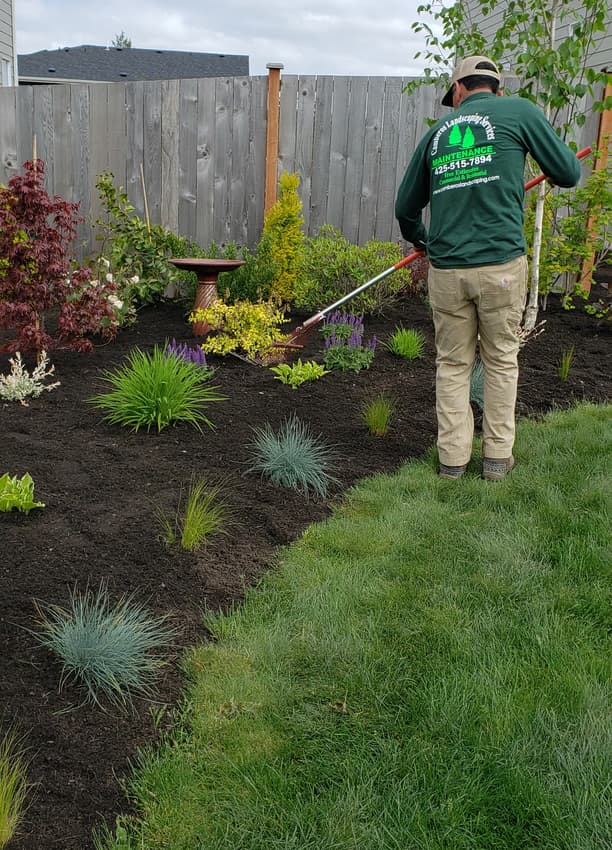
The expectation here is a clean edge. Lawns get mowed on a schedule, aerated before they mat down, and fertilized lightly enough that we are not just feeding the moss. Townhome and hillside lots need low walls and tight paver work more than they need a big landscape renovation. Bark beds are there to keep the mulch line straight and the weeds out of the front that faces the street.
We still find the same drainage mistakes as everywhere else: downspouts tied to nothing, and patios pitched back at the siding. The difference is that a small failure shows, because the rest of the street is kept. Native shrubs fit the greenbelts behind the houses. A tropical plant list does not survive the first wet winter, and it will not match the neighborhood even if it did.
How we do the work
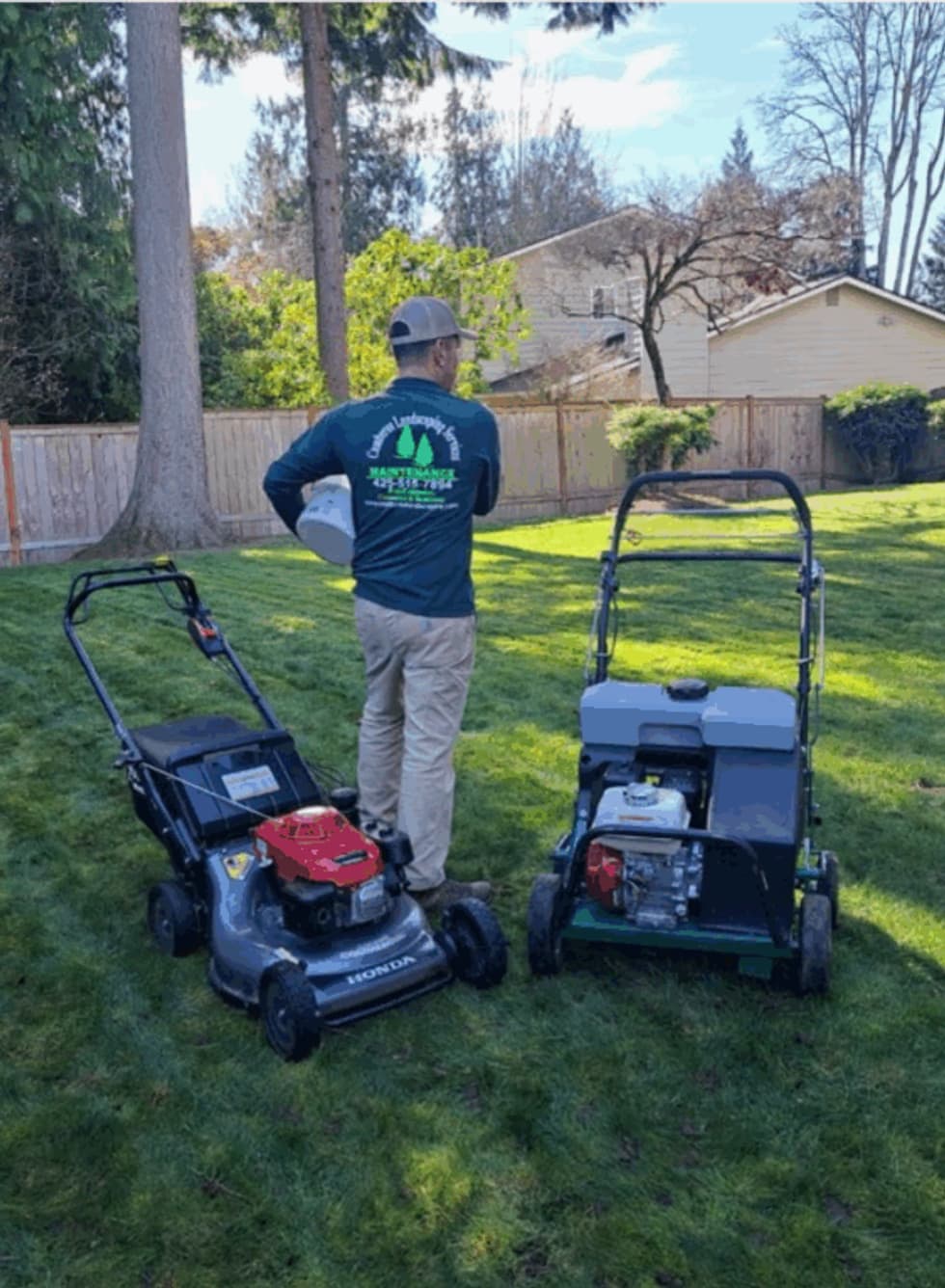
We mow higher than most people expect, especially from October through May, because a short lawn in this climate is a moss invitation. Blades stay sharp. Dull mowing tears wet grass and leaves the gray tips everyone blames on fertilizer.
Clippings stay on the lawn when they are short. They are not thatch. Bags come out when the grass is long and wet and would clump. We do not mow a saturated yard into ruts and call it service. We skip or we reschedule that corner.
Edges are trimmed. Walks are blown. A mow that leaves a windrow on the sidewalk is not finished.
What we look at first
- How soft the ground is that morning
- Obstacles, toys, and the wet spot we should walk around
- Edges that need a trimmer without scalping the tree wells
- Whether the lawn wants a higher set this month
Height by season
Higher from late fall through spring. Slightly lower in a dry August if the lawn is healthy, never down to the crown. The number on the deck matters less than not seeing soil and not tearing wet tips.
Clippings
Short clippings stay. They feed the lawn. Long wet clumps get removed because they smother and they track into the house. Bagging every light mow just to have a empty look is how the lawn gets hungry.
Edges
Trimmer lines along walks and beds, kept vertical. We do not trench the edge a little deeper every visit. When the bed line is lost, that is an edging job with a blade, once, not a weekly excavation.
More from this crew
- Lawn mowing across Snohomish County
- Lawn aeration in Mill Creek
- Lawn fertilization in Mill Creek
- Lawn weed control in Mill Creek
- Yard cleanup in Mill Creek
- Lawn mowing in Bothell
- Lawn mowing in Lynnwood
- Lawn mowing in Everett
Sources for the climate and the water
- USDA plant hardiness map for choosing plants that can take a Snohomish County winter.
- EPA WaterSense on watering less once a lawn or a new planting is established.
- EPA Soak Up the Rain on keeping roof and yard water from becoming someone else’s problem.