Brier is a quiet grid of larger lots under mature trees. The canopy keeps the soil cool and damp, clay holds the rain, and moss will take a lawn that only sees sun in patches. Shade, not neglect, is usually why the grass looks tired. No farm grows sod for the floor of a cedar grove. Laid there, it thins, mosses, and you have paid for a temporary green.
Snohomish County · ZIP 98036 · 2020 population 6,642
Sod is the wrong product in deep shade
We will sod the open part of a wooded lot, the piece that gets real afternoon or morning light. Under the canopy we stop and talk about bark, ferns, and a smaller lawn. That is cheaper over three years than replacing sod.
Where light is marginal, we say so in the bid. If you still want sod, we prepare the soil and we tell you it is a shorter life. We do not pretend otherwise to win the job.
The ground in Brier
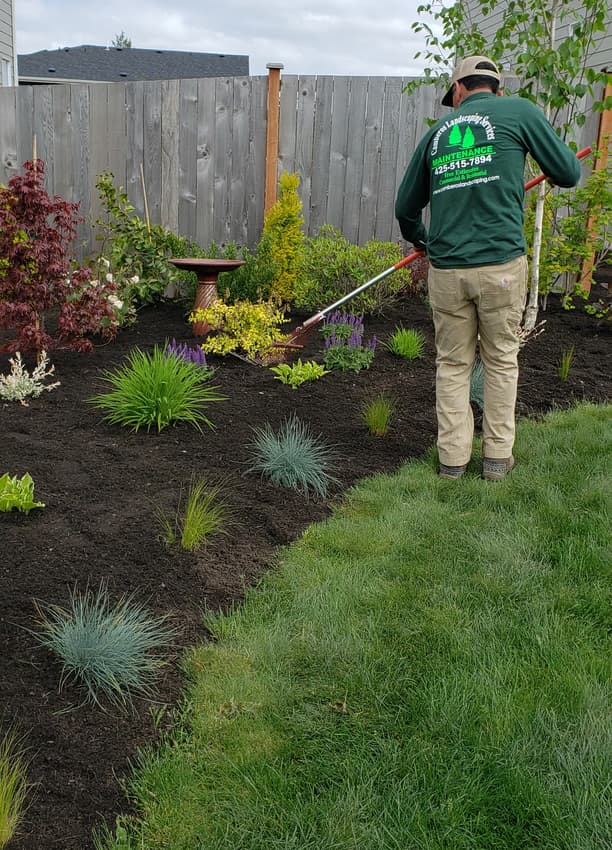
Most of the yards we walk in Brier have been under evergreens for decades. Roots sit high, the lawn is thin where the shade is deepest, and the beds along the fence line are already trying to become forest again — ferns and salal move in on their own. That is a better clue than a catalog. Fighting those beds with a sun-loving flower border means weeding forever.
Clay and humidity show up as moss in the turf and as slippery film on patios that never quite dry. Aeration and a real dethatch help the lawn, but only if we also lift the canopy enough for light to reach the grass. Tree work here is pruning for structure and clearance, not topping. Privacy matters on these lots, so we thin, we do not scalp.
How we do the work
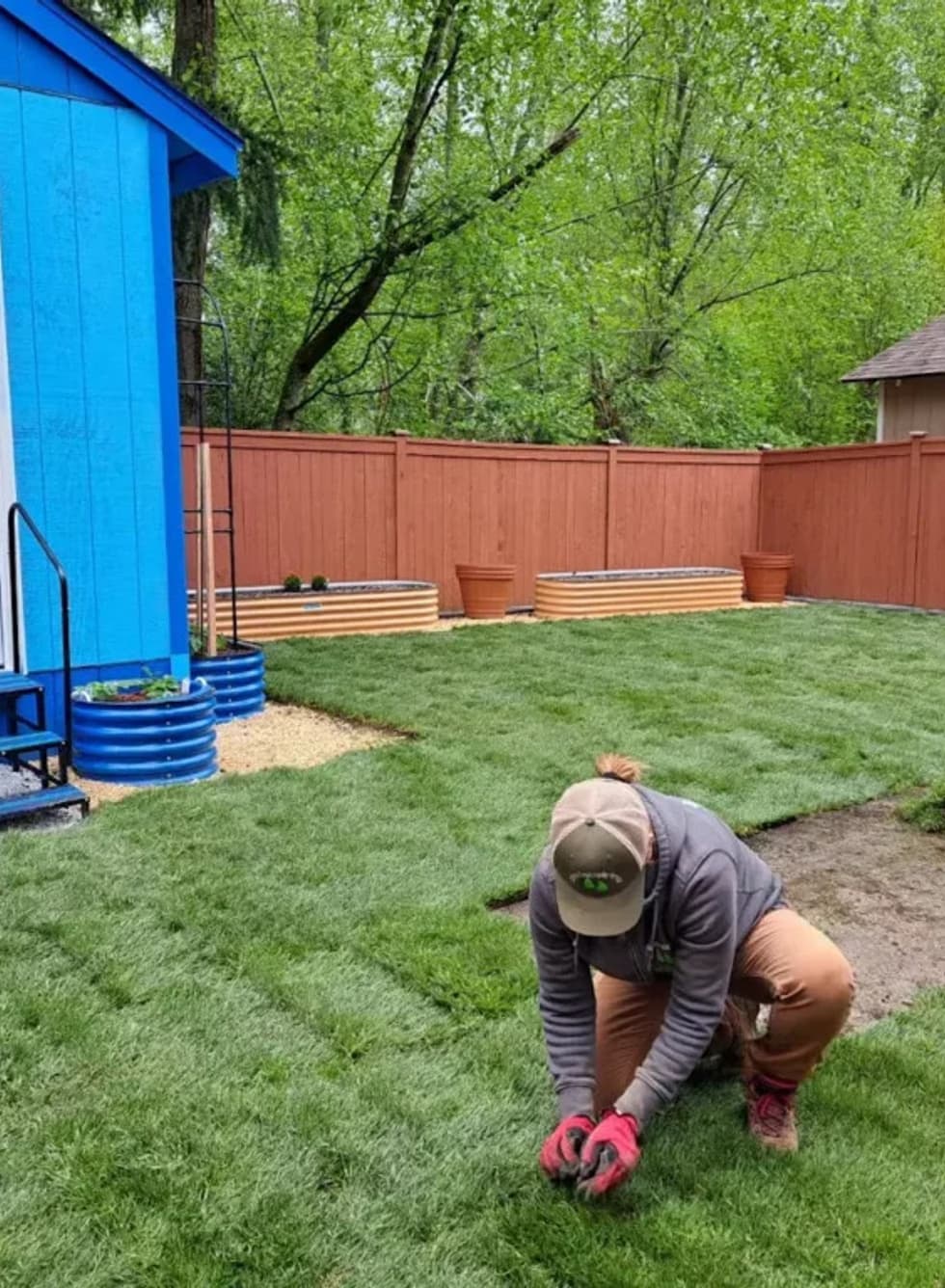
Sod is instant cover and a slow root. It dies when it is laid on compacted clay, on a moss mat, or in a low spot that stays wet. We strip or till, we fix the grade so water leaves, and we lay tight seams on soil that has been loosened a few inches down.
The first two weeks are water and no traffic. After that we want roots chasing soil, which means less frequent watering. A sod lawn that is sprinkled every day forever is a sod lawn that peels up in August.
We lay what arrives that day. Sod that sits on the pallet through a warm afternoon cooks in the roll, and we will not install it.
What we look at first
- What is under the old lawn
- Grade and where the roof water goes
- Access for the pallets
- Sun, because sod in deep shade is an expensive way to grow moss
The first two weeks
Water enough that you cannot peel a corner up by the end of week two. Stay off it. Mow the first time at three inches once it resists a tug. Then ease the water back so the roots leave the roll.
When seed is the better buy
Large areas, deep shade, and tight budgets that would force us to skip prep. Seed costs less and roots deeper if you can wait a month. Sod is for the yard you need to use, on soil we were allowed to prepare.
What is under the roll
A few inches of loosened soil and compost, graded to leave the house. Not the old lawn. Not landscape fabric. Not a sand bed that turns into a pan. If we cannot prep, we should not lay sod.
More from this crew
- Sod installation across Snohomish County
- Lawn seeding in Brier
- Lawn aeration in Brier
- Landscaping in Brier
- Lawn fertilization in Brier
- Sod installation in Lynnwood
- Sod installation in Mountlake Terrace
- Sod installation in Edmonds
Sources for the climate and the water
- USDA plant hardiness map for choosing plants that can take a Snohomish County winter.
- EPA WaterSense on watering less once a lawn or a new planting is established.
- EPA Soak Up the Rain on keeping roof and yard water from becoming someone else’s problem.