Mercer Island sits in the middle of Lake Washington, so almost every street runs downhill to the water. Lots are steep, the tree canopy is old and tall, and the shoreline lots have banks that move when runoff from the street above has nowhere else to go. A boulder wall at the water is a shoreline permit problem. We build the rock that holds the yard up top.
King County · ZIP 98040
Rock above the bank, planted below
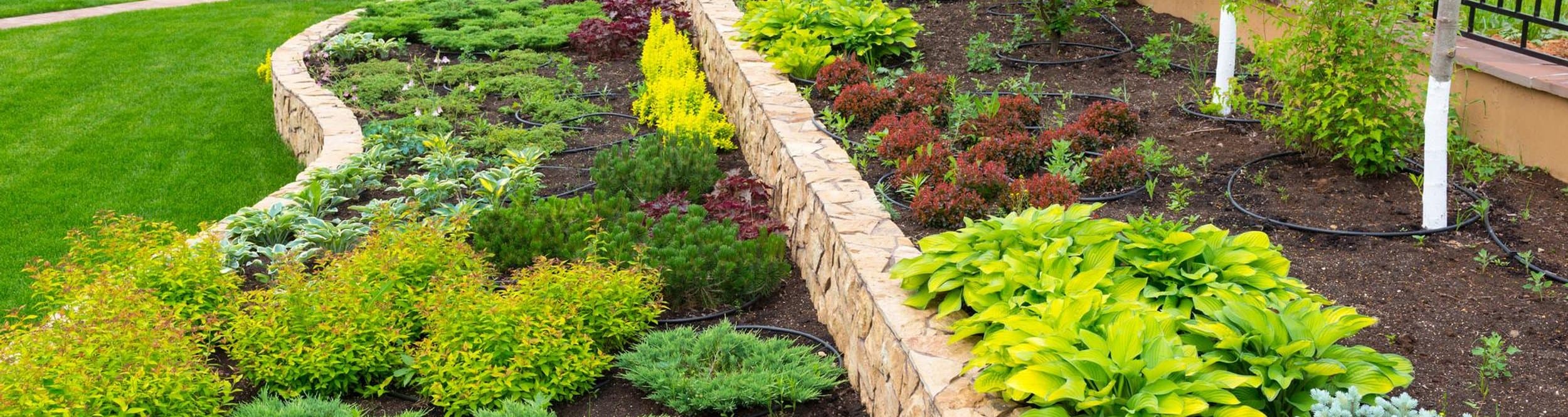
The wall sits back from the shore, drains to the side, and gives you a clean edge for a path or a lawn. Below it we plant. We do not dump quarry spalls down the bank and call it erosion control.
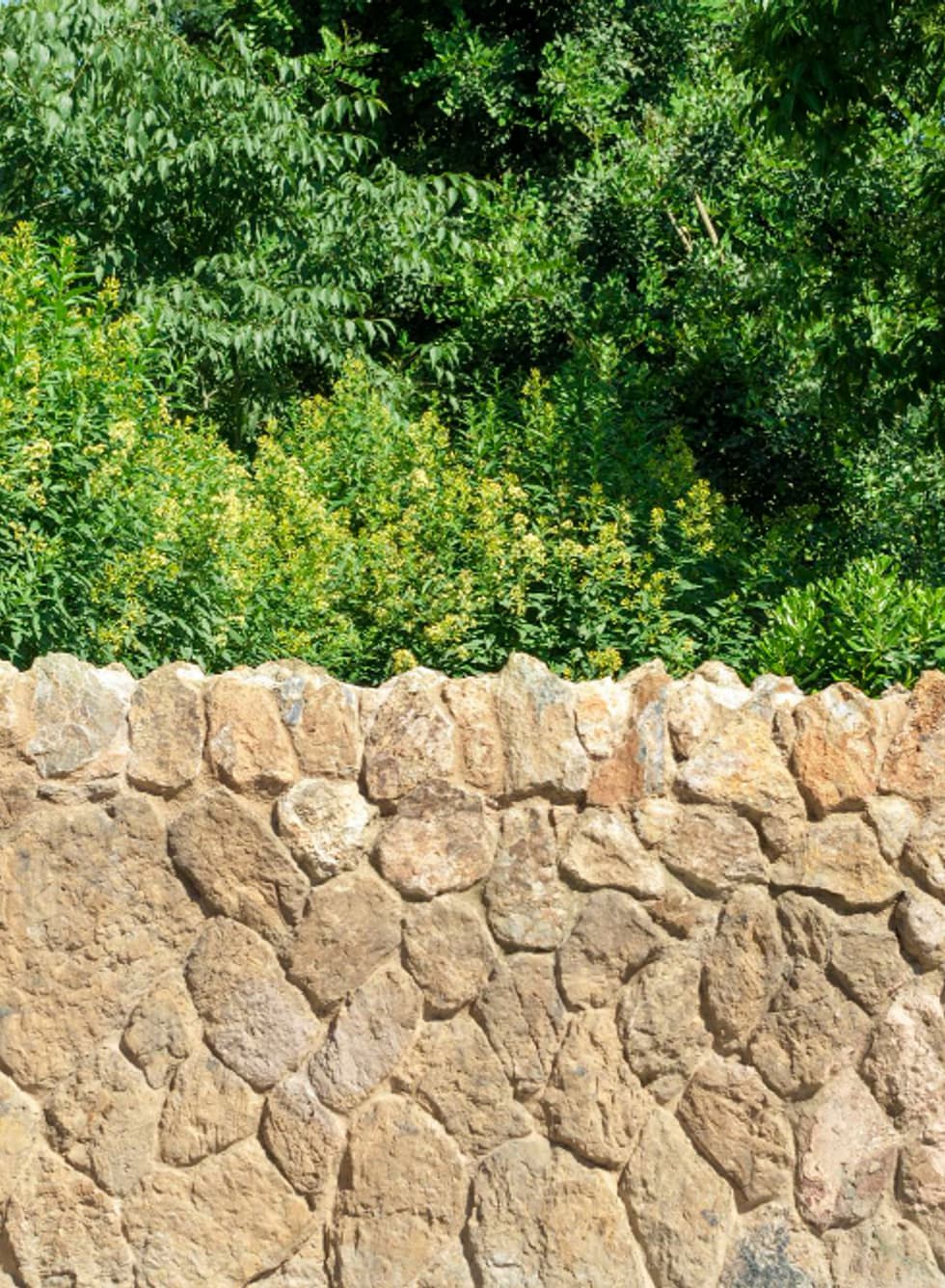
Stone color stays dull and local. Bright river rock used as a wall face is loose and it rolls. Wall rock is angular and heavy.
The ground in Mercer Island
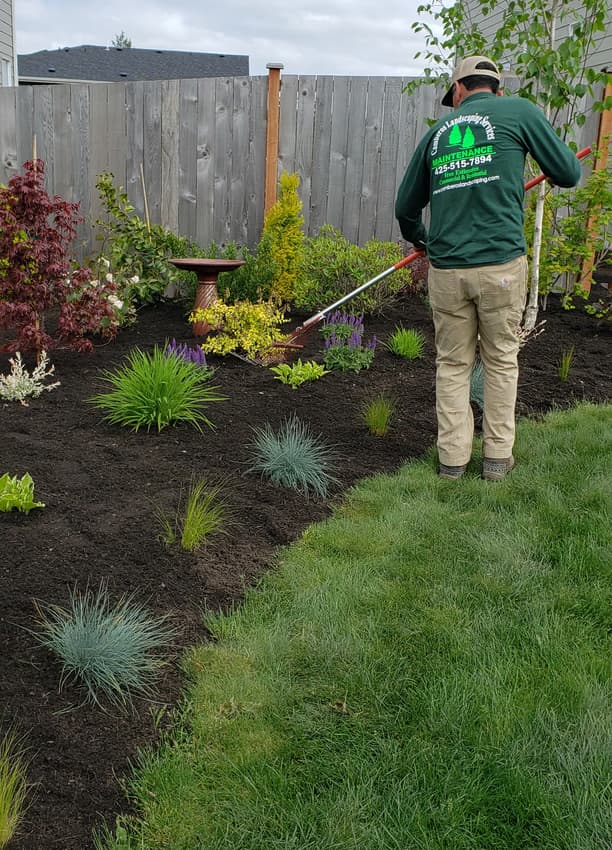
Most of our work here is on slopes. A patio or terrace has to be cut into the hill with a real base and a drain behind any wall, or the first wet winter shows where the water wants to go. On the lakefront lots we keep native shrubs on the bank, because they hold the soil better than lawn, and we take runoff to a drain or a rain garden instead of letting it sheet over the edge.
The city is strict about removing large trees and about work near the shoreline. We check what needs a permit before we cut or dig, and we plan around the trees you have to keep. Under those firs and cedars the ground is shady and mossy, so we often turn worn-out lawn into planting beds and stone paths that stay clean year-round.
How we do the work
A rock wall is dry-stacked or lightly set, with the weight in the stone and the drainage in the voids. It is not a veneer glued to a failing timber wall. We use rock big enough for the height, with a face that leans back into the hill, and smaller rock locked behind so the soil does not pipe through.
Good rock work looks heavier at the bottom. If every stone is the same patio-sized block, it is not a wall, it is a stack. We source local stone and we will tell you when the access cannot take the boulder the job wants.
What we look at first
- Height and whether it is structural or a garden edge
- Machine access for real boulders
- The soil behind: clay that needs a drain, or rock that already sheds
- An existing wall we are tying into
Tying into old rockery
We can often continue an existing rockery if the old base is still honest. If the old wall is tipping, we take it down and use the good stone again. Matching a lean is how you extend a failure.
Dry stack versus mortared
Most of our rock walls are dry, so water can leave and the wall can move a little without cracking a joint. Mortar is for a low, formal edge that is not holding a wet hill. We do not mortar a drainage problem shut.
The base course
The biggest stones, buried, on compacted rock or competent ground. If the first course is the one you can see sitting on the grass, the wall is already failing. You should see the second course at grade, not the bottom of the first.
More from this crew
- Rock walls across the region
- Retaining walls in Mercer Island
- Gravel installation in Mercer Island
- Landscaping in Mercer Island
- Hardscaping in Mercer Island
- Rock walls in Sammamish
Sources for the climate and the water
- USDA plant hardiness map for choosing plants that can take a King County winter.
- EPA WaterSense on watering less once a lawn or a new planting is established.
- EPA Soak Up the Rain on keeping roof and yard water from becoming someone else’s problem.