Mercer Island sits in the middle of Lake Washington, so almost every street runs downhill to the water. Lots are steep, the tree canopy is old and tall, and the shoreline lots have banks that move when runoff from the street above has nowhere else to go. We build the wall that holds the yard. We do not build a bulkhead in the lake. Those are different permits and a different trade, and we will not blur them.
King County · ZIP 98040
A wall at the top of the bank, not in the water
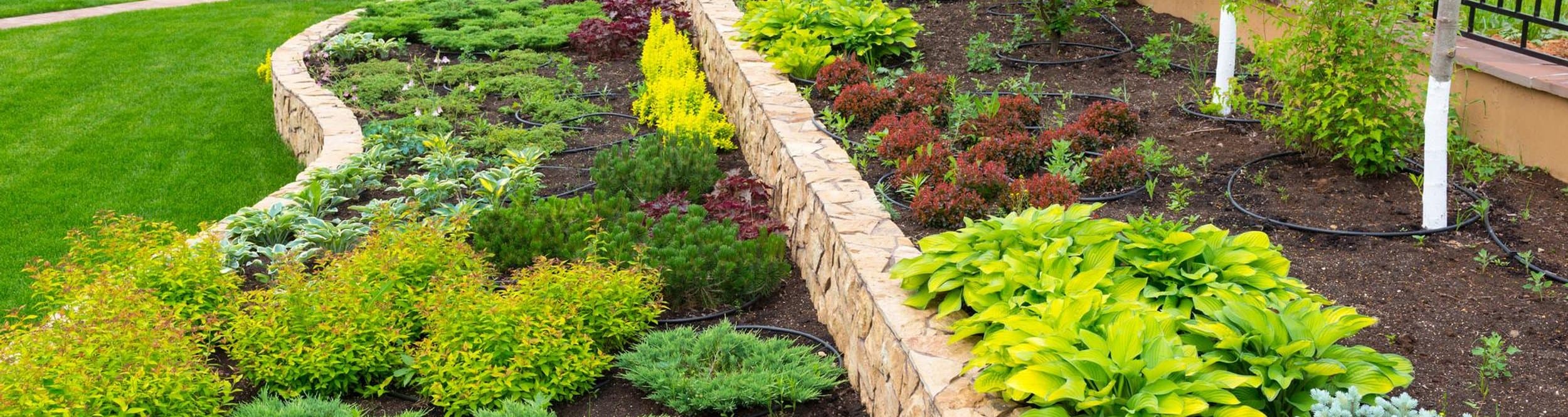
The useful wall is set back, holding the lawn and the patio, with drainage that does not pipe soil down the bank. Native planting below the wall does the work a sod slope cannot. If the erosion is at the waterline, we tell you who you actually need.
Height is usually modest. The mistake is a heavy wall with no drain, loading a wet bank that was already creeping.
The ground in Mercer Island
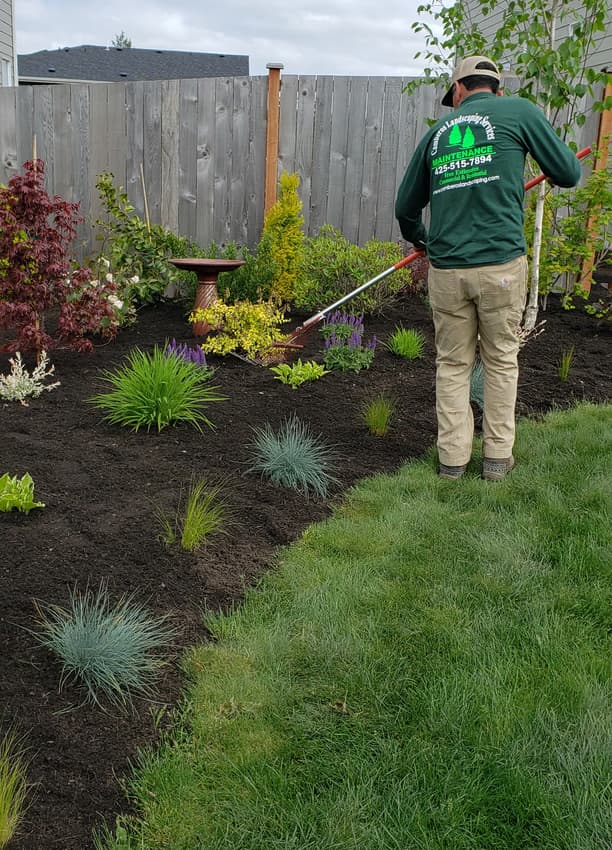
Most of our work here is on slopes. A patio or terrace has to be cut into the hill with a real base and a drain behind any wall, or the first wet winter shows where the water wants to go. On the lakefront lots we keep native shrubs on the bank, because they hold the soil better than lawn, and we take runoff to a drain or a rain garden instead of letting it sheet over the edge.
The city is strict about removing large trees and about work near the shoreline. We check what needs a permit before we cut or dig, and we plan around the trees you have to keep. Under those firs and cedars the ground is shady and mossy, so we often turn worn-out lawn into planting beds and stone paths that stay clean year-round.
How we do the work
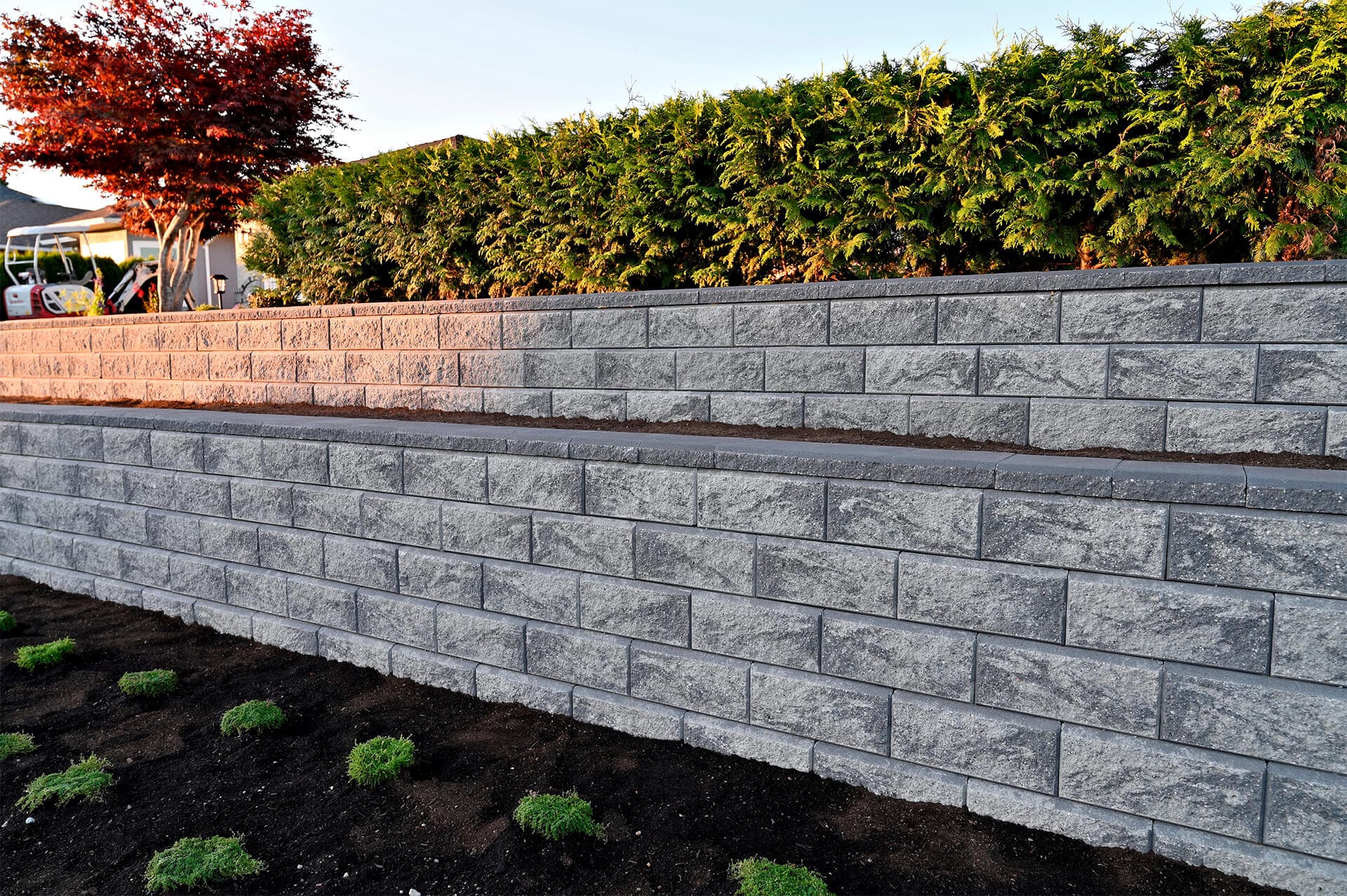
A retaining wall is a structure. The part you see is the block, the boulder, or the timber. The part that keeps it standing is the base, the batter or the geogrid, and the drain rock behind it. We do not stack block on the sod and call it a wall.
Height decides everything. A low garden wall and a wall holding a drive are not the same detail, the same permit, or the same price. We measure the retained dirt, not the face you wish it were.
What we look at first
- Retained height, at the tallest point
- What is above the wall: a lawn, a drive, a house
- Water coming down the slope
- Access for block or for boulders
The base
Compacted rock, buried enough that the first course is not sitting in the organic layer. A wall is not a stack. If the base is soft, we dig out and replace it. There is no fabric or foam that fixes a bad base.
What changes the price
Height, length, access, how much soil we have to move, and whether the wall holds a car or a flower bed. We measure those. A per-foot number shouted from the sidewalk ignores the tallest bay, which is the bay that costs the money.
Drainage is part of the wall
Rock behind the face, a pipe at the heel, and an outlet you can see. Weep holes alone, stuffed with the native clay, are not a drain. This is the step that gets skipped on walls that lean.
More from this crew
- Retaining walls across the region
- Rock walls in Mercer Island
- French drain installation in Mercer Island
- Hardscaping in Mercer Island
- Patio installation in Mercer Island
- Retaining walls in Sammamish
Sources for the climate and the water
- USDA plant hardiness map for choosing plants that can take a King County winter.
- EPA WaterSense on watering less once a lawn or a new planting is established.
- EPA Soak Up the Rain on keeping roof and yard water from becoming someone else’s problem.