Sammamish sits on a plateau above Lake Sammamish, and most of it was built out as subdivisions in the last thirty years. Under a thin layer of topsoil is glacial till, a hardpan that water barely soaks into, and many lots back onto tall stands of Douglas fir. Moss will grow on the face. That is fine. What is not fine is a wall dug through the roots that are holding the bank you wanted to keep.
King County · ZIP 98074
Stone in the trees
We fit the wall between the trees or we keep it low and in front of the root plate. Hand setting is normal. A boulder that needs a full-size machine may not belong in a wooded backyard, and we will change the material rather than skin the lot.
Shade stone stays damp. We do not promise a bare, dry, desert look. The wall should look settled, because the woods will settle it.
The ground in Sammamish
The till is the reason so many yards here stay soggy in winter and dry out fast in summer. Water sits on top of the hardpan, so a new lawn or patio needs drainage planned in from the start. We put in French drains, grade the yard away from the house, and build patio bases deep enough that they do not heave.
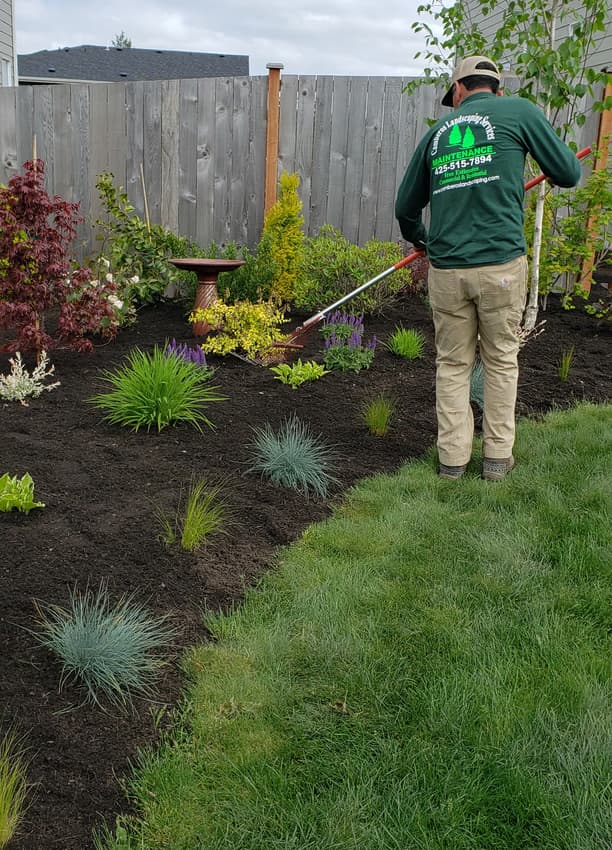
Many neighborhoods have HOA rules for fences, front yards, and plant choices, and we work to those standards. Lots along the greenbelts get heavy shade and needle drop, so we use shade-tolerant planting and bark where grass has given up. Larger backyards here are a good fit for a full redesign: a paver patio, a low retaining wall to level the slope, and irrigation on a timer for the dry months.
How we do the work
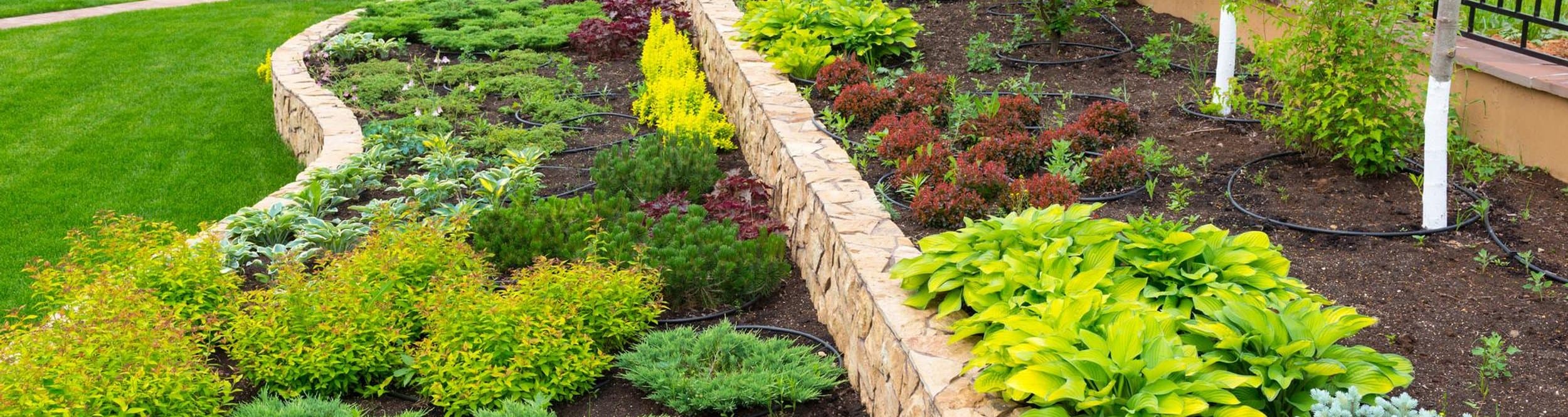
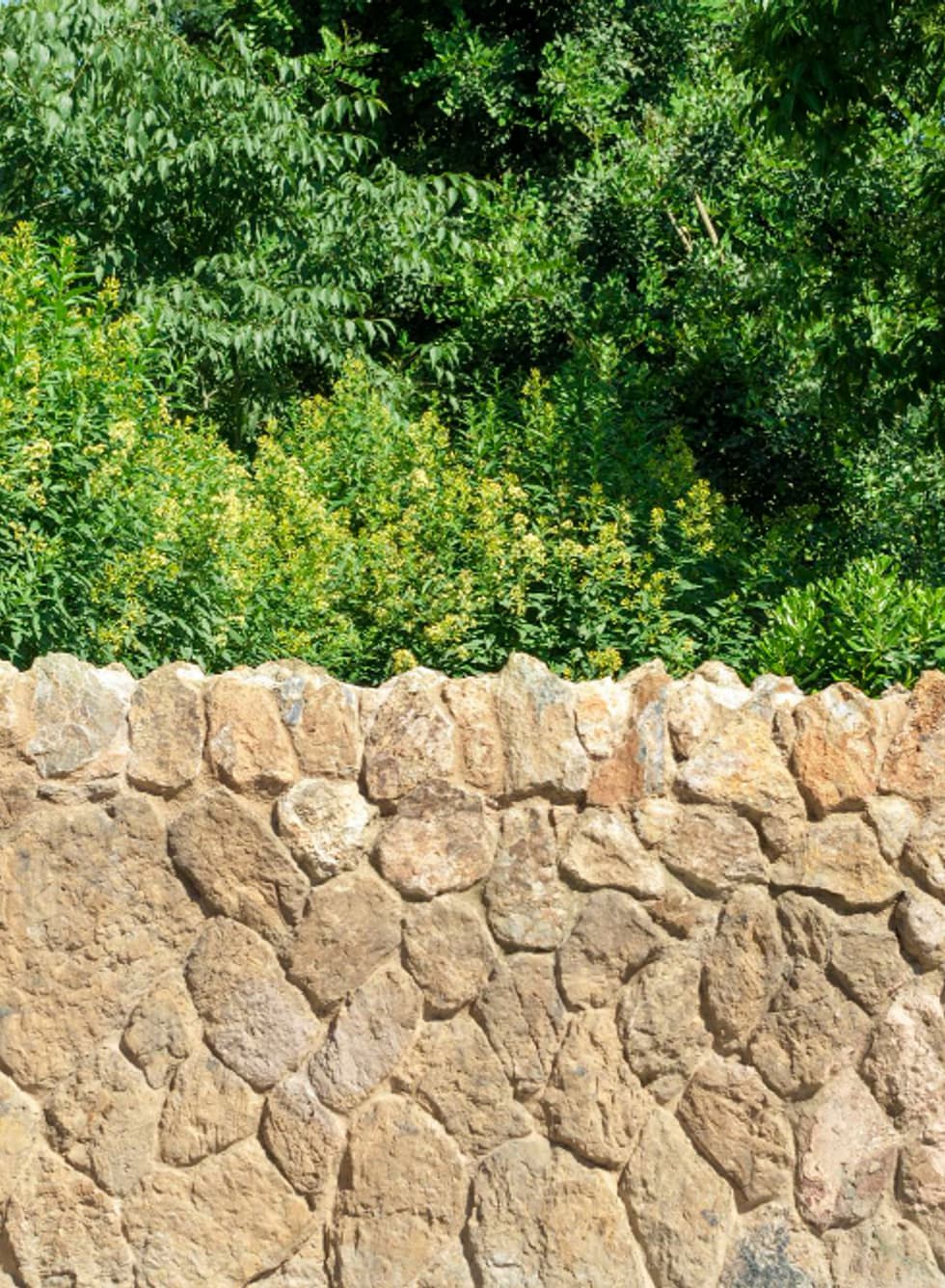
A rock wall is dry-stacked or lightly set, with the weight in the stone and the drainage in the voids. It is not a veneer glued to a failing timber wall. We use rock big enough for the height, with a face that leans back into the hill, and smaller rock locked behind so the soil does not pipe through.
Good rock work looks heavier at the bottom. If every stone is the same patio-sized block, it is not a wall, it is a stack. We source local stone and we will tell you when the access cannot take the boulder the job wants.
What we look at first
- Height and whether it is structural or a garden edge
- Machine access for real boulders
- The soil behind: clay that needs a drain, or rock that already sheds
- An existing wall we are tying into
Tying into old rockery
We can often continue an existing rockery if the old base is still honest. If the old wall is tipping, we take it down and use the good stone again. Matching a lean is how you extend a failure.
What it will not do
A rock wall will not hold an engineered height it was not built for, and it will not stop a landslide. Past a certain height we involve an engineer or we change the grade so the wall can be shorter. That conversation happens before the stone is ordered.
Dry stack versus mortared
Most of our rock walls are dry, so water can leave and the wall can move a little without cracking a joint. Mortar is for a low, formal edge that is not holding a wet hill. We do not mortar a drainage problem shut.
More from this crew
- Rock walls across the region
- Retaining walls in Sammamish
- Gravel installation in Sammamish
- Landscaping in Sammamish
- Hardscaping in Sammamish
- Rock walls in Mercer Island
Sources for the climate and the water
- USDA plant hardiness map for choosing plants that can take a King County winter.
- EPA WaterSense on watering less once a lawn or a new planting is established.
- EPA Soak Up the Rain on keeping roof and yard water from becoming someone else’s problem.