Mukilteo drops toward the ferry and the Sound. Salt reaches the lower streets, and the hills above the terminal shed water down through yards that were cut into the slope. A flat inland detail does not survive on these lots. A wall that traps water in a sandy hillside will shove, and a wall that dumps water over a bluff will cut a gully. Drainage is the wall.
Snohomish County · ZIP 98275 · 2020 population 21,246
Hold the sandy bank, do not load the bluff
We build for the soil that is there: sandier near the shore, heavier uphill. The face can be block or rock. The back is drain rock and a pipe with an outlet that does not erode the slope below. We do not cut the toe out of a bluff to gain a patio without knowing what that bluff is doing.
Salt and wind are hard on timber. We do not use wood as the structural choice on an exposed marine lot.
The ground in Mukilteo
Hillside runoff is the job. A patio with a view is also a patio that can send water at the house if the base and the pitch are wrong. We build the drain before the pavers, and we hold the bank with a wall that has rock or drain tile behind it, not a decorative stack sitting on the sod.
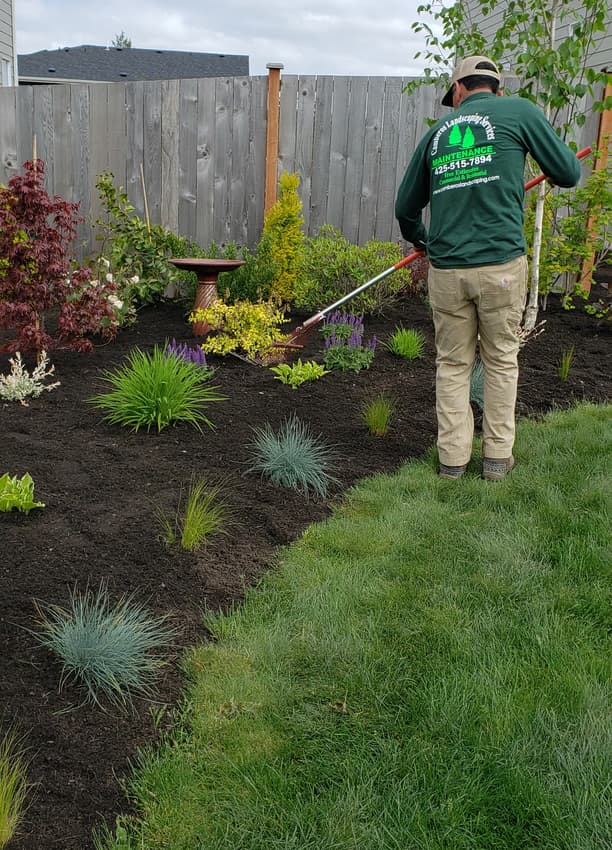
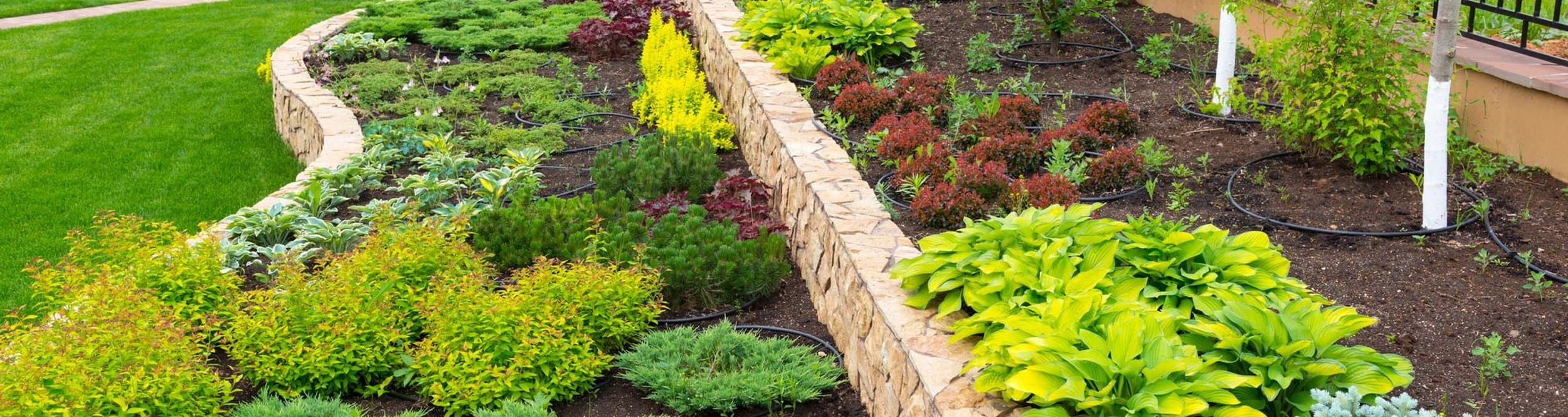
Salt-tolerant natives belong on the exposed edges. Pressure washing is how you get the marine film off a walk and a railing; it comes back, so we treat it as upkeep. Lawns on the upper, slightly flatter streets behave more like the rest of the county — clay, moss, shade from big trees — and we maintain them that way. The waterfront lots are a different trade: erosion, wind, and a view you do not want to block with a hedge.
How we do the work
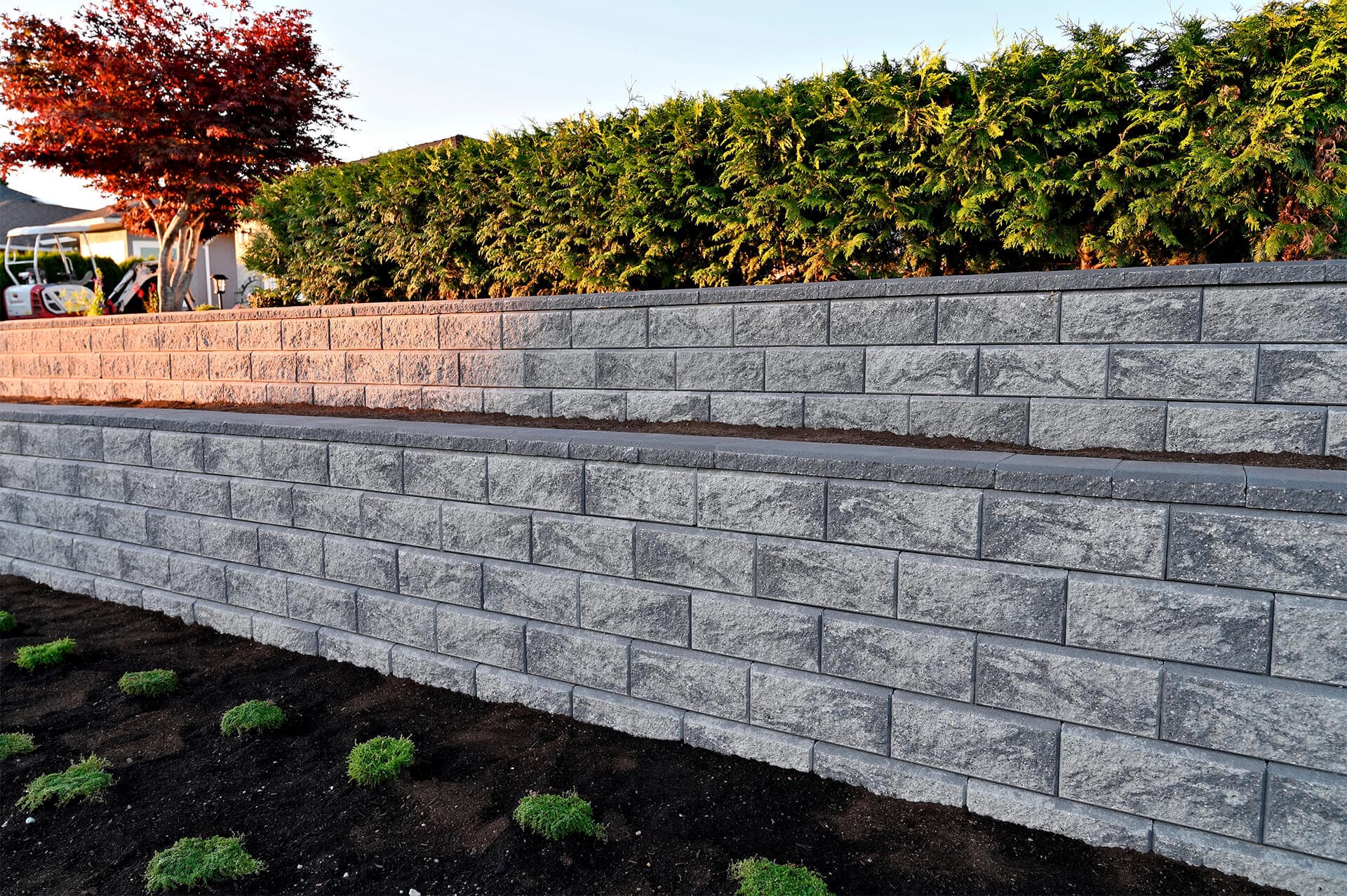
A retaining wall is a structure. The part you see is the block, the boulder, or the timber. The part that keeps it standing is the base, the batter or the geogrid, and the drain rock behind it. We do not stack block on the sod and call it a wall.
Height decides everything. A low garden wall and a wall holding a drive are not the same detail, the same permit, or the same price. We measure the retained dirt, not the face you wish it were.
What we look at first
- Retained height, at the tallest point
- What is above the wall: a lawn, a drive, a house
- Water coming down the slope
- Access for block or for boulders
The base
Compacted rock, buried enough that the first course is not sitting in the organic layer. A wall is not a stack. If the base is soft, we dig out and replace it. There is no fabric or foam that fixes a bad base.
Block, rock, or timber
Engineered block is predictable and what we use when the height or the permit wants an engineered system. Boulders fit the foothills and the older yards. Timber is a short-life choice in the wet, and we will say how many years you are buying.
Drainage is part of the wall
Rock behind the face, a pipe at the heel, and an outlet you can see. Weep holes alone, stuffed with the native clay, are not a drain. This is the step that gets skipped on walls that lean.
More from this crew
- Retaining walls across Snohomish County
- Rock walls in Mukilteo
- French drain installation in Mukilteo
- Hardscaping in Mukilteo
- Patio installation in Mukilteo
- Retaining walls in Everett
- Retaining walls in Edmonds
- Retaining walls in Mill Creek
Sources for the climate and the water
- USDA plant hardiness map for choosing plants that can take a Snohomish County winter.
- EPA WaterSense on watering less once a lawn or a new planting is established.
- EPA Soak Up the Rain on keeping roof and yard water from becoming someone else’s problem.