Everett is the big city in the county, and the ground changes block to block: waterfront fill, older neighborhoods with tired topsoil, and tighter lots where the roof and the driveway shed more water than the yard can swallow. Boeing and the working waterfront are the backdrop. The yards are ordinary residential lots with city drainage problems. Small yards become one surface. That surface has to be the drainage plan, not a lid on top of the drainage problem.
Snohomish County · ZIP 98201 · 2020 population 110,002
The backyard that is mostly patio
We check the side-yard escape route for water before we pave the basin shut. Permeable pavers or a drain across the low end are often the right call. A solid slab from fence to house, dead level, is how basement windows get a pond.
The work is fussy because every inch is in the way of a door, a hose bib, or a gate. We measure those. A patio that blocks the gate you use for the cans is a failed design even if the pavers are straight.
The ground in Everett
On a typical Everett lot the soil has been graded, driven on, and patched for years. It sheds or it puddles, and it rarely does the quiet middle thing a new lawn needs. Downspouts often end in a splash block ten inches from the foundation. That is the puddle by the basement window.
We work from the waterfront streets up into the neighborhoods near the naval station and out toward the valley. Access is the constraint people forget: a machine that fits a Mill Creek cul-de-sac may not fit a fenced backyard off Broadway. Permeable pavers and a short French drain solve more Everett problems than a bigger patio. Lawns here are for people who want the grass cut and the moss knocked back, not a show lawn. We schedule mowing and aeration around that.
How we do the work
A patio here is a roof at ground level. It has to shed water, it has to sit on rock instead of clay, and it has to meet the door without holding a puddle at the threshold. We build in pavers most of the time because a paver field can be lifted and reset. A cracked slab is a demolition.
We talk about furniture, the grill, and the way you actually walk out before we draw a rectangle that looks big on paper and tips water at the house.
What we look at first
- The door threshold and which way the yard falls
- Downspouts landing in the patio area
- How many people, and whether there is a fire pit or a cover
- Access for excavation
Furniture first
We size the floor to the table you own, the grill lid that has to open, and the walk around them. A large empty patio with the table in a puddle is a bad large patio. Bring the measurements.
What it costs more to ignore
Drainage and the base. They are the unphotogenic half of the invoice. Cutting them is how a patio gets rebuilt. We would rather build a smaller floor on a real base than a big one on clay.
At the door
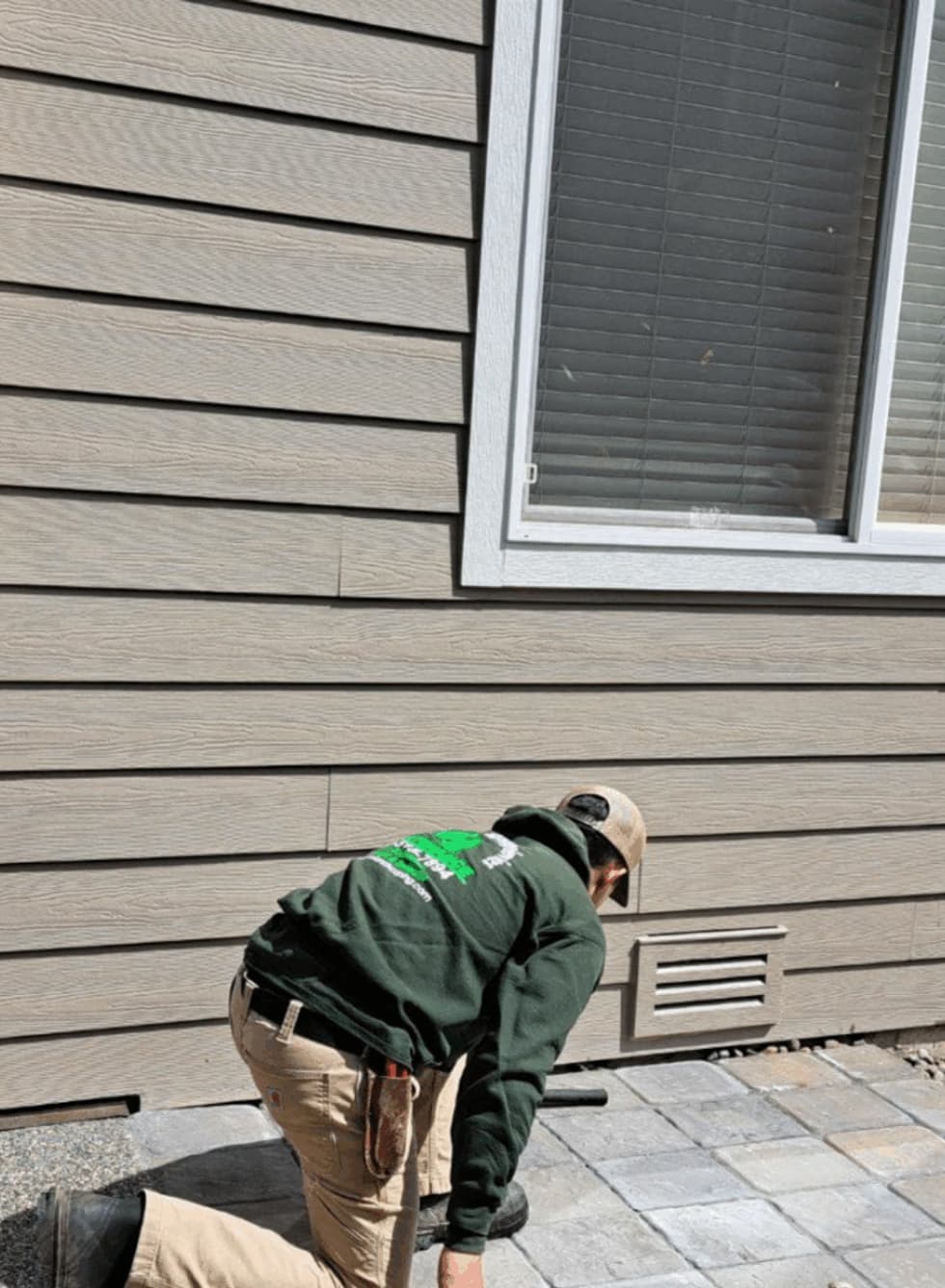
The patio meets the threshold with a step that makes sense and a surface that falls away. We do not bury the siding or the weep screed to make the patio feel flush. That is a rot detail, and we will argue with you about it.
More from this crew
- Patio installation across Snohomish County
- Paver installation in Everett
- Hardscaping in Everett
- Retaining walls in Everett
- Landscape design in Everett
- Patio installation in Mukilteo
- Patio installation in Marysville
- Patio installation in Lake Stevens
Sources for the climate and the water
- USDA plant hardiness map for choosing plants that can take a Snohomish County winter.
- EPA WaterSense on watering less once a lawn or a new planting is established.
- EPA Soak Up the Rain on keeping roof and yard water from becoming someone else’s problem.