Marysville spreads across flat ground north of Everett, out toward Tulalip. The lots are bigger than the city lots to the south, and the ground is slow to drain. Water does not run off a slope because there often is not a slope. Valley lots rarely need a tall wall. They do need the short wall, or the bed edge, to have a way for water to leave. A solid wall in clay becomes a dam.
Snohomish County · ZIP 98270 · 2020 population 70,714
Low walls, wet soil behind them
We drain the back of even a short wall. Clay loads up, freezes, and shoves. A wall with mortar-tight joints and no rock behind it tips in a few winters. The outlet for that drain is planned before the first course, because flat ground hides the fact that water has nowhere to go.
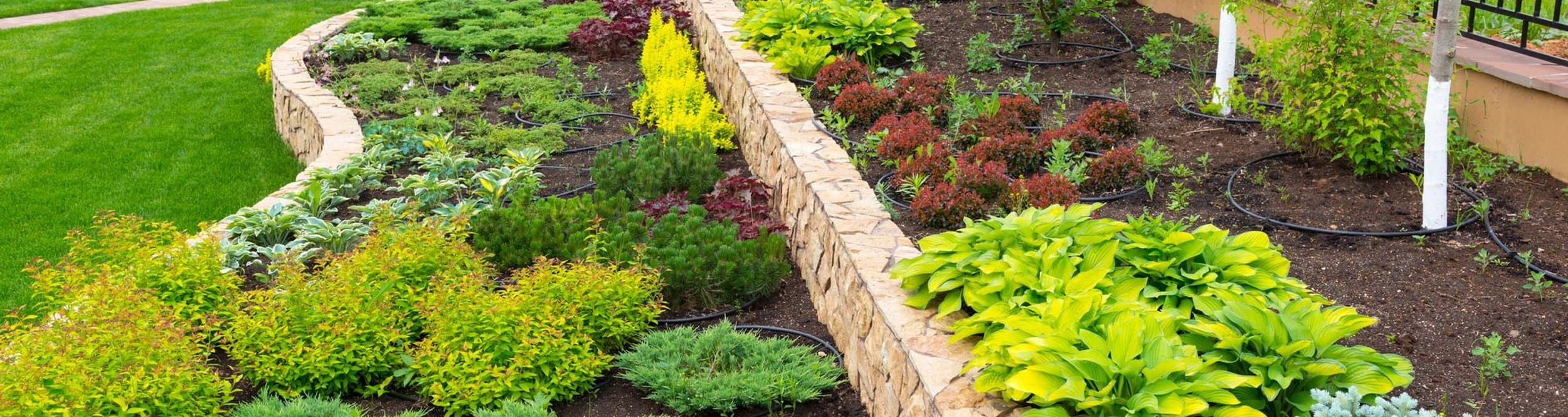
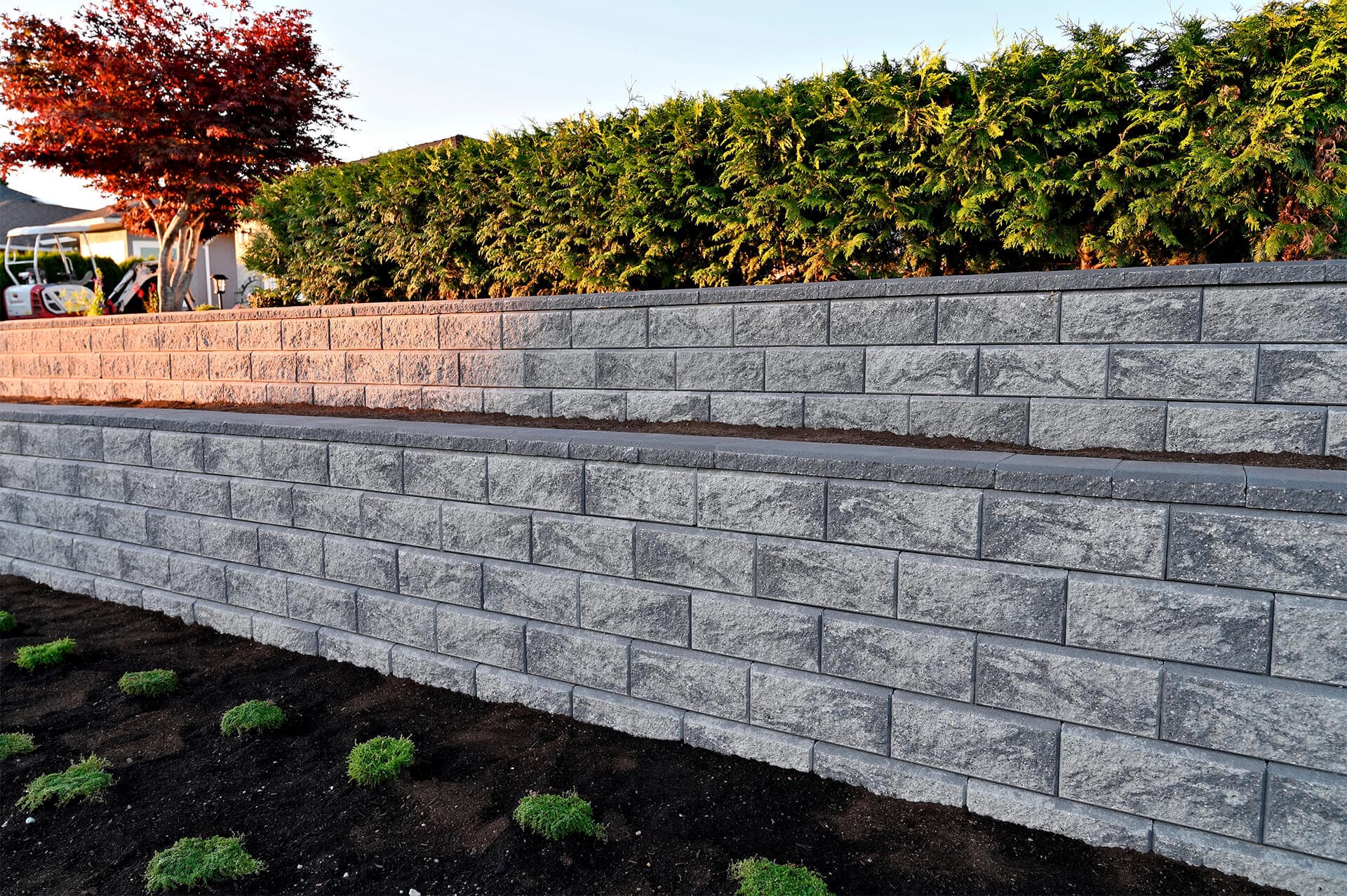
Most of these walls are garden and patio edges, two to three feet. We build them like they will be leaned on, because they will.
The ground in Marysville
Flat ground sounds easy until a winter storm sits on it. French drains and permeable surfaces matter here more than tall walls. Yards are family yards: room for a lawn, a play set, fruit trees that people already have and want kept, and a patio that can take a barbecue without turning into a pond.
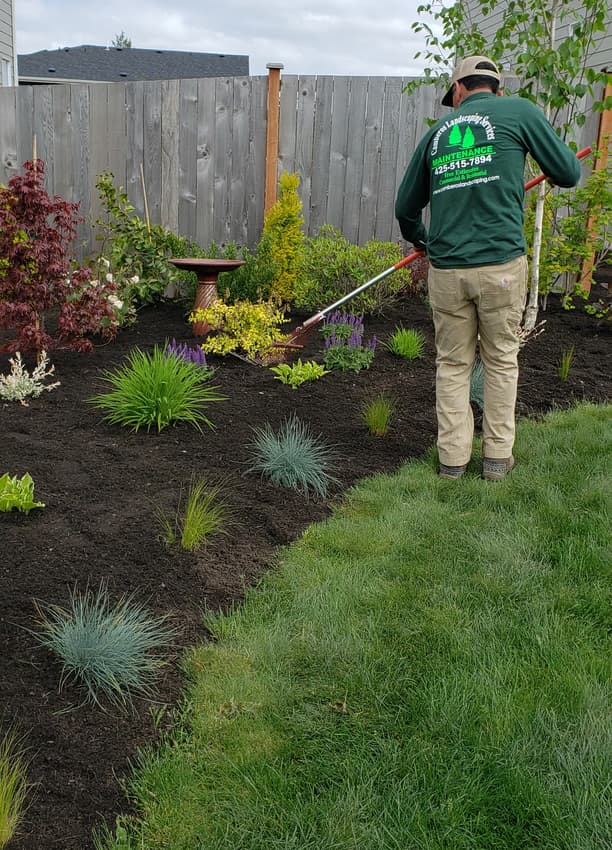
The soil is the kind that grows a decent lawn if it can breathe, and moss if it cannot. We mow, aerate, and seed the open lawns, and we bark the beds so the weed cycle slows down. Drainage is the job we would rather do first. A new sod lawn laid over undrained flat clay is a replacement lawn in two years. Fruit trees get pruned for light and for the fruit, not sheared into balls.
How we do the work
A retaining wall is a structure. The part you see is the block, the boulder, or the timber. The part that keeps it standing is the base, the batter or the geogrid, and the drain rock behind it. We do not stack block on the sod and call it a wall.
Height decides everything. A low garden wall and a wall holding a drive are not the same detail, the same permit, or the same price. We measure the retained dirt, not the face you wish it were.
What we look at first
- Retained height, at the tallest point
- What is above the wall: a lawn, a drive, a house
- Water coming down the slope
- Access for block or for boulders
Drainage is part of the wall
Rock behind the face, a pipe at the heel, and an outlet you can see. Weep holes alone, stuffed with the native clay, are not a drain. This is the step that gets skipped on walls that lean.
The base
Compacted rock, buried enough that the first course is not sitting in the organic layer. A wall is not a stack. If the base is soft, we dig out and replace it. There is no fabric or foam that fixes a bad base.
Block, rock, or timber
Engineered block is predictable and what we use when the height or the permit wants an engineered system. Boulders fit the foothills and the older yards. Timber is a short-life choice in the wet, and we will say how many years you are buying.
More from this crew
- Retaining walls across Snohomish County
- Rock walls in Marysville
- French drain installation in Marysville
- Hardscaping in Marysville
- Patio installation in Marysville
- Retaining walls in Everett
- Retaining walls in Arlington
- Retaining walls in Lake Stevens
Sources for the climate and the water
- USDA plant hardiness map for choosing plants that can take a Snohomish County winter.
- EPA WaterSense on watering less once a lawn or a new planting is established.
- EPA Soak Up the Rain on keeping roof and yard water from becoming someone else’s problem.