Mill Creek was laid out as a planned city: curving streets, townhome slopes, golf-course edges, and lawns that were meant to look trimmed from the day the house sold. The soils are the soils of a graded subdivision, and the rain is the same county rain that finds every low corner. Algae on the north walk is the whole complaint. It is a short job and it is easy to do badly, with stripes and etched concrete.
Snohomish County · ZIP 98012 · 2020 population 20,799
The walks and the patio everyone sees
Even passes, a treatment, plants rinsed. We keep water out of the garage and away from the door threshold. White fences get a soft wash so the grain does not fuzz.
If the “stain” is efflorescence or a rust drip from a pot, we say so. More pressure will not turn that into clean concrete.
The ground in Mill Creek
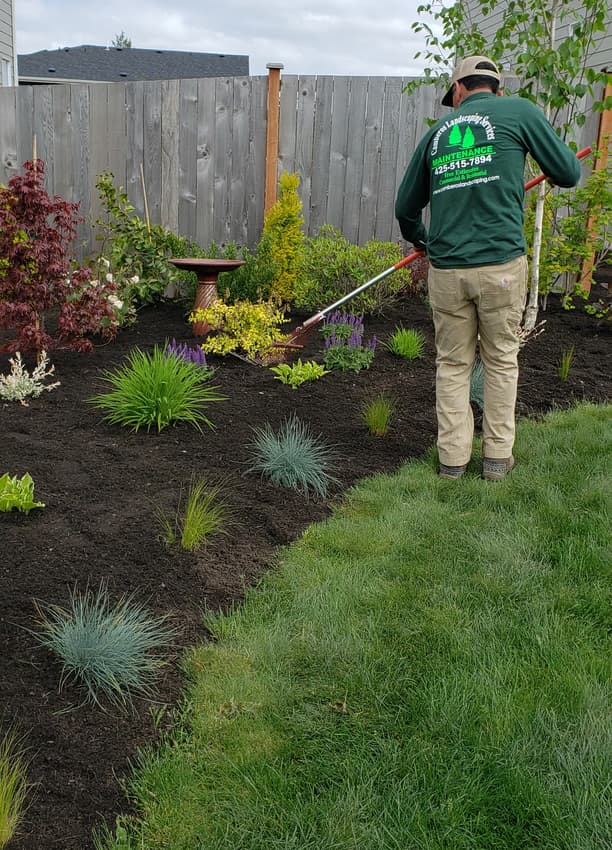
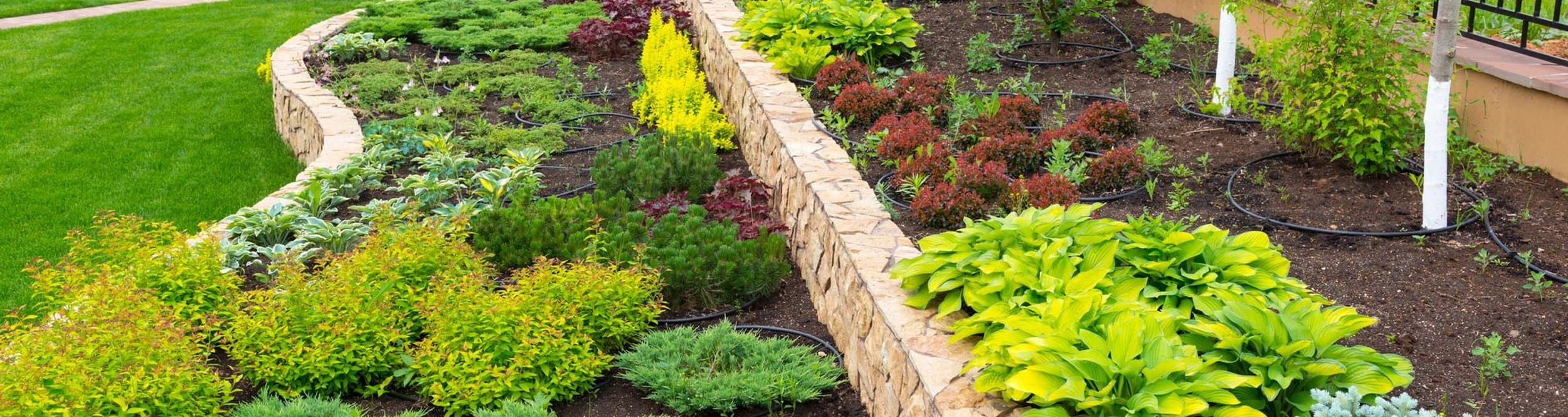
The expectation here is a clean edge. Lawns get mowed on a schedule, aerated before they mat down, and fertilized lightly enough that we are not just feeding the moss. Townhome and hillside lots need low walls and tight paver work more than they need a big landscape renovation. Bark beds are there to keep the mulch line straight and the weeds out of the front that faces the street.
We still find the same drainage mistakes as everywhere else: downspouts tied to nothing, and patios pitched back at the siding. The difference is that a small failure shows, because the rest of the street is kept. Native shrubs fit the greenbelts behind the houses. A tropical plant list does not survive the first wet winter, and it will not match the neighborhood even if it did.
How we do the work
Most of what people call pressure washing here is organic film: the black and green on the north side, the walks, the fence. The fix is the right tip, the right distance, and often a wash that kills the growth so it does not return in a month. A zero-degree tip on a soft wood deck is how you get a furred, ruined deck.
We do not drive water up under lap siding or into a vent to prove the washer is strong. High pressure is for concrete that can take it. Wood, paint, and mortar joints get a softer approach.
What we look at first
- What the surface is
- Where the water will run
- Plants and outlets we need to protect
- Whether the black is mildew that needs a treatment, not just a blast
How often
North sides and shaded patios, about once a year if you care. Sunny south walks can go longer. Exposed marine rails may want it yearly. We do not sign you up for a monthly wash of a surface that does not need it.
What will not come out
Rust, deep oil, and etching that is already in the concrete. We can fade some of it. We will not promise a new slab. Paint that is loose will leave with the dirt, and you will see the bare spots. We point those out first if we can.
Treatment
A wash that kills the algae and mildew, applied and rinsed, is why the surface stays clean longer than a blast. We use it where the film is biological. We do not soak your vegetable bed in it. Plants get rinsed.
More from this crew
- Pressure washing across Snohomish County
- Patio installation in Mill Creek
- Paver installation in Mill Creek
- Fence installation in Mill Creek
- Yard cleanup in Mill Creek
- Pressure washing in Bothell
- Pressure washing in Lynnwood
- Pressure washing in Everett
Sources for the climate and the water
- USDA plant hardiness map for choosing plants that can take a Snohomish County winter.
- EPA WaterSense on watering less once a lawn or a new planting is established.
- EPA Soak Up the Rain on keeping roof and yard water from becoming someone else’s problem.