Mill Creek was laid out as a planned city: curving streets, townhome slopes, golf-course edges, and lawns that were meant to look trimmed from the day the house sold. The soils are the soils of a graded subdivision, and the rain is the same county rain that finds every low corner. Subdivision soils are compact and the patios that came with the house are often a thin slab or a thin paver field that has settled toward the door.
Snohomish County · ZIP 98012 · 2020 population 20,799
An even field on a yard that was graded once
We rebuild the base rather than relaying pavers on the same failed gravel. Irrigation lines get found before the saw, not after. The new field is square to the house, pitched out, and edged so the bark bed is not slowly eating the border.
These yards read as clean or not clean. Cuts are straight. Color is something we choose in daylight, not from a wet sample in a garage.
The ground in Mill Creek
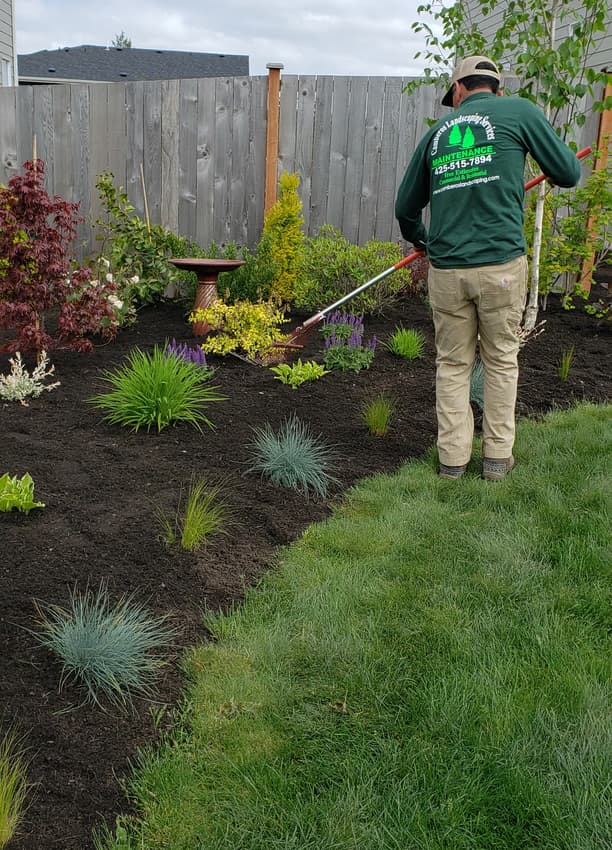
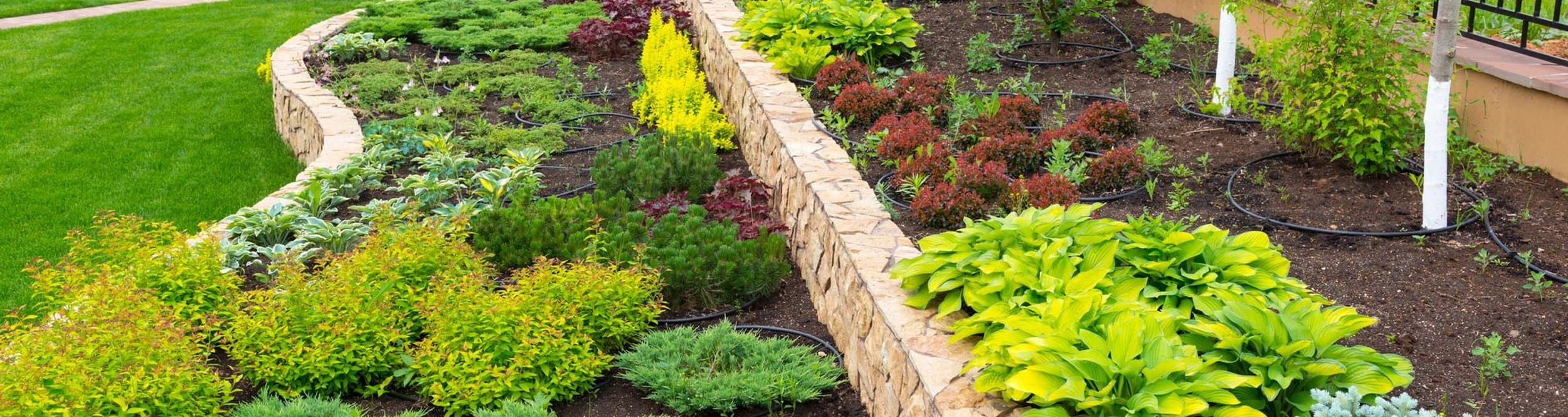
The expectation here is a clean edge. Lawns get mowed on a schedule, aerated before they mat down, and fertilized lightly enough that we are not just feeding the moss. Townhome and hillside lots need low walls and tight paver work more than they need a big landscape renovation. Bark beds are there to keep the mulch line straight and the weeds out of the front that faces the street.
We still find the same drainage mistakes as everywhere else: downspouts tied to nothing, and patios pitched back at the siding. The difference is that a small failure shows, because the rest of the street is kept. Native shrubs fit the greenbelts behind the houses. A tropical plant list does not survive the first wet winter, and it will not match the neighborhood even if it did.
How we do the work
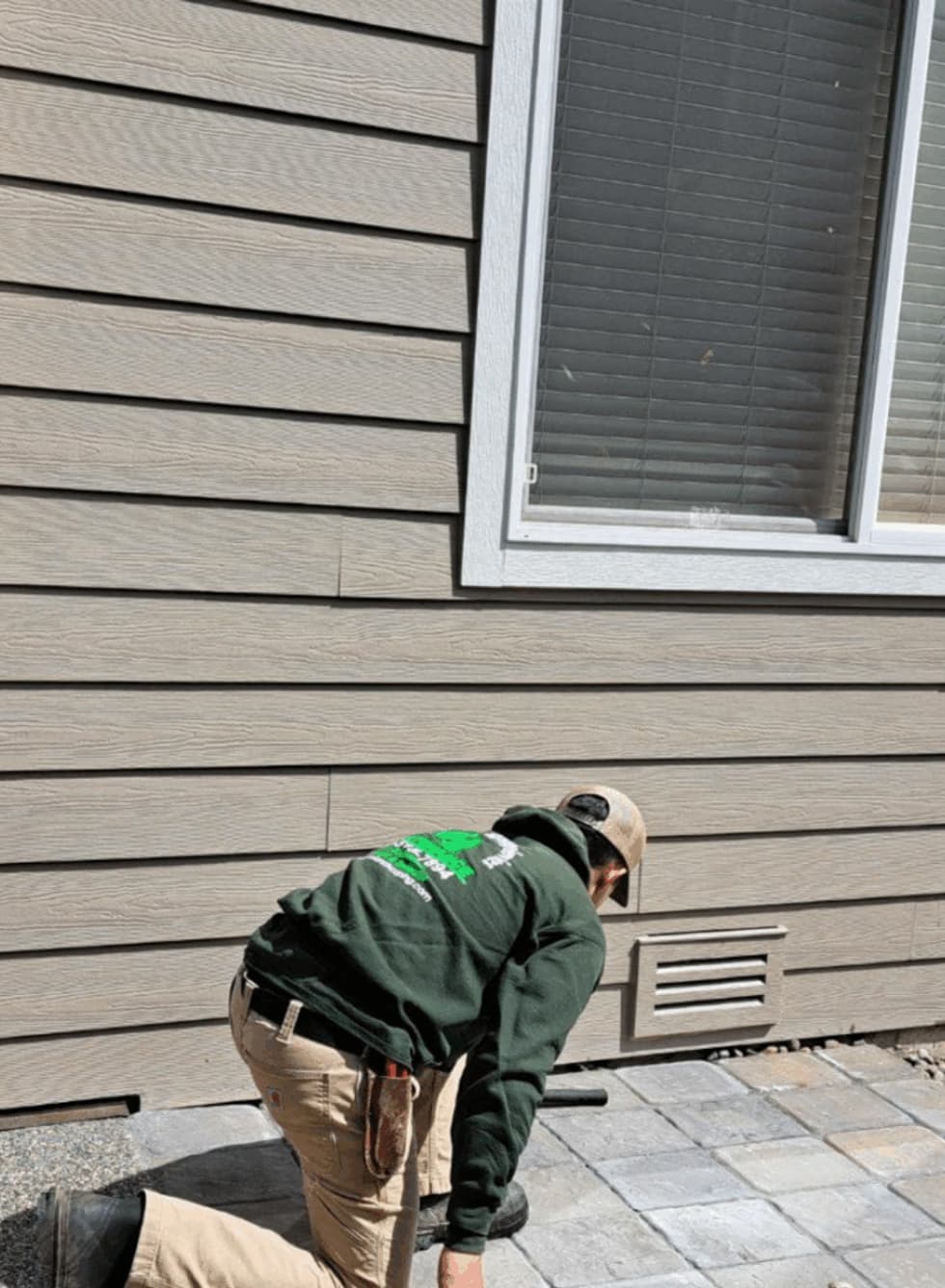
The paver is the skin. The base is the job: excavated, built up in compacted rock, deep enough that this climate will not heave it into waves. We pitch the surface away from the house, we restrain the edges so the field cannot spread, and we sand the joints.
A paver patio set on a couple of inches of loose gravel over clay will look perfect in September and rock underfoot by March. We do not build that, even if the other bid did.
What we look at first
- How the water leaves the surface today
- Clay, fill, or roots under the area
- Edge restraint and where the field ends
- Whether the project is a walk, a patio, or a drive, because the base changes
Edges
Plastic or metal restraint, spiked into the compacted base, then buried so you see paver, not a black strip. An edge against soil with no restraint is the row that opens up.
The base depth
Deeper for a drive than for a walk, and deeper on clay than the brochure drawn for a dry state. We compact in lifts. A single dumped pile of gravel, raked once, is not a base. You should not see waves after the first winter.
Sealing
Optional. It deepens the color and can help the joints, and it is a maintenance coat every few years, not a structural need. We do not sell a sealer as what keeps the patio from settling. The base does that.
More from this crew
- Paver installation across Snohomish County
- Patio installation in Mill Creek
- Hardscaping in Mill Creek
- Gravel installation in Mill Creek
- Pressure washing in Mill Creek
- Paver installation in Bothell
- Paver installation in Lynnwood
- Paver installation in Everett
Sources for the climate and the water
- USDA plant hardiness map for choosing plants that can take a Snohomish County winter.
- EPA WaterSense on watering less once a lawn or a new planting is established.
- EPA Soak Up the Rain on keeping roof and yard water from becoming someone else’s problem.