Lynnwood is built tight: retail around Alderwood, houses on smaller lots, and soils that were compacted when the neighborhood went in. Rain runs off roofs, walks, and the mall-side pavement faster than the yard can take it. City concrete shows every stripe. We overlap passes so the drive does not look combed, and we do not leave a dirty border along the garage.
Snohomish County · ZIP 98036 · 2020 population 38,141
Walks, drives, and the green on the north wall
Oil spots are not mildew. A wash fades them and does not always erase them. We say that before you expect a new slab. The green on the siding and the fence comes off, and a treatment slows the return.
Neighbors’ cars and open windows are part of a tight lot. We work so we are not shooting grit at a windshield. If the drive is the only access, we plan the dry time.
The ground in Lynnwood
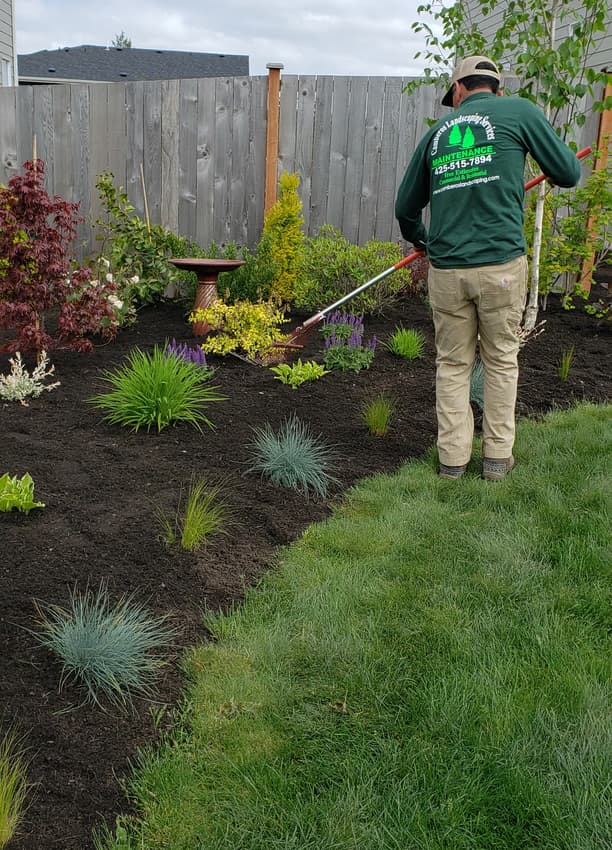
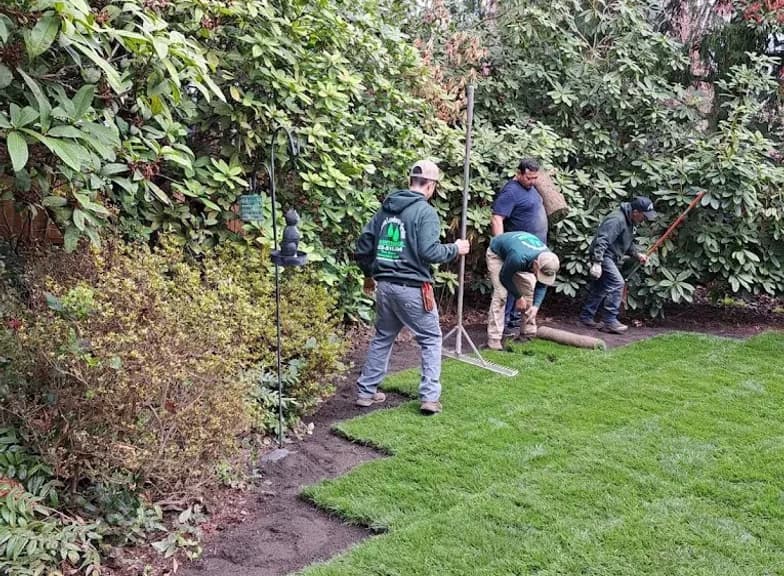
Residential yards here are often a rectangle of tired turf, a fence, and a patio slab that has settled toward the house. The soil underneath is dense. Water sits, moss follows, and a new plant put into that ground without loosening it just stalls.
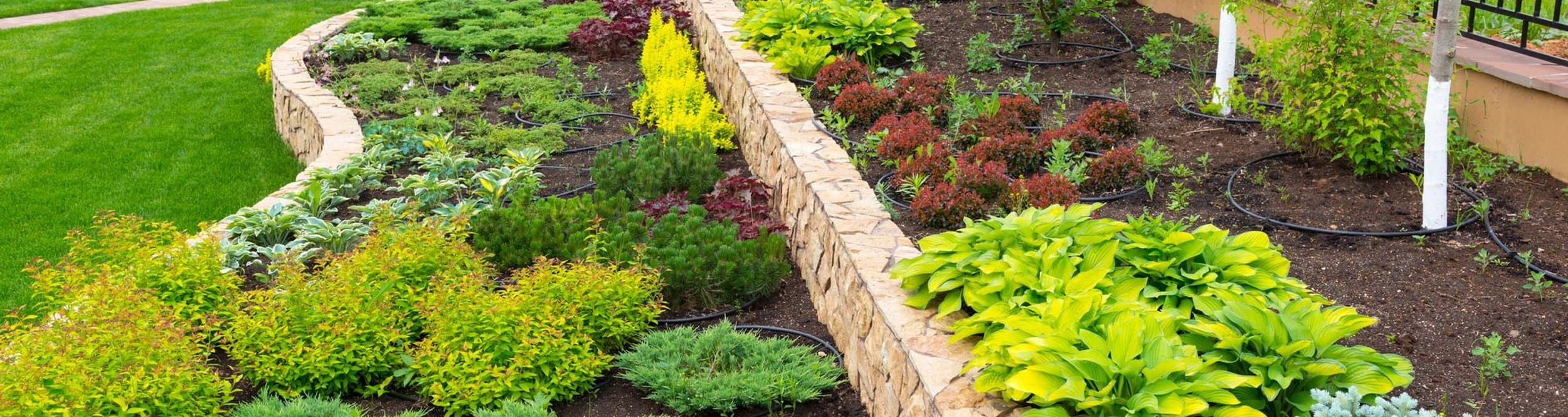
We aerate and dethatch before we promise a greener lawn, and we look at the downspouts before we sell a flower bed. Pavers and gravel show up on the small patios and the side yards where people actually walk. There is also commercial work along the retail streets — pruning, pressure washing, and beds that have to look kept without a full-time gardener. Native, lower-water plantings make more sense than a hedge that needs shearing every three weeks next to a busy road.
How we do the work
Most of what people call pressure washing here is organic film: the black and green on the north side, the walks, the fence. The fix is the right tip, the right distance, and often a wash that kills the growth so it does not return in a month. A zero-degree tip on a soft wood deck is how you get a furred, ruined deck.
We do not drive water up under lap siding or into a vent to prove the washer is strong. High pressure is for concrete that can take it. Wood, paint, and mortar joints get a softer approach.
What we look at first
- What the surface is
- Where the water will run
- Plants and outlets we need to protect
- Whether the black is mildew that needs a treatment, not just a blast
Wood versus concrete
Concrete can take a stronger wash. Cedar decks, fences, and soft siding cannot. If we raise the grain, the surface holds more dirt afterward. We would rather leave it a shade less bright than furred.
What will not come out
Rust, deep oil, and etching that is already in the concrete. We can fade some of it. We will not promise a new slab. Paint that is loose will leave with the dirt, and you will see the bare spots. We point those out first if we can.
Treatment
A wash that kills the algae and mildew, applied and rinsed, is why the surface stays clean longer than a blast. We use it where the film is biological. We do not soak your vegetable bed in it. Plants get rinsed.
More from this crew
- Pressure washing across Snohomish County
- Patio installation in Lynnwood
- Paver installation in Lynnwood
- Fence installation in Lynnwood
- Yard cleanup in Lynnwood
- Pressure washing in Edmonds
- Pressure washing in Brier
- Pressure washing in Mountlake Terrace
Sources for the climate and the water
- USDA plant hardiness map for choosing plants that can take a Snohomish County winter.
- EPA WaterSense on watering less once a lawn or a new planting is established.
- EPA Soak Up the Rain on keeping roof and yard water from becoming someone else’s problem.