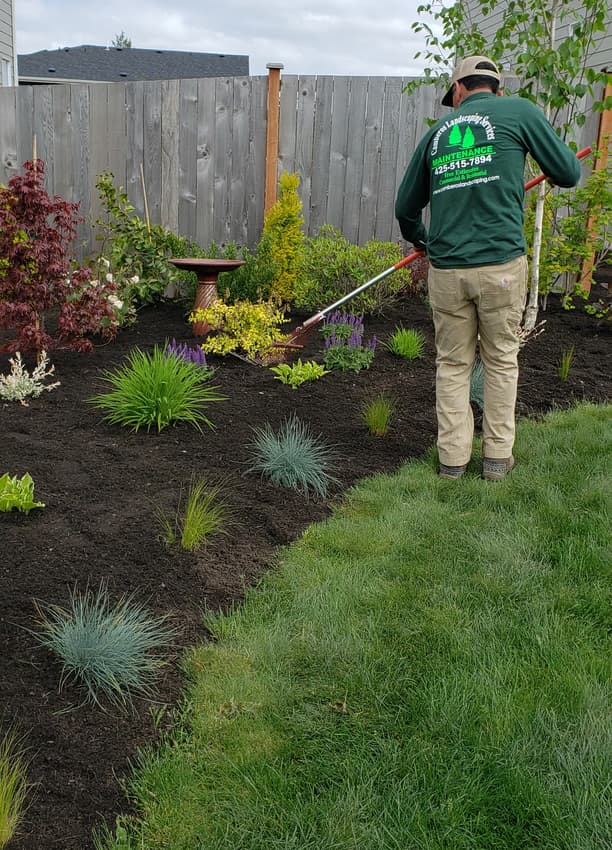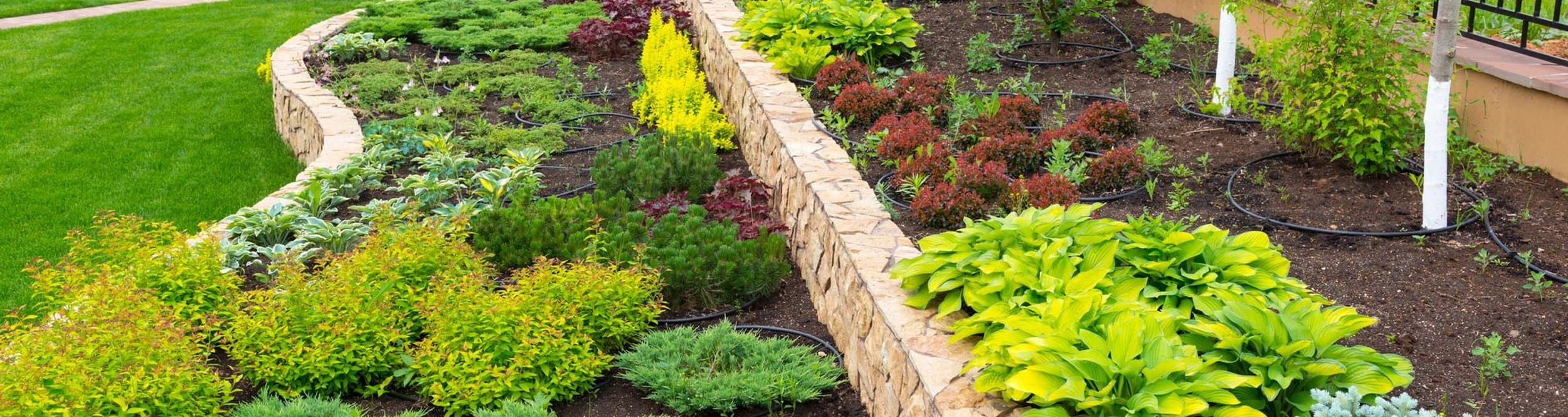
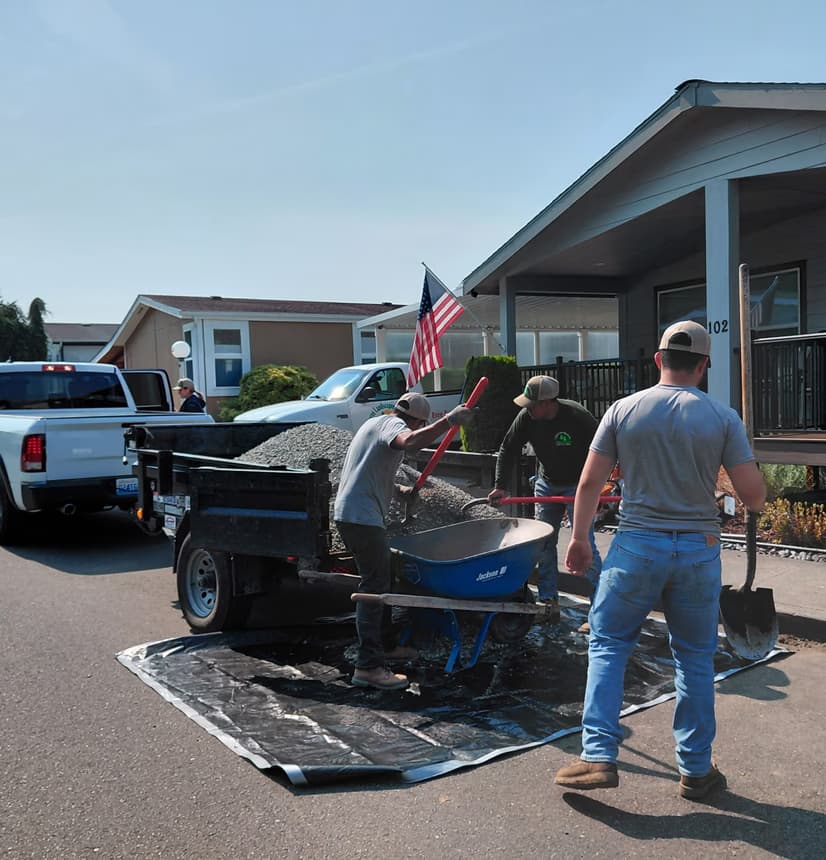
Lynnwood is built tight: retail around Alderwood, houses on smaller lots, and soils that were compacted when the neighborhood went in. Rain runs off roofs, walks, and the mall-side pavement faster than the yard can take it. Small city yards do not have a leftover lawn to hide mistakes in. The walk, the patio, and the drain are the design.
Snohomish County · ZIP 98036 · 2020 population 38,141
The whole yard is the hardscape
We measure gates, setbacks, and the basement window. Permeable surfaces and a real outlet show up more here than a fountain ever will. One material, run cleanly, beats three patterns in a yard you can cross in eight steps.
Storage, the cans, and the hose bib stay usable. A design that looks open and blocks all three is a design we will not build.
The ground in Lynnwood
Residential yards here are often a rectangle of tired turf, a fence, and a patio slab that has settled toward the house. The soil underneath is dense. Water sits, moss follows, and a new plant put into that ground without loosening it just stalls.
We aerate and dethatch before we promise a greener lawn, and we look at the downspouts before we sell a flower bed. Pavers and gravel show up on the small patios and the side yards where people actually walk. There is also commercial work along the retail streets — pruning, pressure washing, and beds that have to look kept without a full-time gardener. Native, lower-water plantings make more sense than a hedge that needs shearing every three weeks next to a busy road.
How we do the work
Hardscape is the permanent part of the yard: the floors you walk, the walls that hold soil, the steps between them. We design it around how water moves and how you move. A pretty patio with a stair that lands in the low spot is a collection of pieces, not a yard.
We would rather build less and have it drain than fill a lot with surfaces that all tip the wrong way. Materials stay limited. One stone, one wall type, so the place looks finished instead of like a showroom.
What we look at first
- The route from the door to the gate, the drive, and the part of the yard you use
- Every place water stands now
- Slopes that need a step or a wall before they need a plant
- What has to stay: trees, fences, the neighbor’s grade
One material, used honestly
Pavers, a wall block or a rock, and gravel. That is usually enough. Mixing flagstone, brick, river rock, and a second paver line makes a small yard loud and gives water more joints to exploit.
The grade drawing
We can usually do this on site without a formal plan set, and we still mark elevations. Water is a number, not a feeling. If the fall is not there, we add a drain or we change the floor. We do not squint and hope.
Steps
Even risers, a tread you can put a whole foot on, and a surface that is not slick when it is wet. Landscape steps are where people fall. We build them like we will use them in the dark, in January.
More from this crew
- Hardscaping across Snohomish County
- Paver installation in Lynnwood
- Patio installation in Lynnwood
- Retaining walls in Lynnwood
- Landscape design in Lynnwood
- Hardscaping in Edmonds
- Hardscaping in Brier
- Hardscaping in Mountlake Terrace
Sources for the climate and the water
- USDA plant hardiness map for choosing plants that can take a Snohomish County winter.
- EPA WaterSense on watering less once a lawn or a new planting is established.
- EPA Soak Up the Rain on keeping roof and yard water from becoming someone else’s problem.