Marysville spreads across flat ground north of Everett, out toward Tulalip. The lots are bigger than the city lots to the south, and the ground is slow to drain. Water does not run off a slope because there often is not a slope. A spike hole in this clay glazes shut. Water still sits on top, and the grass thins until moss takes the opening. Cores give the rain a way into the root zone.
Snohomish County · ZIP 98270 · 2020 population 70,714
Cores in clay that smears
Valley clay smears when it is wet and turns to brick in August. We core in the windows when the soil holds a shape in your hand without dripping. Leave the plugs. They are the clay you want broken up, and raking them off throws away the only soil you loosened.
After a wet week the lawn can look fine from the street and still be anaerobic an inch down. That is the sour smell when you pull a plug. We do not fertilize that lawn the same week. Food on a sealed surface feeds the moss. Open the ground, then feed it if it actually needs feeding.
The ground in Marysville
Flat ground sounds easy until a winter storm sits on it. French drains and permeable surfaces matter here more than tall walls. Yards are family yards: room for a lawn, a play set, fruit trees that people already have and want kept, and a patio that can take a barbecue without turning into a pond.
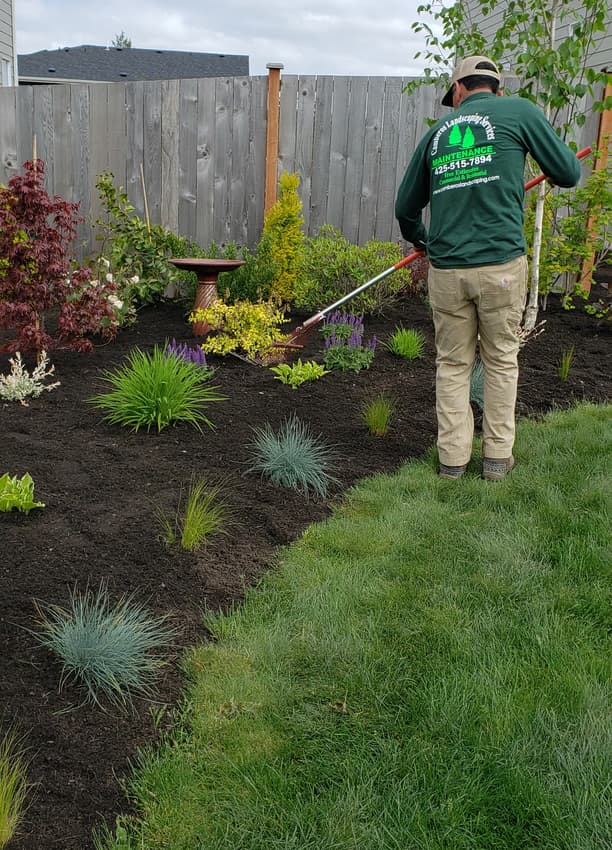
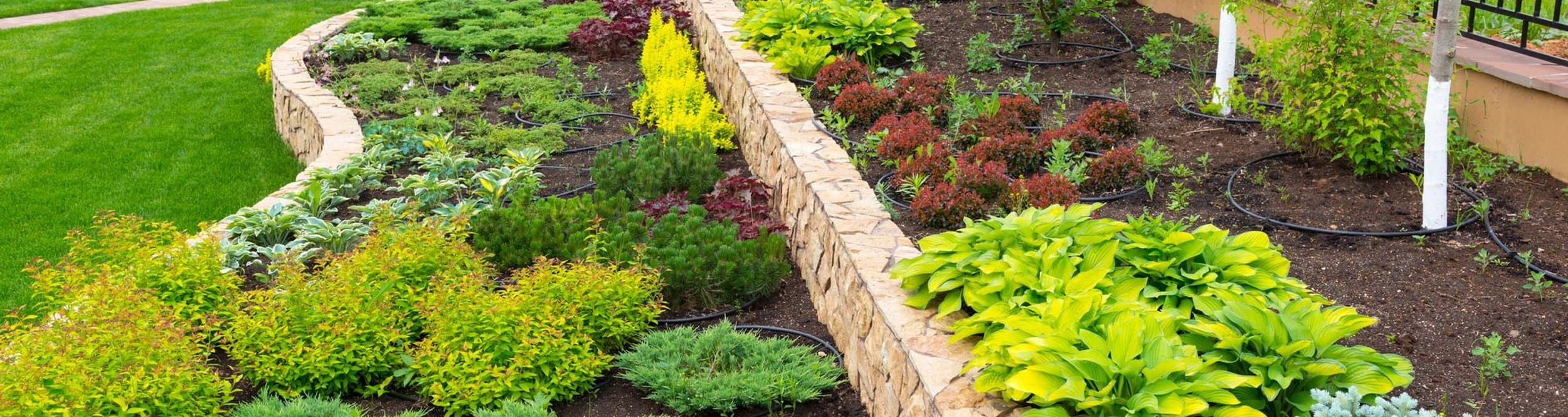
The soil is the kind that grows a decent lawn if it can breathe, and moss if it cannot. We mow, aerate, and seed the open lawns, and we bark the beds so the weed cycle slows down. Drainage is the job we would rather do first. A new sod lawn laid over undrained flat clay is a replacement lawn in two years. Fruit trees get pruned for light and for the fruit, not sheared into balls.
How we do the work
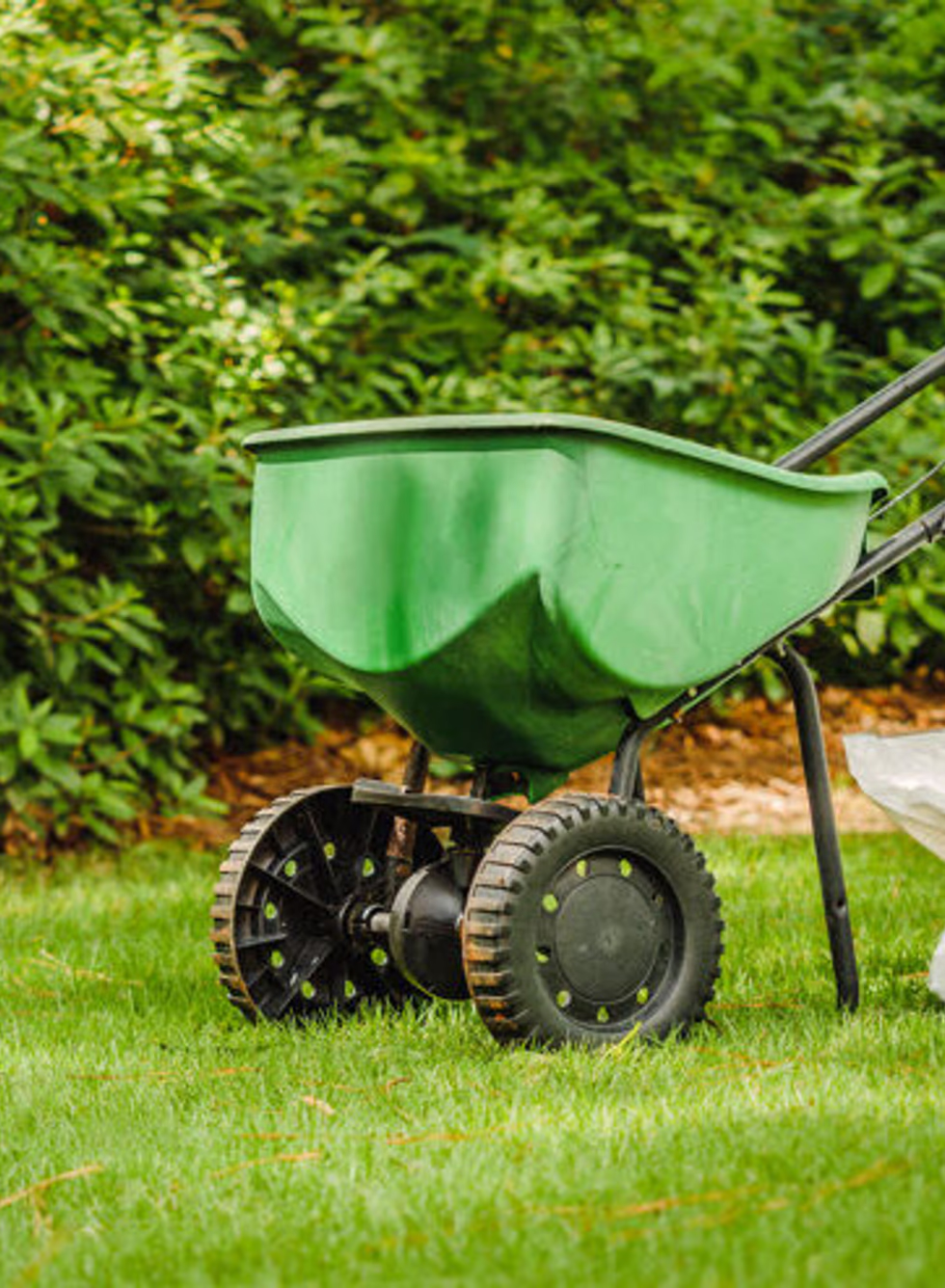
We pull cores, we do not poke holes. A spike aerator squeezes the soil tighter around each puncture, which is the opposite of what a Western Washington lawn needs. Cores are about three inches, left on the grass to break apart in the rain. The visit is timed for soil that is moist enough to take the tine and dry enough that the machine does not leave ruts.
If the thatch is thicker than a finger, aerating through it only decorates the moss. Those lawns get dethatched first. Lime is a separate decision. A lot of local soil is sour, and we spread lime when the lawn shows it, not because a calendar said March.
What we look at first
- Thatch depth before we core
- Whether the ground ruts under foot
- Shade from trees that will keep the lawn thin no matter how often we aerate
- Downspouts dumping onto the same corner every winter
When we show up
The useful months are April into early June, and again in September. Midsummer cores on a dry lawn shatter and the holes collapse. January cores on saturated ground are ruts. We would rather wait a week than leave you with tracks.
Seed in the holes
Aeration without seed is enough when the lawn is thick and you are only relieving compaction. When you can see soil between the plants, we put seed in the openings the same day. Seed on an unaerated moss mat is bird food.
What we leave behind
Plugs on the grass for a few days, then they fall apart. You can mow when they crumble. Watering is only needed if we seeded and the week turned dry, which is rare here. Stay off the soft spots until the footprints disappear.
More from this crew
- Lawn aeration across Snohomish County
- Lawn dethatching in Marysville
- Lawn seeding in Marysville
- Lawn fertilization in Marysville
- Lawn mowing in Marysville
- Lawn aeration in Everett
- Lawn aeration in Arlington
- Lawn aeration in Lake Stevens
Sources for the climate and the water
- USDA plant hardiness map for choosing plants that can take a Snohomish County winter.
- EPA WaterSense on watering less once a lawn or a new planting is established.
- EPA Soak Up the Rain on keeping roof and yard water from becoming someone else’s problem.