Mercer Island sits in the middle of Lake Washington, so almost every street runs downhill to the water. Lots are steep, the tree canopy is old and tall, and the shoreline lots have banks that move when runoff from the street above has nowhere else to go. A drain that daylighted straight down the bank dumps soil and whatever was in the lawn into the water. We slow it, spread it, or turn it aside.
King County · ZIP 98040
Move water without sending the yard into the lake
Foundation and lawn drains on the upper lot are normal and useful. The last twenty feet before the shore are the design. We use a level spreader, a planted swale, or a line that stays on the property and does not blow out the bank.
We do not trench the shoreline into a ditch. If the wet problem is the lake itself at high water, a French drain will not lower the lake. We will tell you that on the visit.
The ground in Mercer Island
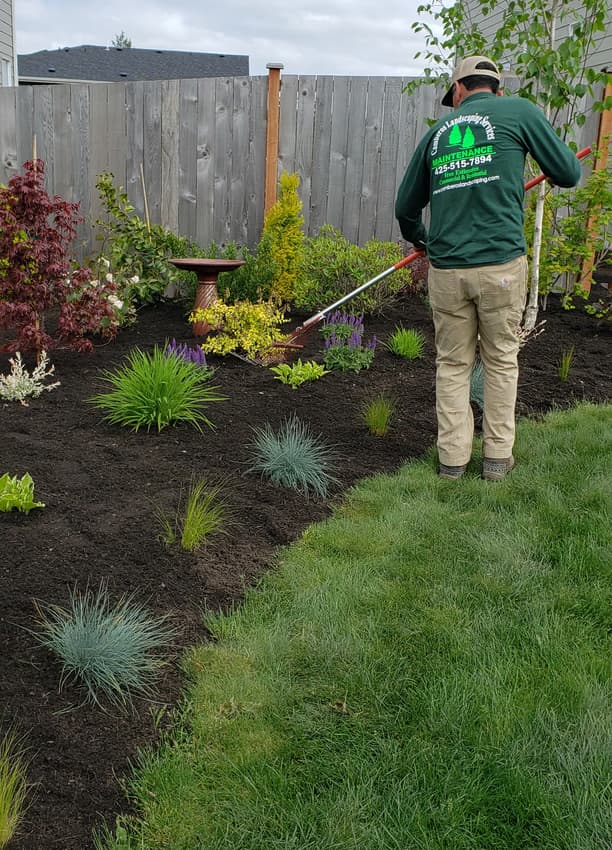
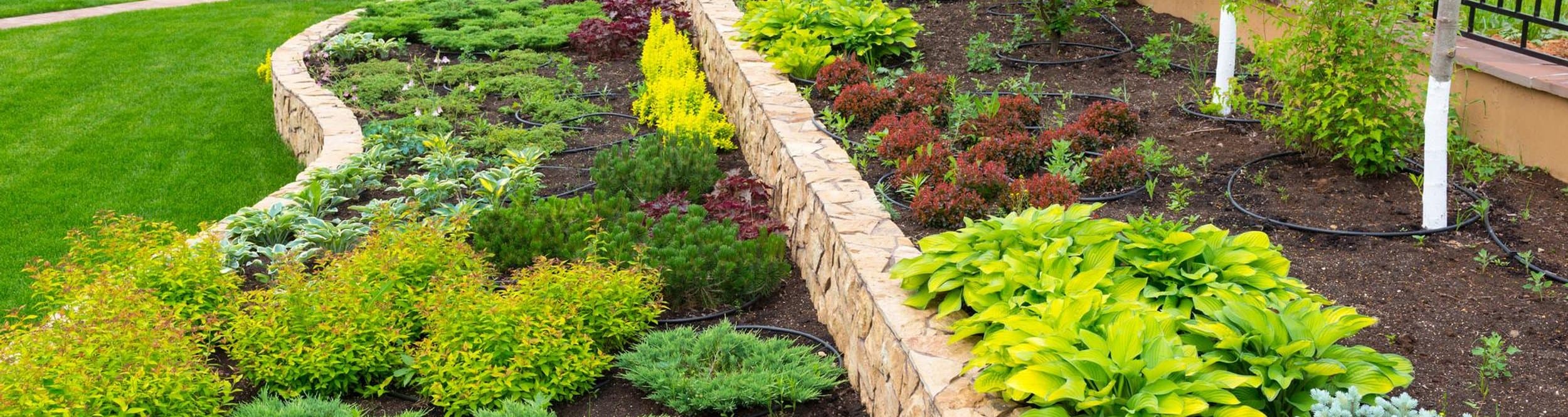
Most of our work here is on slopes. A patio or terrace has to be cut into the hill with a real base and a drain behind any wall, or the first wet winter shows where the water wants to go. On the lakefront lots we keep native shrubs on the bank, because they hold the soil better than lawn, and we take runoff to a drain or a rain garden instead of letting it sheet over the edge.
The city is strict about removing large trees and about work near the shoreline. We check what needs a permit before we cut or dig, and we plan around the trees you have to keep. Under those firs and cedars the ground is shady and mossy, so we often turn worn-out lawn into planting beds and stone paths that stay clean year-round.
How we do the work
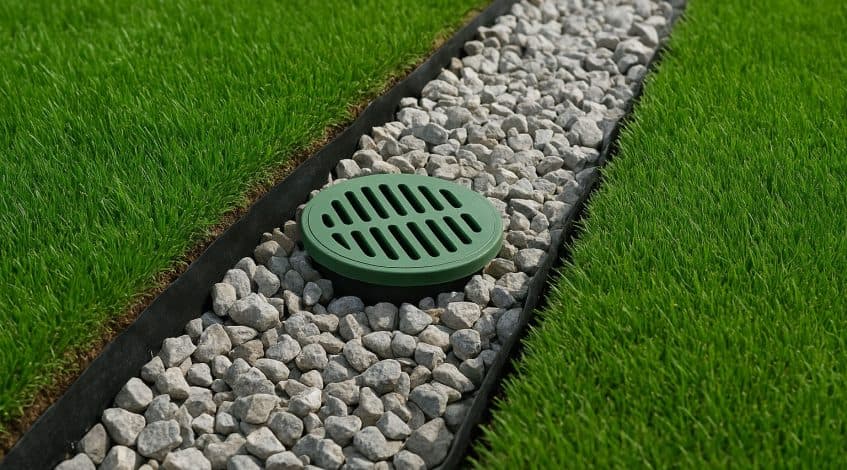
A French drain is a perforated pipe in washed rock, wrapped so the fines do not fill it, sloped to a place the water can actually leave. We do not end a drain in a dry well of hope, and we do not outlet it at the neighbor’s shed.
The trench is deep enough to catch the water you are chasing, which is often the downspout and the wet line along the foundation, not a decorative strip in the middle of the lawn. Surface grading still matters. A drain cannot fix a patio that pitches at the house.
What we look at first
- Where the water shows up, and where it can daylight
- Downspouts that are dumping at the footing
- Utilities before we trench
- Whether the wet spot is a seep that will need more than one line
Maintenance
Silt arrives. Cleanouts and a flush every few years keep the pipe a pipe. Catch basins, if we used one, need the leaves emptied. A drain with no access becomes a dig when it clogs, so we put the access in.
Cost follows the outlet
A short line with an easy daylight is a different job from a line that has to cross a drive, miss a gas service, and reach a ditch fifty feet away. We price it after we see the outlet. We do not quote a per-foot number from the curb.
Downspouts
Solid pipe until it is away from the house, then into the drain if the drain can take the roof. We do not dump a whole roof into a two-inch pop-up in the middle of the lawn and call it drainage.
More from this crew
- French drain installation across the region
- Retaining walls in Mercer Island
- Gravel installation in Mercer Island
- Landscaping in Mercer Island
- Patio installation in Mercer Island
- French drain installation in Sammamish
Sources for the climate and the water
- USDA plant hardiness map for choosing plants that can take a King County winter.
- EPA WaterSense on watering less once a lawn or a new planting is established.
- EPA Soak Up the Rain on keeping roof and yard water from becoming someone else’s problem.