Stanwood is where the subdivisions run out and the fields start. Lots are larger, drives are longer, and the ground is the open, often heavy soil of a farm edge rather than a city fill pad. On a large lot the outlet is often a ditch that has filled in. Cleaning the ditch is the job. The pipe is useless if the ditch is higher than the yard.
Snohomish County · ZIP 98292 · 2020 population 7,915
Long runs, and a ditch that has to be real
We shoot the grade. A long French drain on heavy ground works when it falls the whole way and the rock is clean. We do not bury two hundred feet of pipe that is deep at the house and proud at the field.
Crossings under a gravel drive get a sleeve. Otherwise the first time the drive is graded, the pipe is hooked. Cleanouts go at the bends so the silt from a field can be flushed instead of dug up.
The ground in Stanwood
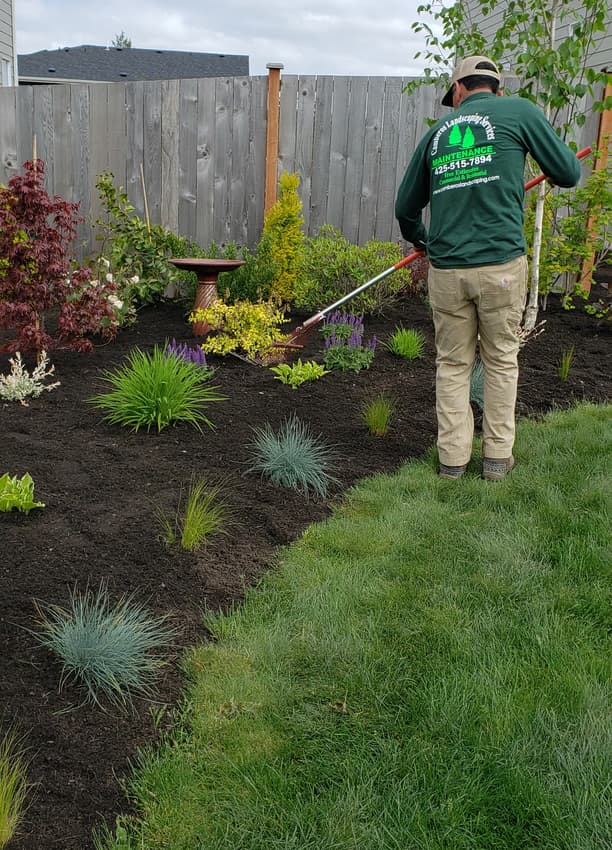
A Stanwood place might be a house, a lawn that is really a small pasture, a gravel drive, and a fence that has to mean something — keeping a view open, marking a line, holding a gentle slope. We mow and aerate at a scale that does not make sense on a Lynnwood lot. Weed pressure is real because the seed source is the field next door, not a crack in a sidewalk.
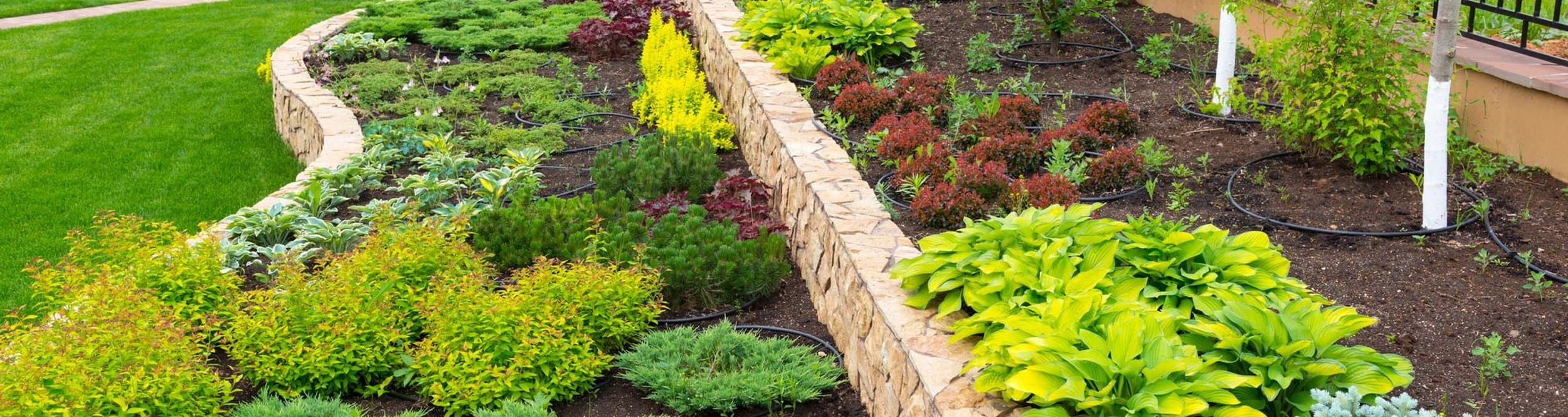
Drainage still matters. Flat or gently sloping heavy ground will sit wet. We use gravel where a paved drive would be wasted money, and a low wall where a bank needs a clean edge. Plantings can be simpler and tougher. The goal on a lot this size is a yard you can live in without a crew every week, with the edges kept and the drive solid.
How we do the work
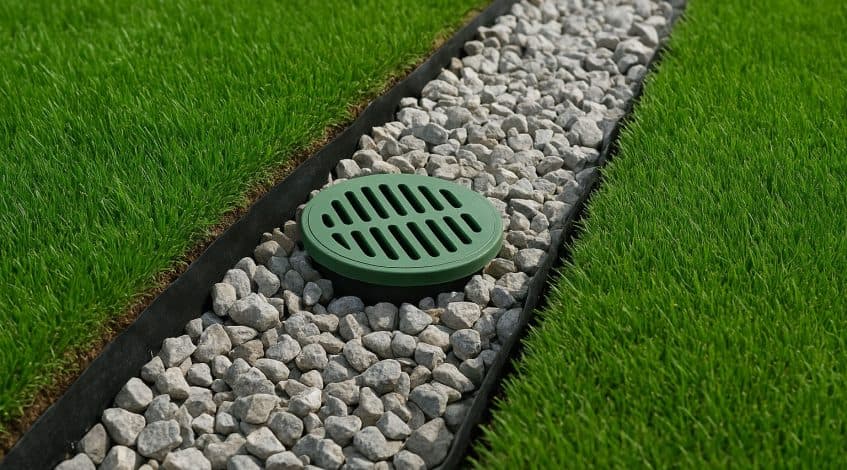
A French drain is a perforated pipe in washed rock, wrapped so the fines do not fill it, sloped to a place the water can actually leave. We do not end a drain in a dry well of hope, and we do not outlet it at the neighbor’s shed.
The trench is deep enough to catch the water you are chasing, which is often the downspout and the wet line along the foundation, not a decorative strip in the middle of the lawn. Surface grading still matters. A drain cannot fix a patio that pitches at the house.
What we look at first
- Where the water shows up, and where it can daylight
- Downspouts that are dumping at the footing
- Utilities before we trench
- Whether the wet spot is a seep that will need more than one line
What the trench looks like
Fabric, washed rock, pipe with the holes oriented the way the detail calls for, then rock, then fabric closed, then soil. The lawn or the bark goes back on top. A trench of pit-run gravel with a pipe tossed in will silt up, and we do not build those.
Cost follows the outlet
A short line with an easy daylight is a different job from a line that has to cross a drive, miss a gas service, and reach a ditch fifty feet away. We price it after we see the outlet. We do not quote a per-foot number from the curb.
Downspouts
Solid pipe until it is away from the house, then into the drain if the drain can take the roof. We do not dump a whole roof into a two-inch pop-up in the middle of the lawn and call it drainage.
More from this crew
- French drain installation across Snohomish County
- Retaining walls in Stanwood
- Gravel installation in Stanwood
- Landscaping in Stanwood
- Patio installation in Stanwood
- French drain installation in Arlington
- French drain installation in Marysville
Sources for the climate and the water
- USDA plant hardiness map for choosing plants that can take a Snohomish County winter.
- EPA WaterSense on watering less once a lawn or a new planting is established.
- EPA Soak Up the Rain on keeping roof and yard water from becoming someone else’s problem.