Snohomish is the old river town. Downtown sits above the Snohomish River, the houses have mature trees, and a lot of the gardens were planted decades ago and then left to get big. The ground near the river stays wet. The hills just south of it do not. If the wet spot is groundwater from the river, a pipe will run full and still not dry the lawn. We use drains for roof and surface water on the bench, not as a promise to lower the water table.
Snohomish County · ZIP 98290 · 2020 population 10,091
A drain cannot beat the river
We outlet to a ditch or a slope that is above the ordinary high water. A pipe that outlets below that line runs backward when the river is up. We have seen it, and we will not build it.
Surface drains and regrading solve the puddle by the shop. They do not make a floodplain into a basement. If that is the hope, we stop and talk before anyone rents a trencher.
The ground in Snohomish
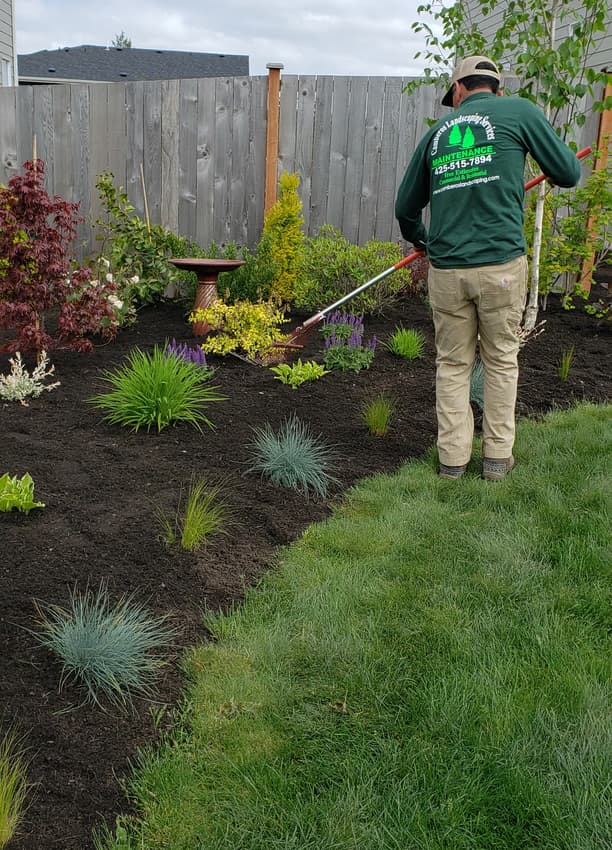
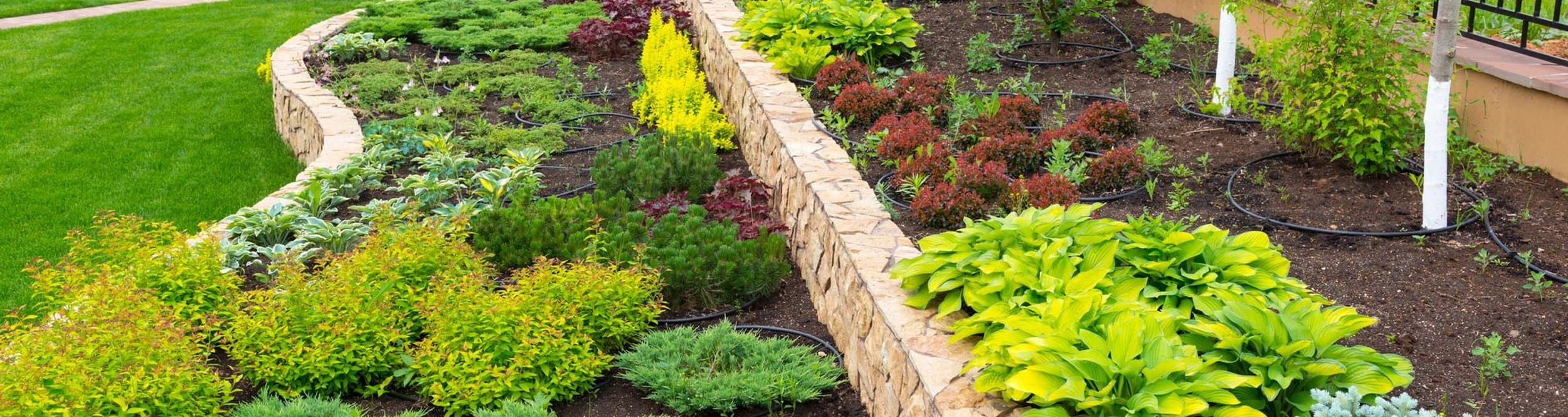
Historic lots come with plants nobody planned: a cedar too close to the porch, a lilac that has swallowed the walk, beds that were neat in 1998 and are roots and bindweed now. Pruning and a hard cleanup are often the whole first phase. Bark, used with a little restraint, puts a finished line back on a Victorian front without covering the problem.
Closer to the river, drains matter. Riparian edges want native plants that can take wet soil, not a sod lawn rolled to the bank. We do not haul fill into the floodplain to “raise the yard” without understanding where that water will go next. Uphill, in the newer pockets, the work looks more like the rest of the county: lawns, small patios, and moss.
How we do the work
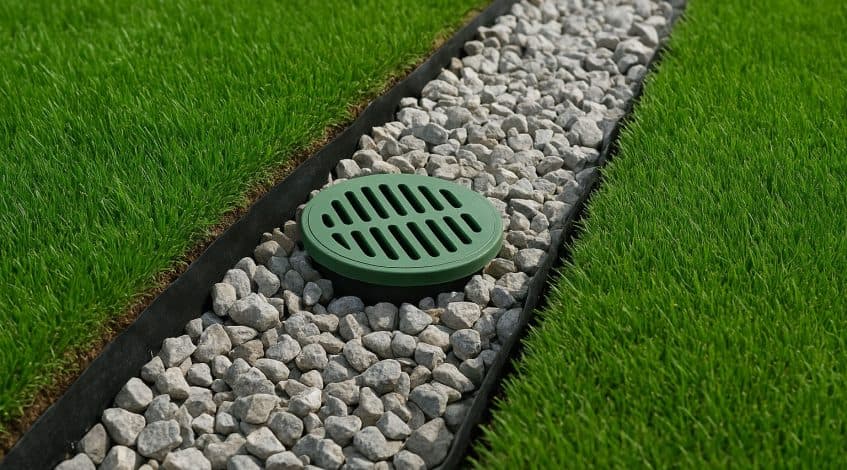
A French drain is a perforated pipe in washed rock, wrapped so the fines do not fill it, sloped to a place the water can actually leave. We do not end a drain in a dry well of hope, and we do not outlet it at the neighbor’s shed.
The trench is deep enough to catch the water you are chasing, which is often the downspout and the wet line along the foundation, not a decorative strip in the middle of the lawn. Surface grading still matters. A drain cannot fix a patio that pitches at the house.
What we look at first
- Where the water shows up, and where it can daylight
- Downspouts that are dumping at the footing
- Utilities before we trench
- Whether the wet spot is a seep that will need more than one line
Downspouts
Solid pipe until it is away from the house, then into the drain if the drain can take the roof. We do not dump a whole roof into a two-inch pop-up in the middle of the lawn and call it drainage.
What the trench looks like
Fabric, washed rock, pipe with the holes oriented the way the detail calls for, then rock, then fabric closed, then soil. The lawn or the bark goes back on top. A trench of pit-run gravel with a pipe tossed in will silt up, and we do not build those.
Maintenance
Silt arrives. Cleanouts and a flush every few years keep the pipe a pipe. Catch basins, if we used one, need the leaves emptied. A drain with no access becomes a dig when it clogs, so we put the access in.
More from this crew
- French drain installation across Snohomish County
- Retaining walls in Snohomish
- Gravel installation in Snohomish
- Landscaping in Snohomish
- Patio installation in Snohomish
- French drain installation in Monroe
- French drain installation in Everett
- French drain installation in Lake Stevens
Sources for the climate and the water
- USDA plant hardiness map for choosing plants that can take a Snohomish County winter.
- EPA WaterSense on watering less once a lawn or a new planting is established.
- EPA Soak Up the Rain on keeping roof and yard water from becoming someone else’s problem.